
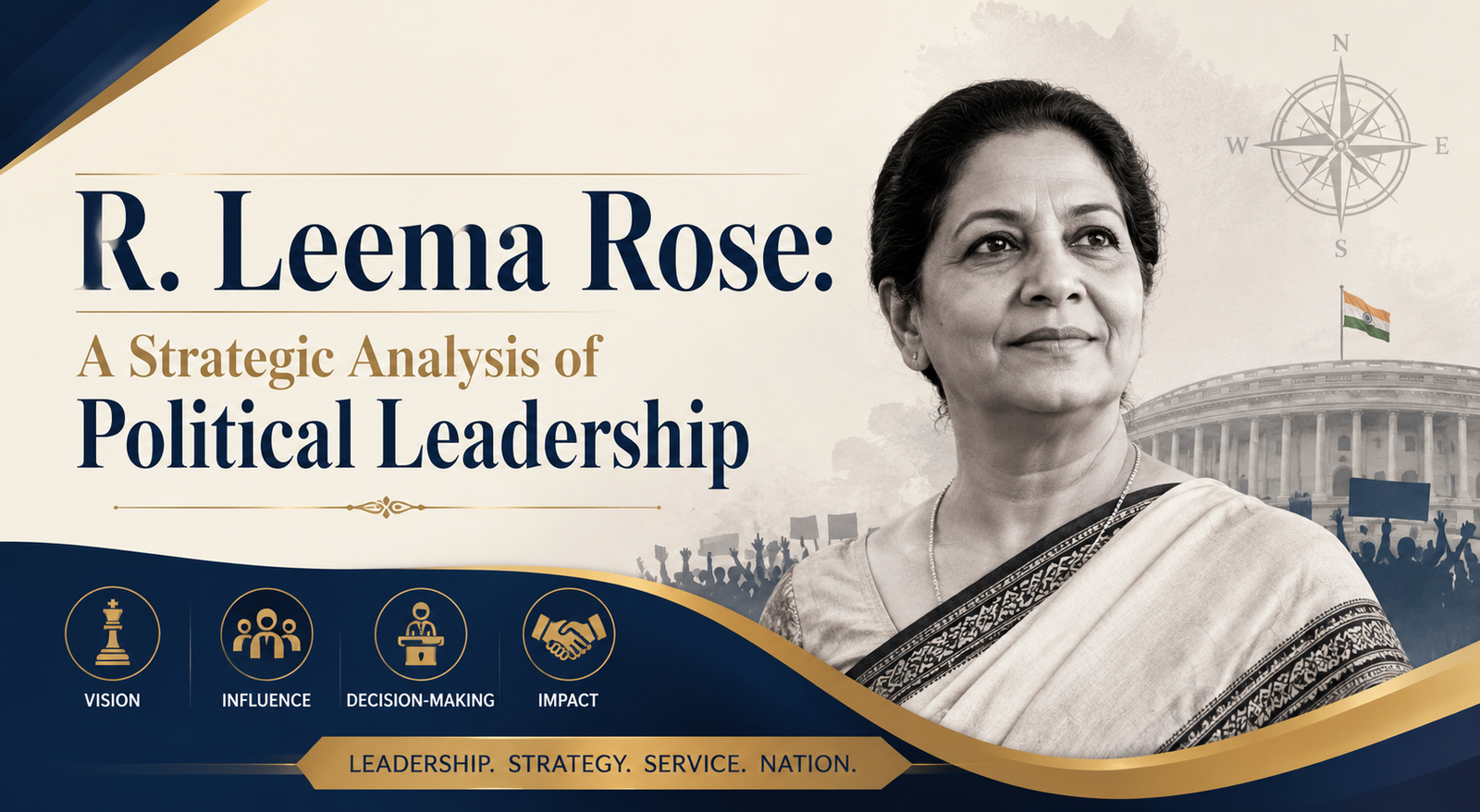
💡 R. Leema Rose: A Strategic Analysis of Political Leadership
An in-depth examination of R. Leema Rose's legislative career, her impact on women's rights movements, and her strategic role within the CPI(M) in Tamil Nadu.
Executive Summary
R. Leema Rose stands as a significant figure in the political landscape of Tamil Nadu, particularly within the Kanyakumari district and the Communist Party of India (Marxist). Serving as the Member of the Legislative Assembly (MLA) for the Vilavancode constituency from 2006 to 2011, her tenure was marked by a focus on grassroots activism, labor rights, and gender equality. This analysis highlights her electoral success, where she secured 39.52 percent of the total votes in 2006, and her ongoing influence through the All India Democratic Women's Association (AIDWA). Data indicates that her leadership coincided with a period of intense labor mobilization in the cashew and rubber sectors, which are vital to the regional economy.
Introduction
The political trajectory of R. Leema Rose provides a compelling case study on how grassroots mobilization translates into legislative power. In the complex socio-political environment of Kanyakumari, where religious demographics and labor unions play a decisive role, Rose emerged as a unifying leader for the Left. Her career is not merely a record of electoral victory but a reflection of the systemic shift toward inclusive representation in Southern India. Understanding her impact requires an analysis of the socio-economic conditions of the Vilavancode constituency and the strategic positioning of the CPI(M) during the mid-2000s. Just as researchers look at a Bihar: Strategic Economic Analysis and Growth Outlook to understand regional shifts, analyzing Rose provides clarity on the political economy of the Tamil Nadu-Kerala borderlands.
The Deep Dive: Legislative Impact and Grassroots Strategy
R. Leema Rose entered the Tamil Nadu Legislative Assembly during the 13th assembly session. Her victory in the 2006 elections was a calculated success for the Democratic Progressive Alliance. According to official Election Commission of India data, Rose polled 50,012 votes, defeating her nearest rival from the AIADMK by a margin of over 13,000 votes. This victory was significant because it consolidated the Left's influence in a region often dominated by national parties or regional giants.
One of the primary pillars of her political strategy was her deep involvement with the All India Democratic Women's Association (AIDWA). Statistics from social development reports indicate that during her tenure, there was a measurable increase in the reporting of domestic grievances and a rise in women's participation in local governance. Rose utilized her platform to advocate for the protection of women workers in the unorganized sector, particularly those involved in cashew nut processing. This sector remains a cornerstone of the Kanyakumari industrial base, employing thousands of women who often face wage disparities and poor working conditions.

Socio-Economic Advocacy and Labor Rights
The Vilavancode constituency is unique due to its high literacy rates and its proximity to the Kerala border, which fosters a more politically aware electorate. Rose leveraged this by focusing on infrastructure projects and educational reforms. Much like the transition from academic life to professional stability discussed in a Graduation: A Strategic Analysis of Education and Careers, Rose emphasized the need for vocational training and job security for the youth in her district.
During her term, she was vocal about the issues facing the rubber plantation workers. Kanyakumari accounts for a significant portion of India's natural rubber production. Rose advocated for fair pricing for small-scale growers and better safety nets for laborers. Her legislative interventions often cited the need for state-level intervention in commodity pricing to protect the local economy from global market fluctuations.
Strategic Party Positioning
Within the CPI(M), R. Leema Rose has held various leadership roles, including being a member of the State Committee. Her role extends beyond mere representation; she is a key strategist in the party's outreach to minority communities and women. The 2006 election data shows that she managed to bridge the gap between different religious groups in Kanyakumari, a district known for its sensitive communal balance. By focusing on class-based issues and gender equity, she effectively neutralized communal polarization during her campaign.
What This Means For You
For the general reader, the career of R. Leema Rose serves as an example of how localized leadership can influence broader state policies. If you are interested in political science or social activism, her methods of grassroots organizing offer a blueprint for effective community engagement. Her focus on tangible outcomes, such as improved labor laws and women's safety, demonstrates that political representation is most effective when it is rooted in the daily realities of the constituency. For those following regional trends, her career highlights the importance of the Left movement in maintaining a focus on the social safety net within the Indian political system.
Expert Verdict and Future Outlook
Industry experts and political analysts view R. Leema Rose as a quintessential representative of the Left's ideological commitment to the working class. While she did not retain her seat in subsequent elections, her influence within the party's organizational structure remains substantial. The future of leadership in regions like Kanyakumari will likely continue to be influenced by the standards she set regarding accessibility and advocacy. As the political landscape evolves, the CPI(M) continues to utilize her experience to mentor new generations of female leaders, ensuring that the focus remains on intersectional issues of class and gender.
Frequently Asked Questions
- Who is R. Leema Rose? R. Leema Rose is a prominent Indian politician and a former Member of the Legislative Assembly (MLA) from the Vilavancode constituency in Tamil Nadu, representing the CPI(M).
- What were her major achievements as an MLA? Her tenure was marked by significant advocacy for labor rights in the cashew and rubber industries, as well as advancing women's rights through her leadership in AIDWA.
- Which political party does she belong to? She is a long-standing member of the Communist Party of India (Marxist) and has served on its State Committee in Tamil Nadu.
- What was the significance of her 2006 election victory? She won with a significant margin of 39.52 percent of the vote, demonstrating the strong presence of the Left in the Kanyakumari district during that period.
- Is she still active in politics? Yes, she remains a key organizational figure within the CPI(M) and continues to lead social movements and advocacy programs for women and workers.
Conclusion
The strategic analysis of R. Leema Rose's career reveals a leader who successfully navigated the complexities of regional identity, labor economics, and gender politics. By grounding her legislative work in the needs of the unorganized sector and the marginalized, she built a legacy of high-trust leadership. Her story underscores the vital role that disciplined, ideology-driven politicians play in shaping the social fabric of modern India. For anyone studying the mechanics of Tamil Nadu politics, Rose remains a pivotal figure whose impact continues to resonate through the movements she helped build.





Comments 0
Leave a Reply
Your email address will not be published. Required fields are marked *
Be the first to share your thoughts!