
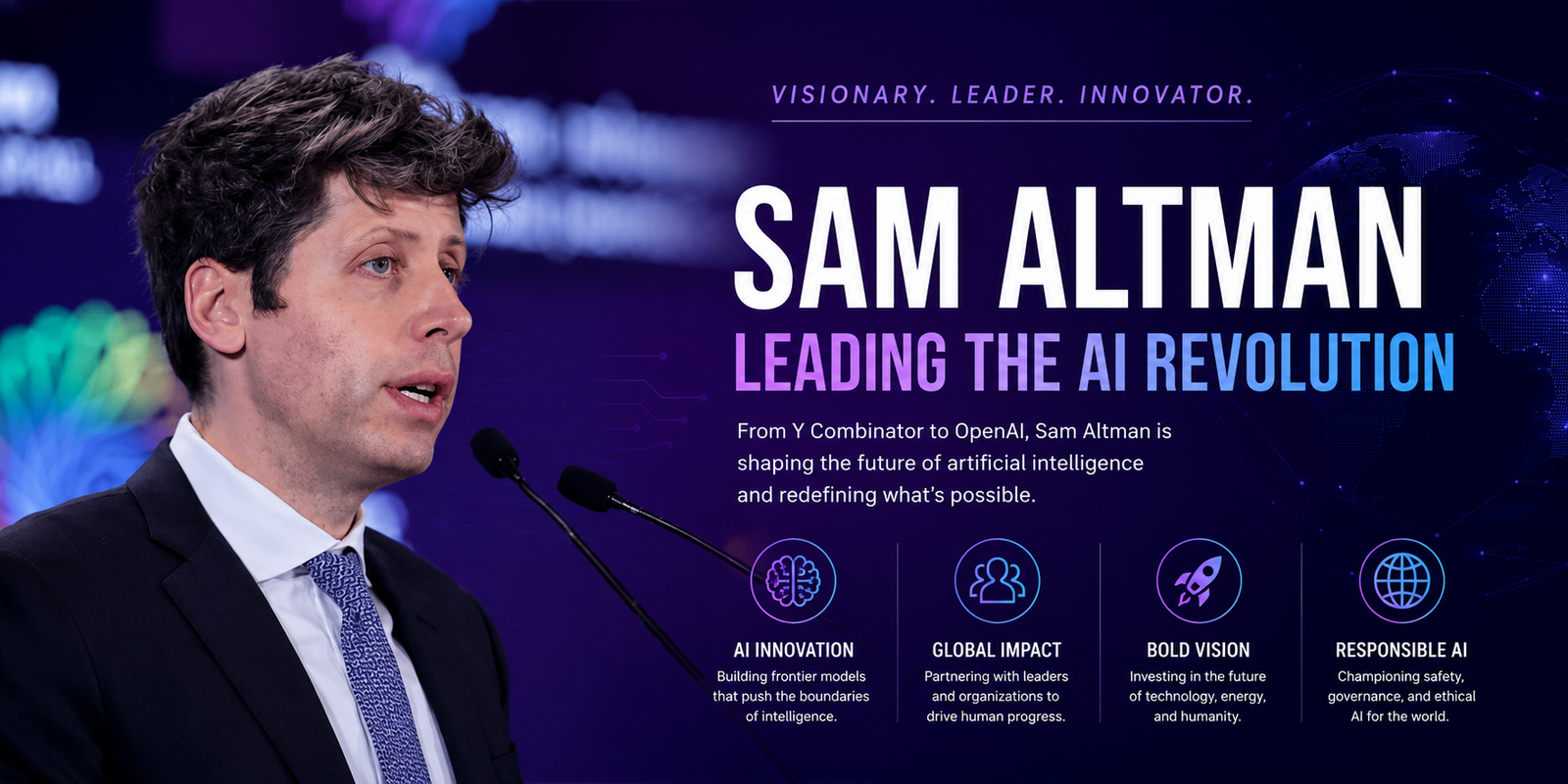
💡 Sam Altman: Strategic Analysis of AI Leadership and ROI
An authoritative deep dive into Sam Altman's leadership at OpenAI, his impact on the global AI market, and the strategic implications for the technology sector.
Executive Summary
Sam Altman has emerged as one of the most influential figures in the generative artificial intelligence revolution. As the CEO of OpenAI, Altman leads an organization whose valuation and strategic importance have grown dramatically since the launch of ChatGPT. In early 2024, OpenAI was valued at approximately $80 billion or more in a reported employee share sale, placing it among the world's most valuable private technology companies. His leadership has also been closely associated with OpenAI's long-term partnership with Microsoft, which has provided substantial capital, cloud infrastructure, and technical resources to support the company's expansion. The partnership has continued to evolve, with Microsoft remaining a major shareholder and OpenAI's primary cloud partner under amended agreements announced in 2026.
Key areas of this analysis include Altman's role in scaling OpenAI from a research-focused organization into a major AI product and infrastructure company, his influence on the development of advanced AI systems, and his efforts to address the enormous computing, energy, and semiconductor requirements of the AI industry. ChatGPT achieved 100 million weekly active users within months of its launch and has since expanded to hundreds of millions of weekly users, demonstrating the extraordinary speed of generative AI adoption. This report evaluates Altman's influence on corporate governance, geopolitical AI competition, technological investment, and the future development of Artificial General Intelligence (AGI).
Introduction: The Architect of the Intelligence Age
In the landscape of modern technology, few individuals command as much influence as Sam Altman. His trajectory from president of Y Combinator to CEO of OpenAI represents a significant shift in how artificial intelligence is developed, commercialized, and integrated into the global economy. Altman is not merely a technology executive; he has become a strategic figure operating at the intersection of advanced computing, capital investment, AI research, product development, and public policy.
The events of November 2023, when Altman was removed as OpenAI's CEO and subsequently reinstated, became one of the most consequential leadership crises in the history of the AI industry. OpenAI's board initially stated that Altman had not been consistently candid in his communications with the board. However, a later independent review by WilmerHale concluded that the events were primarily the result of a breakdown in trust between Altman and the previous board, rather than concerns about product safety, the pace of development, OpenAI's finances, or statements to investors and partners.
Altman's rapid return, together with the subsequent restructuring of OpenAI's governance, highlighted the importance of leadership, organizational stability, and investor confidence in the rapidly expanding AI sector. The episode demonstrated that success in artificial intelligence depends not only on algorithmic capabilities, but also on human capital, governance, infrastructure, capital access, and the ability to navigate increasingly complex economic and regulatory environments.
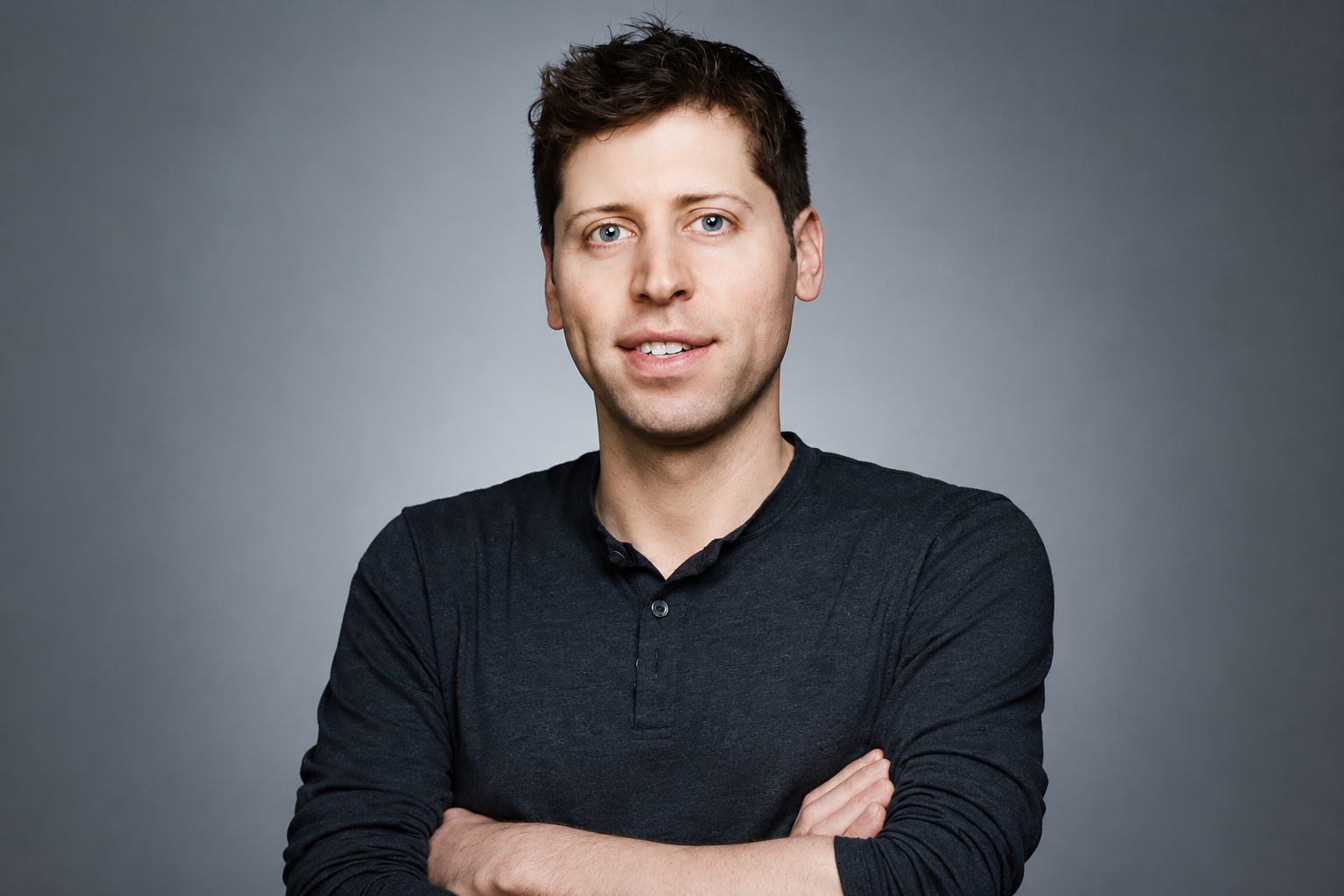
THE DEEP DIVE: Strategic Pillars of Altman's Leadership
1. The Capitalization of Artificial Intelligence
One of Altman's primary strategic achievements has been helping transform OpenAI from a research-focused nonprofit into a large-scale AI company capable of raising and deploying enormous amounts of capital. OpenAI originally created a capped-profit structure in 2019 to attract investment while keeping the nonprofit in control. However, that structure has since evolved. In 2025, OpenAI moved its for-profit business toward a Public Benefit Corporation (PBC) structure, with the nonprofit Foundation retaining control and holding a significant equity interest. This change was designed to provide a more conventional capital structure while keeping OpenAI's broader mission at the center.
The partnership with Microsoft has been a cornerstone of OpenAI's scaling strategy. Microsoft has provided substantial capital, cloud infrastructure, and technical support, while OpenAI's models have been deeply integrated with Microsoft's Azure ecosystem and products. Under the amended 2026 agreement, Microsoft remains a major shareholder and OpenAI's primary cloud partner, while OpenAI has gained greater flexibility to use additional infrastructure and cloud providers.
This aggressive scaling strategy reflects the enormous computing, energy, and infrastructure requirements of frontier AI. The competitive landscape now includes major technology companies such as Google, Meta, Anthropic, and other rapidly growing AI laboratories, making access to compute and capital a critical strategic advantage.
2. The Seven Trillion Dollar Vision
One of the most ambitious aspects associated with Altman's long-term strategy has been his reported interest in dramatically expanding global semiconductor and AI infrastructure capacity. In 2024, industry reports described discussions involving Altman, investors, and semiconductor-industry participants around the possibility of mobilizing trillions of dollars to expand chip manufacturing and the broader infrastructure required for advanced AI.
Reports at the time suggested figures ranging from approximately $5 trillion to $7 trillion, although these numbers represented reported discussions and potential infrastructure requirements rather than a confirmed OpenAI fundraising commitment or an officially announced $7 trillion program. The underlying strategic issue was clear: the rapid development of AI requires enormous quantities of advanced processors, semiconductor manufacturing capacity, data centers, electricity, and supporting infrastructure.
By focusing attention on these physical constraints, Altman's strategy extends beyond software development into the broader industrial foundation required for AI. The long-term objective is to reduce infrastructure bottlenecks that could otherwise limit the pace at which increasingly capable AI systems can be developed and deployed.
3. Governance and the Safety-Capability Paradox
Altman operates at the center of an ongoing debate between AI safety, alignment, and technological capability. OpenAI has repeatedly emphasized an iterative approach in which advanced systems are deployed with safety measures, evaluated through real-world use and testing, and improved as new risks and capabilities become better understood. OpenAI's development of systems such as GPT-4 and Sora 2 included extensive evaluation, red-teaming, and iterative safety measures before and during deployment.
However, the technology landscape has changed significantly since the original publication of this analysis. The Sora product was discontinued on April 26, 2026, so Sora should no longer be described as an actively deployed product in a current 2026 analysis.
The strategic challenge remains the balance between advancing increasingly capable AI systems and managing their potential risks. For investors and policymakers, this creates an important governance question: how can an AI company maintain rapid innovation while establishing effective oversight, safety evaluation, transparency, and accountability as its systems become more powerful?
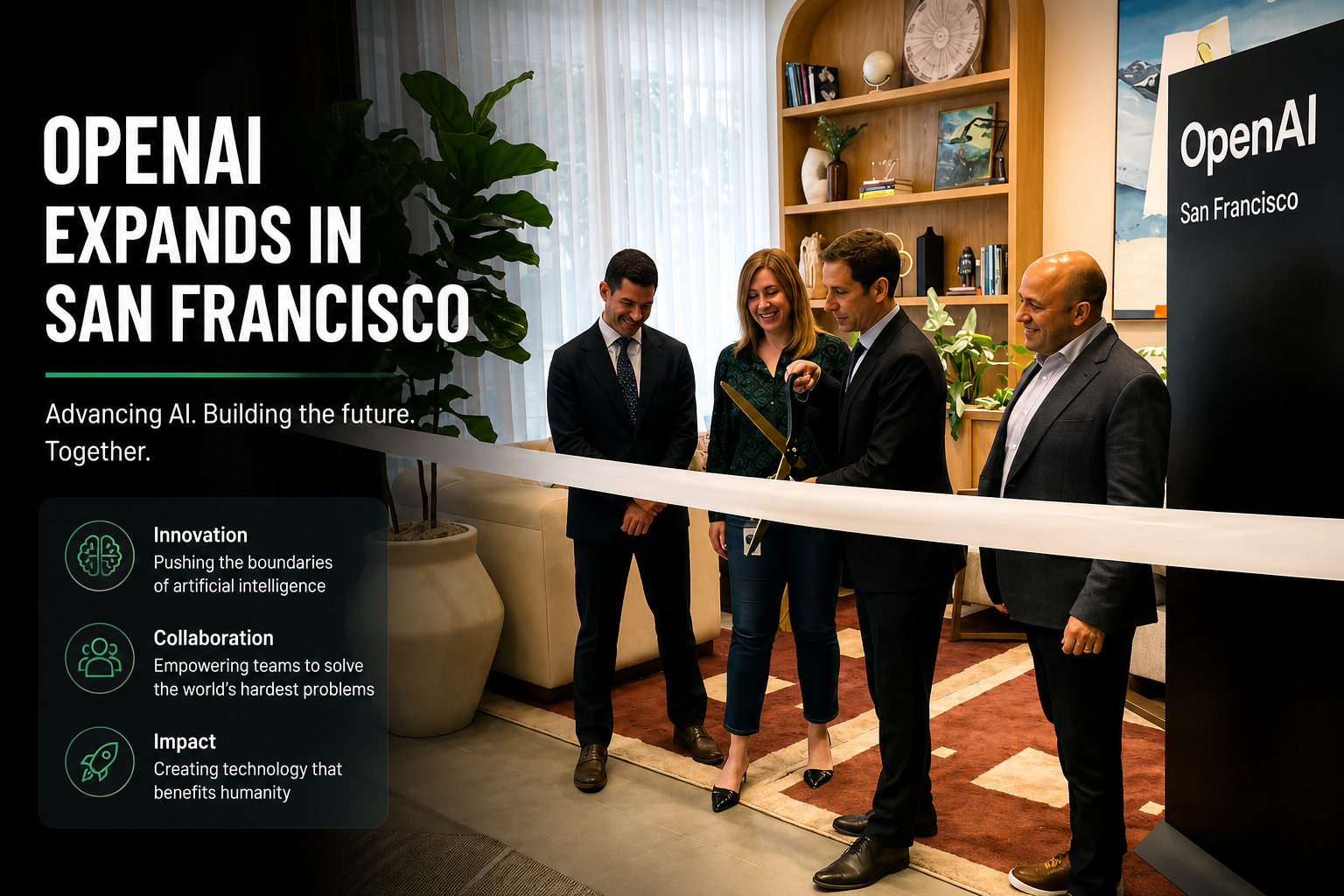
4. Geopolitics and Regulatory Influence
Altman has played a prominent role in discussions with policymakers and world leaders about the governance of advanced artificial intelligence. He has previously advocated for international cooperation and, at different points, discussed the possibility of an international organization for AI governance with a role comparable in some respects to the IAEA's role in nuclear oversight. Rather than representing an established global regulatory framework, these proposals reflect the broader debate over how governments should coordinate on AI safety, standards, security, and the cross-border impact of increasingly capable AI systems.
By participating actively in discussions around AI regulation, OpenAI has sought to contribute to debates involving safety, copyright, privacy, security, and responsible deployment. The strategic challenge is that AI regulation is developing differently across jurisdictions, creating the possibility of fragmented rules that could increase compliance costs and complicate the deployment of AI products across international markets.
WHAT THIS MEANS FOR YOU: Actionable Insights
For Professionals: AI literacy is becoming increasingly important as AI systems move beyond simple question-and-answer interactions toward agentic workflows that can perform multi-step tasks, use tools, interact with software, and work toward longer-term objectives. Developing skills in AI-assisted workflows, verification, automation, and effective human-AI collaboration could become increasingly valuable as these systems mature. OpenAI's 2026 research and products show the growing role of AI agents in professional workflows.
For Investors: The AI sector remains highly competitive rather than a simple winner-take-all market. OpenAI has developed a substantial ecosystem through ChatGPT, its API platform, enterprise products, and developer tools, but competitors including Anthropic, Google, Meta, and other AI companies continue to compete for enterprise customers, developers, computing resources, and model adoption. OpenAI reports more than one million business customers using its tools, demonstrating significant enterprise adoption, but market leadership should not be treated as guaranteed.
For Policy Makers: Policy discussions should focus not only on theoretical AI risks but also on practical issues such as labor-market disruption, privacy, cybersecurity, intellectual property, competition, and accountability for increasingly autonomous AI systems. Altman has also been associated with the idea that AI could eventually contribute to new mechanisms for distributing economic benefits, including universal basic income. However, this remains a broader long-term policy concept rather than an established mechanism being implemented through World today. The World project, originally launched as Worldcoin, focuses primarily on proof-of-personhood and digital identity infrastructure, while its founders have discussed a potential connection between AI-driven economic change and future AI-funded UBI.

Expert Verdict / Future Outlook
The future of Sam Altman's leadership will be shaped by OpenAI's ability to continue advancing increasingly capable AI systems while maintaining strong safety, governance, and commercial execution. GPT-5 was already introduced in August 2025, so the strategic question is no longer whether OpenAI can deliver GPT-5, but how effectively Altman and OpenAI can build on its capabilities and compete in the rapidly evolving frontier-AI market.
The competitive landscape remains intense, with major technology companies and AI laboratories investing heavily in reasoning, agents, infrastructure, and model development. OpenAI also faces continuing legal, regulatory, intellectual-property, and governance challenges. At the infrastructure level, the strategic outlook points toward greater integration across computing, data centers, energy, and semiconductor capacity as the cost of developing advanced AI systems continues to increase. Altman's role is therefore likely to remain centered on connecting technological development with capital, infrastructure, business strategy, and public policy.
FAQ: Authoritative Insights
What is Sam Altman's net worth and how does he make money?
Sam Altman's wealth primarily comes from his investments in technology and other companies rather than from ownership of OpenAI. Forbes estimated his net worth at approximately $3.3 billion in July 2026, while later 2026 reporting placed the figure above $4 billion after additional investment holdings were disclosed. His investments include companies such as Reddit, Stripe, and Helion Energy. Altman does not hold an equity stake in OpenAI, according to current reporting.
Why was Sam Altman fired from OpenAI in 2023?
On November 17, 2023, OpenAI's board removed Altman as CEO, stating that he had not been consistently candid in his communications with the board. However, a subsequent independent review by WilmerHale concluded that the events primarily resulted from a breakdown in trust between Altman and the previous board. The review found that the decision was not driven by concerns about product safety, development speed, OpenAI's finances, or statements to investors and business partners. Altman was subsequently reinstated as CEO, and OpenAI restructured its board and governance.
What is the goal of Sam Altman's World project?
The project originally known as Worldcoin is now called World, or World Network. Its core focus is building a global identity and financial network centered on World ID and proof of personhood, using technologies such as biometric verification through Orb devices to help establish that an individual is a unique human. The project's founders have also discussed the possibility that AI-driven economic changes could eventually create a path toward AI-funded universal basic income, but UBI should be described as a potential long-term vision rather than an established distribution system currently operated by World.
How does Sam Altman view the risks of AGI?
Altman has repeatedly acknowledged that increasingly capable AI systems could create significant risks, including misuse, loss of control, and broader societal disruption. His approach has emphasized iterative development, safety evaluation, testing, and international cooperation as AI capabilities advance. The strategic challenge is to continue improving AI systems while developing safeguards and governance mechanisms that can keep pace with their capabilities.
What is the relationship between Sam Altman and Microsoft?
Microsoft and OpenAI maintain a major strategic partnership involving cloud infrastructure, AI technology, commercial products, and investment. Under the amended 2026 agreement, Microsoft remains OpenAI's primary cloud partner, and OpenAI products ship first on Azure unless Microsoft cannot or chooses not to support the required capabilities. Microsoft also continues to hold a significant stake in OpenAI. The 2026 agreement changed several aspects of the commercial relationship, including Microsoft's revenue-sharing arrangements, so the relationship should not be described simply as Microsoft providing Azure in exchange for a share of OpenAI's profits.
Conclusion: Strategic Takeaway
Sam Altman represents a new generation of technology leaders operating at the intersection of artificial intelligence, capital, infrastructure, and global policy. His ability to attract investment, scale AI infrastructure, develop major consumer and enterprise products, and navigate complex governance and regulatory challenges has made him one of the most influential executives in the AI industry.
For stakeholders across industries, the broader takeaway is clear: the transition toward an AI-driven economy is accelerating, but the competitive landscape remains highly dynamic. The strategies adopted by OpenAI and its competitors will influence the development of AI infrastructure, enterprise adoption, regulation, labor markets, and technological competition in the years ahead. Success in this environment will require not only advanced AI capabilities, but also strong governance, capital discipline, infrastructure planning, and a clear understanding of the evolving global AI ecosystem.
Important Note: Financial Disclaimer: This content is for educational purposes only and does not constitute professional financial advice. Always consult with a certified financial planner before making investment decisions.




Comments 0
Leave a Reply
Your email address will not be published. Required fields are marked *
Be the first to share your thoughts!