
💡 Spotify Business Strategy: A Deep Analysis of Audio Dominance
An authoritative analysis of Spotify's business model, focusing on personalization, freemium conversion, and the shift toward sustainable profitability.
Executive Summary
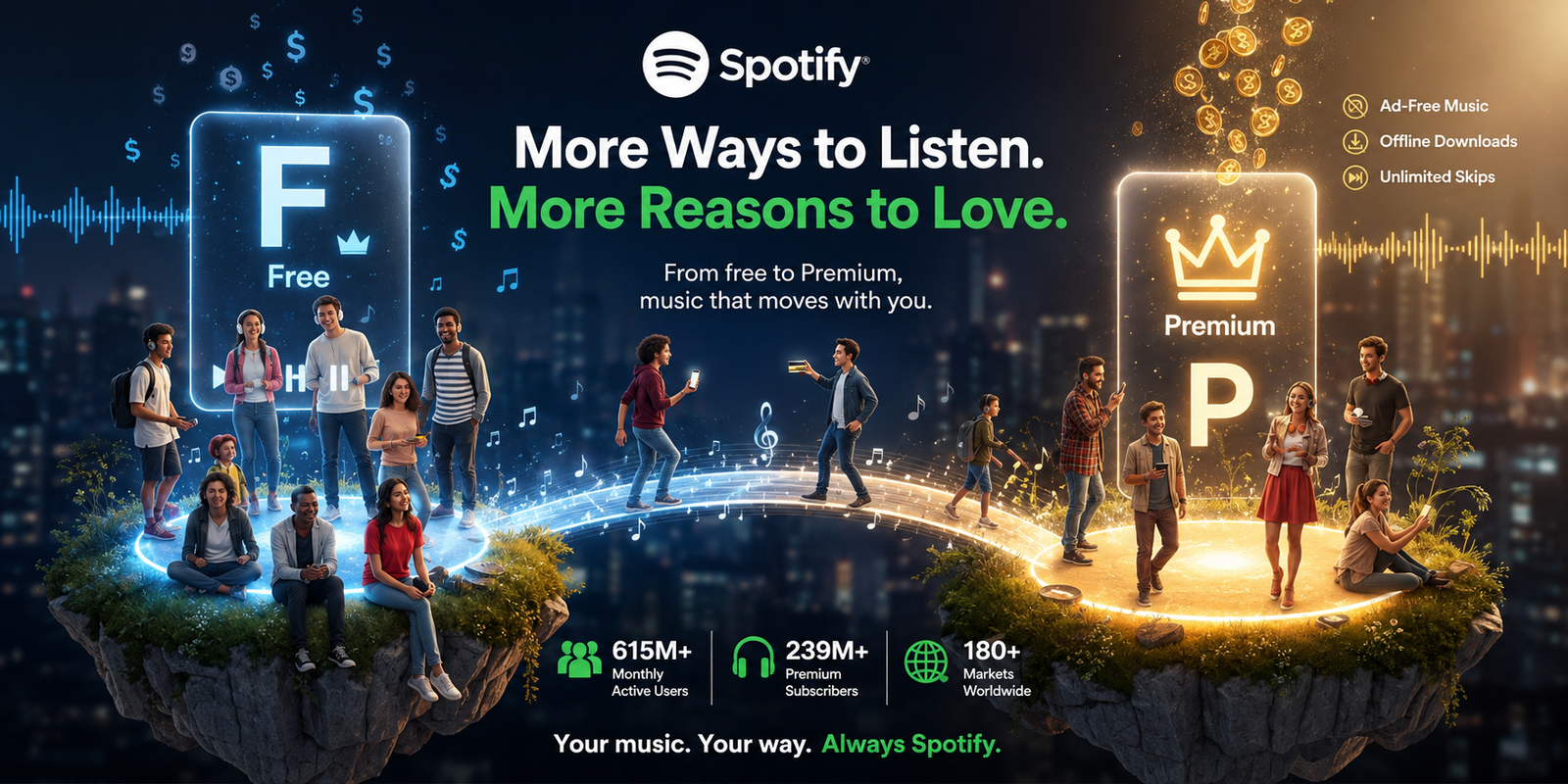
Spotify has transitioned from a disruptive music startup into a leading global audio platform. In the first quarter of 2024, the company reported 615 million Monthly Active Users (MAUs), representing a 19 percent year-over-year increase. Key findings in this analysis include Spotify’s strategic shift toward stronger revenue growth and margin expansion, continued investment in artificial intelligence and personalization, and the evolution of its two-sided marketplace. With a Premium subscriber base of 239 million and a gross margin of 27.6 percent, Spotify demonstrated significant progress toward improving profitability and building a more sustainable long-term business model.

Introduction: The Audio-First Architecture
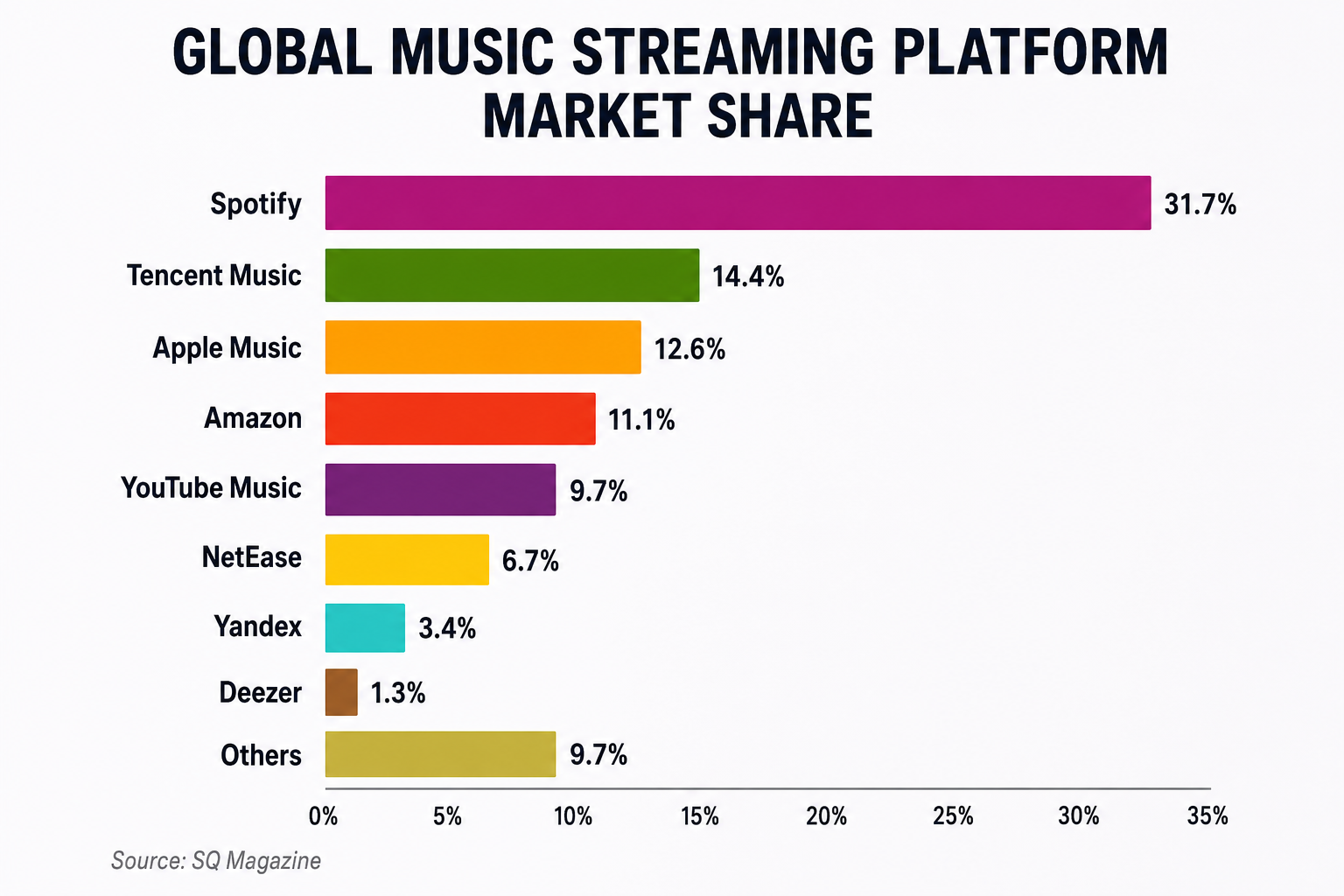
The global music streaming market is projected to surpass $100 billion by 2030, with Spotify remaining one of the leading platforms driving the industry's continued growth. Unlike companies such as Apple and Amazon, whose music services are integrated into broader technology ecosystems, Spotify's core business is centered on audio streaming and monetization. This has shaped a strategy built around three key pillars: ubiquity, personalization, and diversification. By making its service available across a wide range of devices and using data to create personalized listening experiences, Spotify has established a strong competitive position in the global audio market.
The Deep Dive: Mechanics of the Spotify Business Strategy
Spotify's business strategy is built around a model in which its Ad-Supported Service serves as both a standalone product and an important funnel for converting users into Premium subscribers. At the same time, the company continues to develop tools and services that create additional value for creators and advertisers. This layered approach helps Spotify manage the high content costs associated with the music-streaming industry.
1. The Freemium Conversion Engine
The core of Spotify's user-acquisition strategy is its Ad-Supported Service. In the first quarter of 2024, Spotify reported 388 million Ad-Supported MAUs, up 22 percent year over year. This segment provides users with free access supported primarily by advertising and also serves as an important channel for acquiring Premium subscribers.
Spotify states that new Premium subscribers are primarily sourced from the conversion of Ad-Supported Users. The company uses product links, targeted campaigns, and performance marketing to encourage existing users to upgrade to Premium. Trial programs also contribute to Premium subscriber growth.
The objective, therefore, is not simply to generate advertising revenue from free users. The Ad-Supported Service also expands Spotify's overall audience and creates opportunities to convert engaged users into paying subscribers. However, Spotify does not publicly disclose a single fixed Premium conversion rate or a specific churn advantage that would support claims of a consistently superior conversion or churn rate across the broader streaming industry.
In the context of broader market shifts, understanding the economic impact of consumer choices is vital. Just as The Strategic Value of Vacations: Global Industry Analysis highlights how discretionary spending influences global markets, Spotify's ability to capture consumers' leisure time remains an important component of its long-term business value.
2. Algorithmic Moats and AI Integration
Spotify does not simply host music; it also uses algorithms and machine learning to personalize the listening experience. Features such as Discover Weekly and AI DJ help users discover music and audio content tailored to their interests.
Spotify's competitive advantage comes partly from the large amount of listening behavior generated through its platform. The company uses this information to improve recommendations, personalization, and engagement. Its service is also designed to work across smartphones, desktops, cars, game consoles, and in-home devices. Spotify has reported that Premium subscribers who use the service across multiple devices tend to show higher engagement and lower churn, increasing their expected lifetime value to the company.
This personalization creates a meaningful user-experience advantage because Spotify can continually refine recommendations based on individual listening behavior. However, describing this as an absolute “high switching cost” should be treated as a strategic interpretation rather than a directly measured company metric.
This focus on technological leadership also parallels strategies seen in other sectors. For instance, the leadership approach discussed in the Sam Altman: Strategic Analysis of AI Leadership and ROI highlights how AI can become a fundamental layer of a technology company's product strategy rather than simply an additional feature.
3. The Two-Sided Marketplace
To expand its role beyond music distribution, Spotify has developed a range of tools that connect artists and labels with listeners. Through Spotify for Artists and Campaign Kit, the company offers promotional tools such as Marquee, Showcase, and Discovery Mode. Marquee and Showcase are sponsored promotional formats that allow eligible artists and teams to promote releases to relevant Spotify listeners. Discovery Mode allows artists and labels to identify priority songs, giving those tracks an additional signal within Spotify's recommendation algorithms. There is no upfront cost for Discovery Mode, but Spotify charges a commission on streams generated in Discovery Mode contexts.
Rather than describing this as a traditional “pay-to-play” system, it is more accurate to view it as an expansion of Spotify's artist-marketing ecosystem. These tools give creators additional ways to reach listeners while allowing Spotify to participate in the promotion and discovery process.
4. Content Diversification: Podcasts and Audiobooks
Spotify's expansion into podcasts and audiobooks has been a strategic effort to broaden the platform beyond music. Music licensing and royalty costs remain a major component of Spotify's cost structure, while podcasts and audiobooks provide additional forms of content and engagement. Spotify has invested in podcast content, technology, advertising, and creator tools, including the Spotify Audience Network, which helps advertisers reach podcast audiences across participating content.
Audiobooks have also become an increasingly important part of Spotify's Premium offering. In 2024, Spotify expanded audiobook access to additional markets and introduced an Audiobook Access Tier in the United States. The company has positioned audiobooks as another way to increase the value and breadth of its subscription offering.
What This Means For You
For the average consumer and the savvy investor, Spotify's strategy offers several actionable insights:
Personalization Value: Spotify uses listening behavior and engagement data to personalize recommendations and improve the overall user experience. The more a listener interacts with the platform, the more data Spotify can use to refine its recommendations.
Subscription Costs: Spotify periodically adjusts its pricing as its service and content offering evolve. Additional subscription plans and features may continue to develop as the company expands beyond music into podcasts, audiobooks, and other forms of audio and video content.
Creator Opportunities: For independent artists, Spotify increasingly provides data-driven and on-platform promotional tools such as Marquee, Showcase, and Discovery Mode. These tools give creators additional ways to reach relevant listeners, although they should not be characterized simply as a “pay-to-play” system.
Important Note: Financial Disclaimer: This content is for educational purposes only and does not constitute professional financial advice. Always consult with a certified financial planner before making investment decisions.





Comments 0
Leave a Reply
Your email address will not be published. Required fields are marked *
Be the first to share your thoughts!