
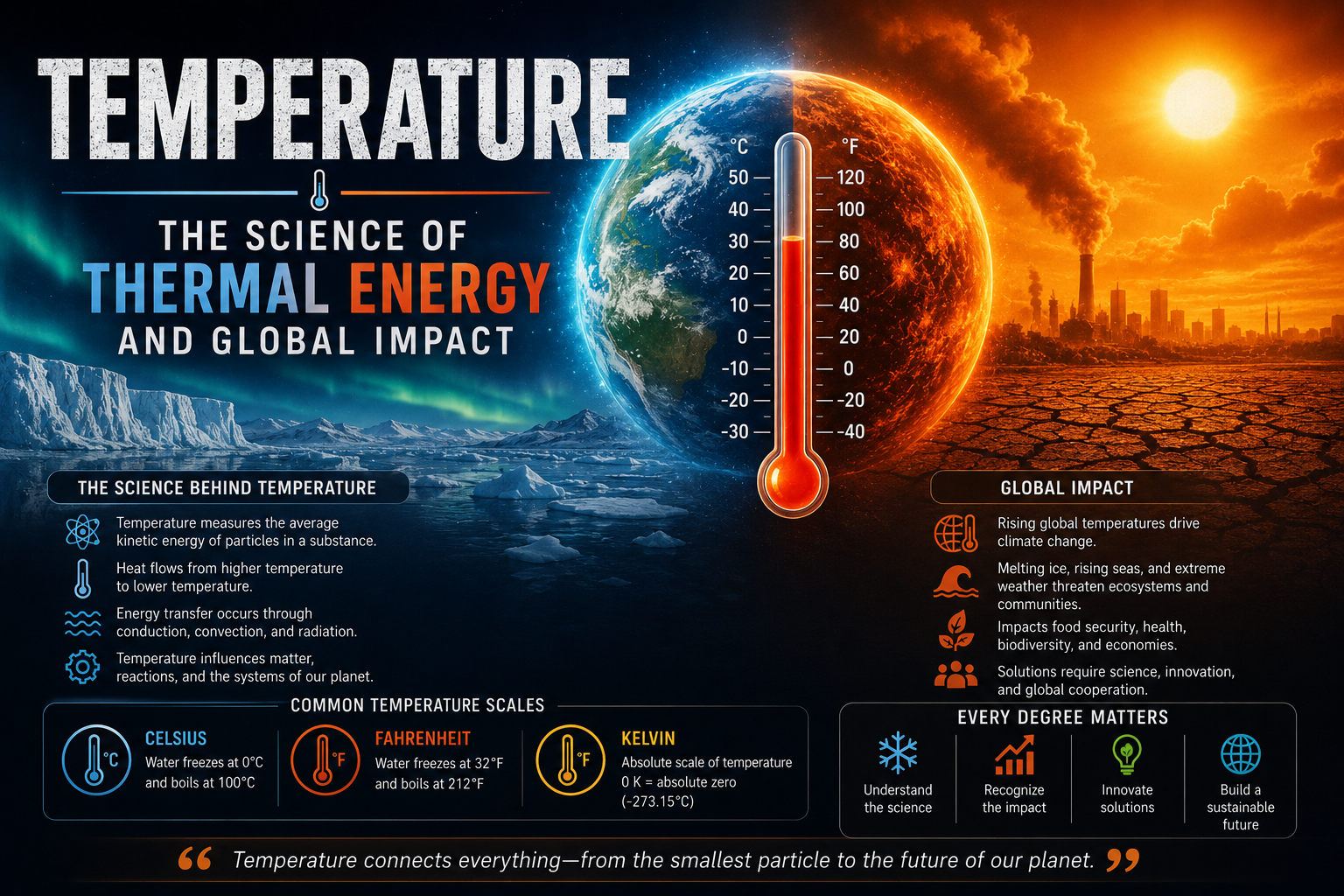
💡 Temperature: The Science of Thermal Energy and Global Impact
An authoritative analysis of temperature physics, its critical role in global climate systems, industrial precision, and human physiological limits.
Executive Summary
Temperature is a fundamental physical property that quantifies the average kinetic energy of particles within a system. Beyond basic weather reporting, temperature serves as the primary metric for industrial efficiency, biological survival, and planetary health. Key data highlights include the global average temperature increase of 1.1 degrees Celsius since the pre-industrial era, the critical threshold of 1.5 degrees Celsius set by the IPCC, and the shifting baseline of human body temperature from 37 degrees Celsius to approximately 36.6 degrees Celsius in modern populations. This report analyzes the mechanisms of thermal measurement, the macroeconomic impacts of temperature fluctuations, and the future of cryogenic and plasma technologies.
Introduction
Temperature dictates the state of matter, the rate of chemical reactions, and the viability of life itself. From the precision required in semiconductor manufacturing to the massive energy expenditures used to cool global data centers, thermal management is a multi-billion dollar industry. While often used interchangeably with heat, temperature is specifically a measurement of intensity rather than total energy. Understanding this distinction is vital for interpreting climate data, optimizing mechanical systems, and managing personal health. As we observe significant seasonal changes and temperature fluctuations across the globe, the ability to accurately measure and respond to thermal shifts has become a cornerstone of modern infrastructure.
The Deep Dive: Physics, Measurement, and Global Systems
The scientific understanding of temperature is governed by the laws of thermodynamics. The Zeroth Law of Thermodynamics establishes the concept of thermal equilibrium, which allows for the creation of thermometers. Today, the International Temperature Scale of 1990 (ITS-90) provides the framework for calibrating equipment used in everything from aerospace engineering to food safety.
Thermodynamic Scales and Absolute Zero
There are three primary scales used in the modern landscape: Celsius, Fahrenheit, and Kelvin. The Kelvin scale is the SI unit for thermodynamic temperature, starting at absolute zero (0 K), the point where all molecular motion ceases. Achieving temperatures near absolute zero is essential for quantum computing and superconductivity research. In contrast, the high-temperature frontier involves plasma physics, where temperatures exceed millions of degrees, mimicking the fusion processes found in stars.
The Macroeconomics of Temperature
Temperature has a direct correlation with global economic output. According to the International Labour Organization (ILO), heat stress is projected to reduce total working hours worldwide by 2.2 percent by the year 2030, a productivity loss equivalent to 80 million full-time jobs. This economic strain is particularly visible in emerging markets, where outdoor labor is prevalent. Investors monitoring Indian stock market trends frequently account for temperature-driven volatility in energy and agricultural commodities, as extreme heat spikes demand for electricity and threatens crop yields.
Biological Impact and Human Thermoregulation
The human body operates within a narrow thermal window. Thermoregulation is the process by which the hypothalamus maintains a core temperature of roughly 37 degrees Celsius. However, recent longitudinal studies suggest that the average human body temperature has been declining by 0.03 degrees Celsius per birth decade since the Industrial Revolution. When the environment exceeds the body's ability to shed heat, hyperthermia occurs, leading to organ failure. Conversely, extreme cold triggers a physiological response designed to protect vital organs, a concept often explored in the atmospheric tension of survival horror mechanics and psychological thrillers.
Industrial Heat Management
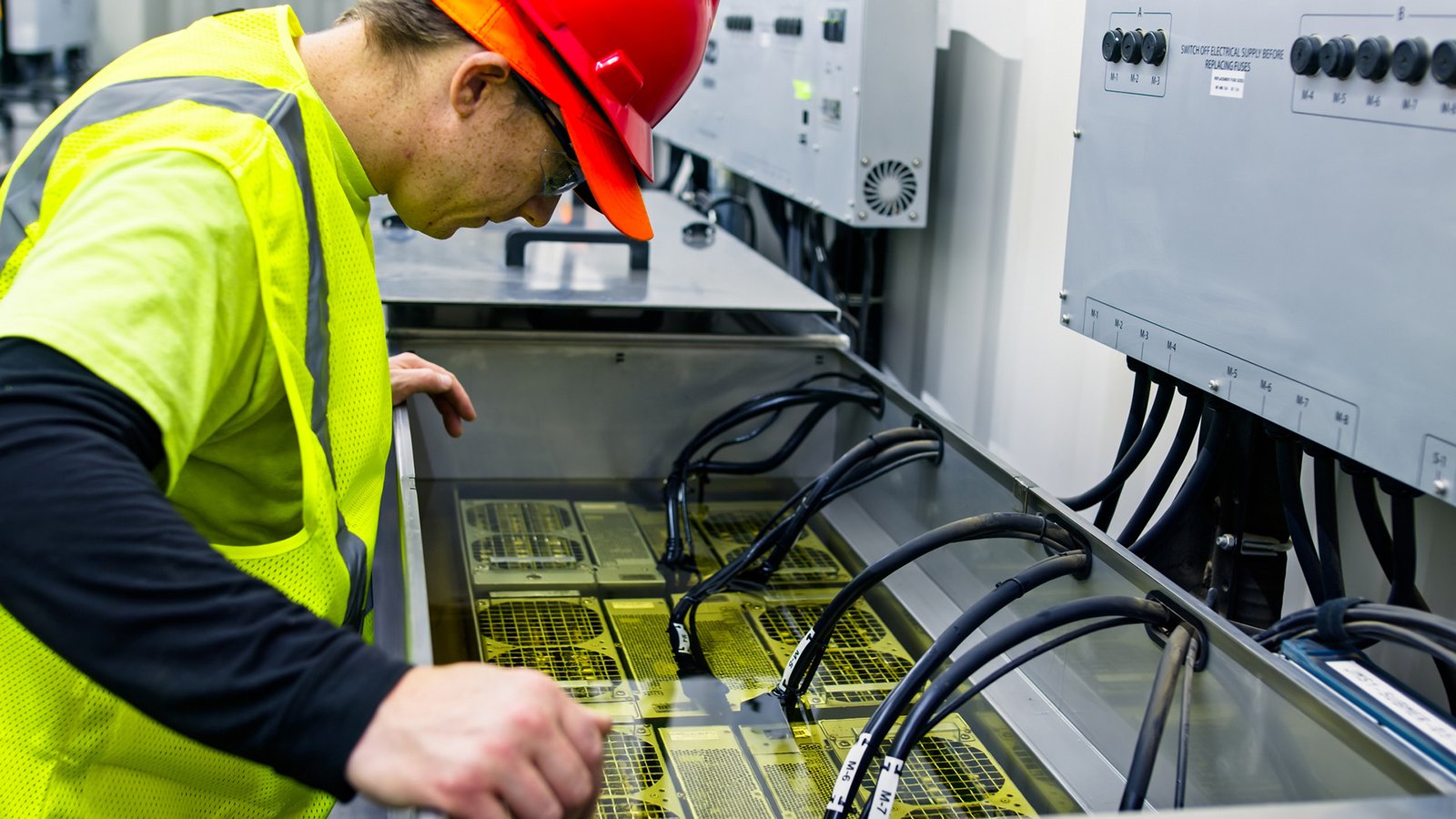
In the technology sector, temperature control is the single largest operational expense. Data centers, which power the modern internet, consume approximately 200 terawatt-hours (TWh) of electricity annually. Nearly 40 percent of this energy is dedicated to cooling systems to prevent hardware degradation. Advanced immersion cooling and liquid-to-chip technologies are currently being deployed to manage the thermal output of high-density AI processing units.

What This Means For You
For the individual, temperature management translates to health, safety, and financial efficiency. Understanding how to optimize home insulation and HVAC systems can reduce annual energy costs by up to 15 percent. Furthermore, recognizing the signs of heat exhaustion and hypothermia is a critical skill as global weather patterns become more volatile. On a professional level, those in manufacturing or logistics must adhere to strict thermal protocols, such as the cold chain requirements for pharmaceuticals, where a deviation of even two degrees can render vaccines ineffective.
Expert Verdict and Future Outlook
The future of temperature technology lies in precision and sustainability. We are seeing a shift toward solid-state cooling (Peltier effect) which eliminates the need for harmful refrigerants. Additionally, the development of smart materials that change their thermal conductivity based on ambient temperature will revolutionize the construction and apparel industries. From a climate perspective, the focus remains on the 1.5 degrees Celsius limit. Exceeding this threshold increases the risk of triggering climate tipping points, such as the thawing of permafrost, which would release massive amounts of methane, further accelerating thermal gain. The integration of AI in climate modeling is providing more accurate 10-year thermal projections, allowing cities to implement better urban heat island mitigation strategies.

FAQ
- What is the difference between heat and temperature? Temperature measures the average kinetic energy of molecules in a substance, while heat refers to the total energy transferred between systems due to a temperature difference.
- Why is the 1.5 degree Celsius climate target so important? Scientific consensus indicates that warming beyond 1.5 degrees Celsius will lead to irreversible damage to ecosystems, including the total loss of coral reefs and significant sea-level rise.
- How does temperature affect battery performance? Lithium-ion batteries experience reduced ion mobility in cold temperatures, leading to lower capacity, while excessive heat accelerates chemical degradation and poses a fire risk.
- What is the triple point of water? The triple point is the unique temperature (0.01 degrees Celsius) and pressure at which water exists simultaneously as a gas, liquid, and solid in equilibrium.
- Can humans adapt to higher global temperatures? While humans have physiological adaptation mechanisms like sweating, there is a limit known as the wet-bulb temperature (35 degrees Celsius at 100 percent humidity) beyond which the body can no longer cool itself, leading to death.
Conclusion
Temperature is not merely a number on a display; it is a critical variable that governs the physical world and the global economy. As we move toward an era defined by thermal extremes, the importance of precision measurement, efficient cooling infrastructure, and climate mitigation cannot be overstated. Success in the next decade will be defined by how well industries and individuals adapt to the shifting thermal landscape through technological innovation and strategic resource management.





Comments 0
Leave a Reply
Your email address will not be published. Required fields are marked *
Be the first to share your thoughts!