
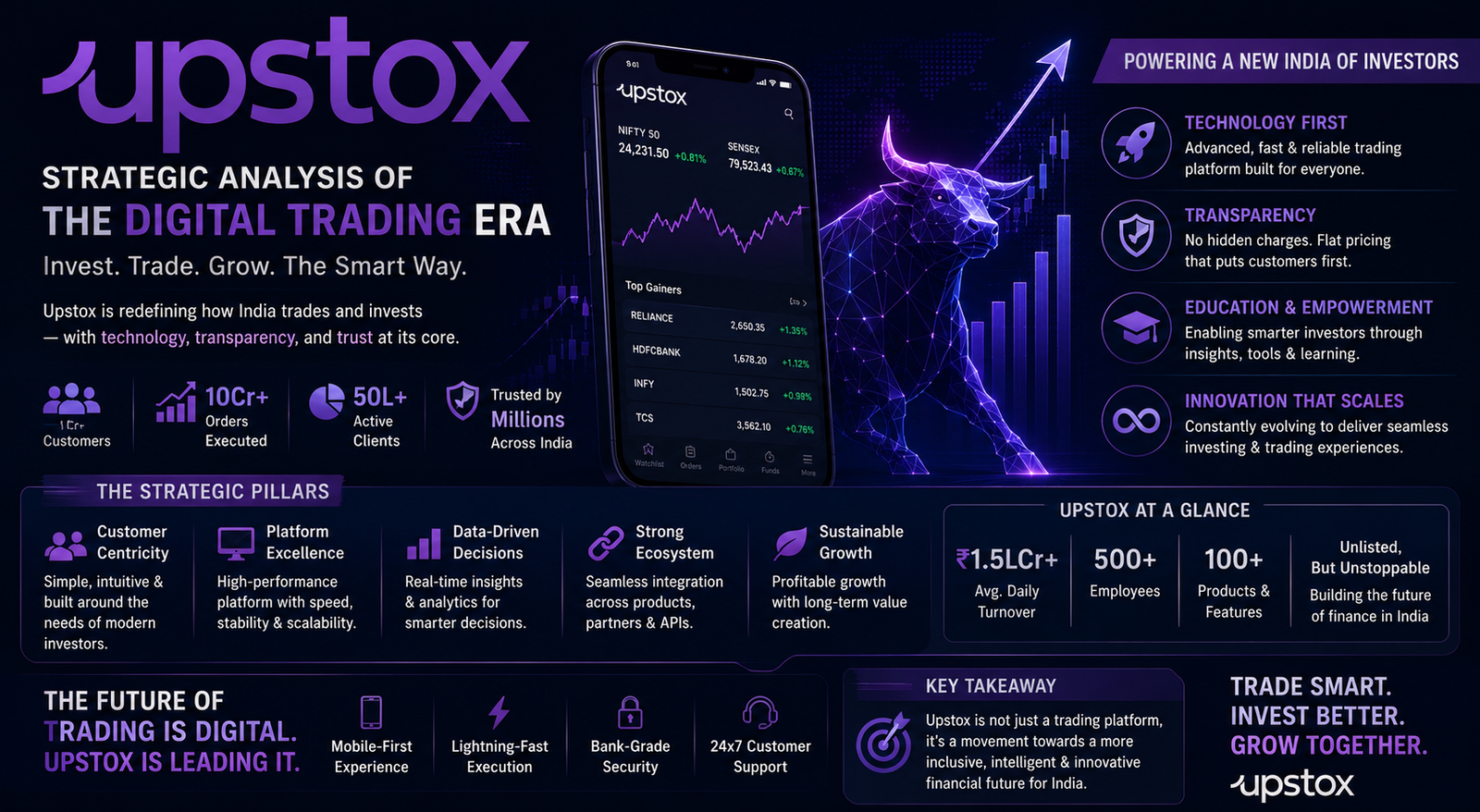
💡 Upstox: Strategic Analysis of the Digital Trading Era
A comprehensive industry analysis of Upstox, exploring its market growth, technological infrastructure, and impact on the Indian retail investment landscape.
Executive Summary
Upstox, operating under the corporate identity of RKSV Securities, has established itself as a cornerstone of the Indian fintech ecosystem. With a valuation exceeding 3.4 billion dollars following its Series C funding round, the platform serves over 12 million registered users. Key findings indicate that Upstox has successfully leveraged a mobile-first strategy to capture a significant share of the Tier 2 and Tier 3 market segments. This analysis highlights the company's transition from a pure-play discount broker to a comprehensive wealth management platform, bolstered by institutional backing from Tiger Global and Ratan Tata. Data suggests that while the platform maintains a strong active user base of approximately 2.5 million on the National Stock Exchange (NSE), its strategic focus is shifting toward long-term wealth products to counter the volatility of retail intraday trading volumes.
Introduction
The landscape of Indian capital markets has undergone a radical transformation over the last decade. Historically, retail participation was hampered by high brokerage fees, complex paperwork, and a lack of transparent information. The arrival of discount brokerages like Upstox fundamentally altered this trajectory. Founded by Ravi Kumar, Shrinivas Viswanath, and Kavitha Subramanian, Upstox was built on the premise that technology could democratize access to financial markets. By removing the traditional barriers to entry, the platform has played a pivotal role in the surge of demat account openings, which crossed the 150 million mark in India by mid-2024. This analysis examines the strategic pillars that support the growth of Upstox and its positioning against both traditional incumbents and modern fintech rivals.
The Deep Dive: Strategic Pillars and Market Dynamics
The success of Upstox is not accidental; it is the result of a deliberate focus on three core areas: technological scalability, cost leadership, and aggressive brand positioning. Unlike traditional brokers that rely on a network of sub-brokers and physical branches, Upstox operates a lean, centralized digital model. This allows for a significantly lower Customer Acquisition Cost (CAC) compared to legacy firms.
Technological Infrastructure and API Integration
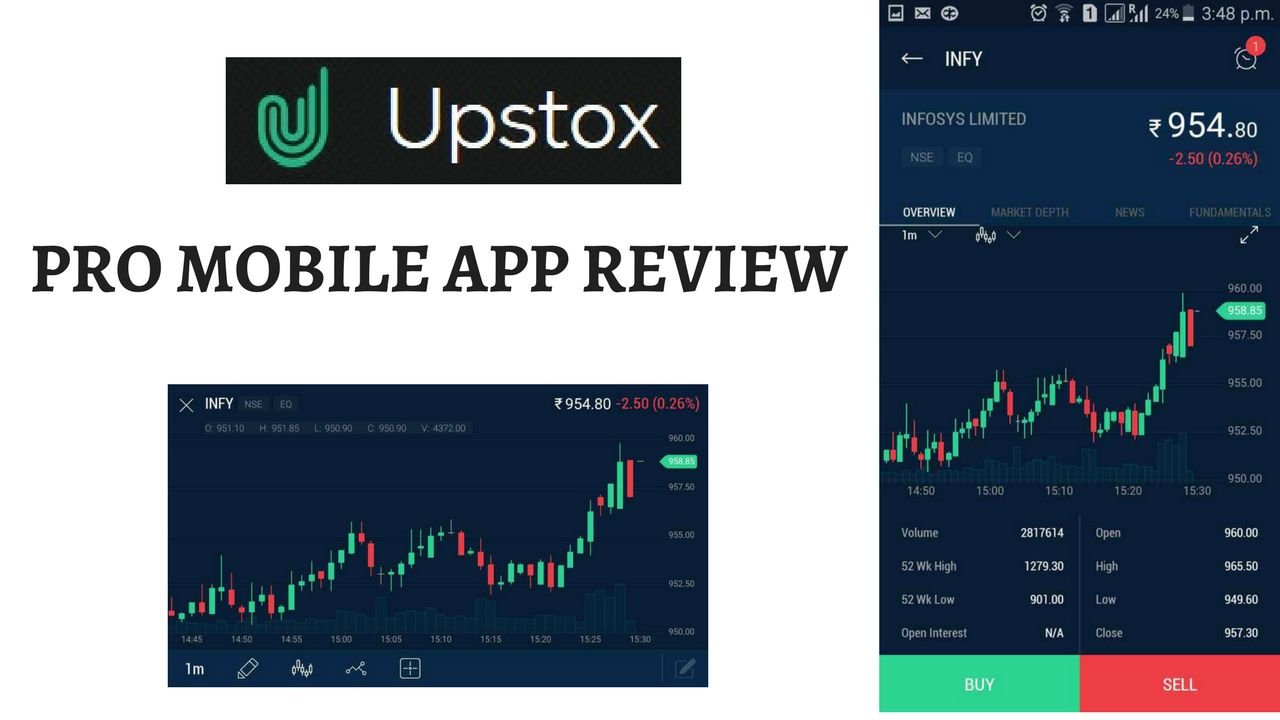
At the heart of the Upstox value proposition is its proprietary trading engine. The platform handles millions of orders daily with low latency, a critical requirement for high-frequency traders. The Upstox Pro platform provides advanced charting tools, including over 100 indicators and multiple chart types. Furthermore, the company has opened its ecosystem through the Upstox For Developers API. This allows third-party developers and algorithmic traders to build custom applications on top of the Upstox infrastructure. This openness mirrors the broader trend of digital transparency seen in other sectors, such as the media industry detailed in our Indian Express: Strategic Analysis of Media Influence, where platform accessibility dictates market reach.
Funding and Valuation Metrics
Upstox has secured substantial capital to fuel its expansion. Its Series C round, led by Tiger Global, propelled the company into the unicorn club. The involvement of Ratan Tata provided not just capital but a layer of institutional credibility that is rare in the startup world. This credibility is essential in a sector where trust is the primary currency. The company's revenue model primarily relies on a flat fee of 20 rupees per trade for intraday, F&O, currencies, and commodities, while equity delivery remains free. This transparent pricing structure has forced traditional brokers to revise their own fee schedules to remain competitive.
Regulatory Compliance and Onboarding
One of the most significant hurdles for any fintech firm in India is the regulatory framework governed by the Securities and Exchange Board of India (SEBI). Upstox has invested heavily in automated KYC (Know Your Customer) processes to ensure rapid onboarding. The integration with Aadhaar-based e-KYC has reduced the account opening time from days to minutes. This focus on digital identity and verification is a cornerstone of modern Indian governance, similar to the processes analyzed in the PM Kisan KYC: Strategic Analysis of Direct Benefit Transfer, where digital verification is used to streamline service delivery to millions of citizens.
Market Competition and Differentiation
While Upstox enjoys a massive user base, it faces stiff competition from Zerodha and Groww. Zerodha remains the leader in terms of profitability and active client numbers, while Groww has seen rapid growth among first-time investors. Upstox differentiates itself by targeting the serious trader segment with superior tools while simultaneously offering a simplified interface for casual investors. The strategic influence of these platforms extends beyond finance, impacting how economic narratives are formed, much like the broader strategic influences discussed in the Steve Hilton: Strategic Analysis of Political Influence regarding how information flow shapes public perception.

What This Means For You
For the individual investor, the rise of Upstox represents a shift in power. You now have access to institutional-grade tools at a fraction of the historical cost. However, this ease of access comes with the responsibility of financial literacy. The platform provides educational resources, but the risk of capital loss in volatile markets remains a personal burden. If you are a long-term investor, the zero-brokerage model for delivery is a significant advantage for compounding wealth. For active traders, the focus should be on utilizing the advanced charting and API features to manage risk effectively.
Expert Verdict / Future Outlook
The future of Upstox lies in its ability to transition from a transaction-based broker to a holistic wealth management partner. We expect to see deeper integration of Artificial Intelligence to provide personalized investment insights and automated portfolio rebalancing. As the Indian retail market matures, the focus will shift from sheer user acquisition to increasing the Average Revenue Per User (ARPU). Upstox is well-positioned to lead this change, provided it continues to innovate in the face of evolving SEBI regulations regarding margin requirements and algorithmic trading. The long-term outlook remains bullish as financialization of savings in India continues to accelerate.
FAQ
- Is Upstox a safe platform for long-term investing? Yes, Upstox is a SEBI-registered broker and a member of the NSE, BSE, and MCX. Your securities are held in a demat account with CDSL or NSDL, which are independent depositories, ensuring your assets remain safe even if the broker faces issues.
- What are the hidden charges in Upstox? Upstox is transparent about its fees. While brokerage is flat, users must pay statutory charges such as STT (Securities Transaction Tax), GST, SEBI turnover fees, and stamp duty, which are mandated by the government.
- How does Upstox make money if delivery is free? The company generates revenue through intraday and F&O trading fees, interest on margin trade funding, and distribution commissions from mutual funds and IPOs.
- Can I trade on Upstox without a bank account? No, a linked bank account is mandatory for transferring funds to and from your trading account. The bank account must be in the name of the demat account holder.
- What is the Upstox Pro platform? Upstox Pro is the advanced version of their trading application designed for professional traders, offering comprehensive technical analysis tools, high-speed execution, and customizable workspaces.
Conclusion
Upstox stands as a testament to the power of technological disruption in the financial sector. By prioritizing user experience and cost efficiency, it has successfully challenged the status quo and brought millions of Indians into the formal economy. The strategic takeaway for the industry is clear: in a digital-first world, the winners are those who can provide professional-grade functionality with consumer-grade simplicity. As the platform continues to expand its product suite into insurance and fixed income, it is set to remain a dominant force in the quest for financial inclusion and wealth creation in India.
Important Note: Financial Disclaimer: This content is for educational purposes only and does not constitute professional financial advice. Always consult with a certified financial planner before making investment decisions.





Comments 0
Leave a Reply
Your email address will not be published. Required fields are marked *
Be the first to share your thoughts!