
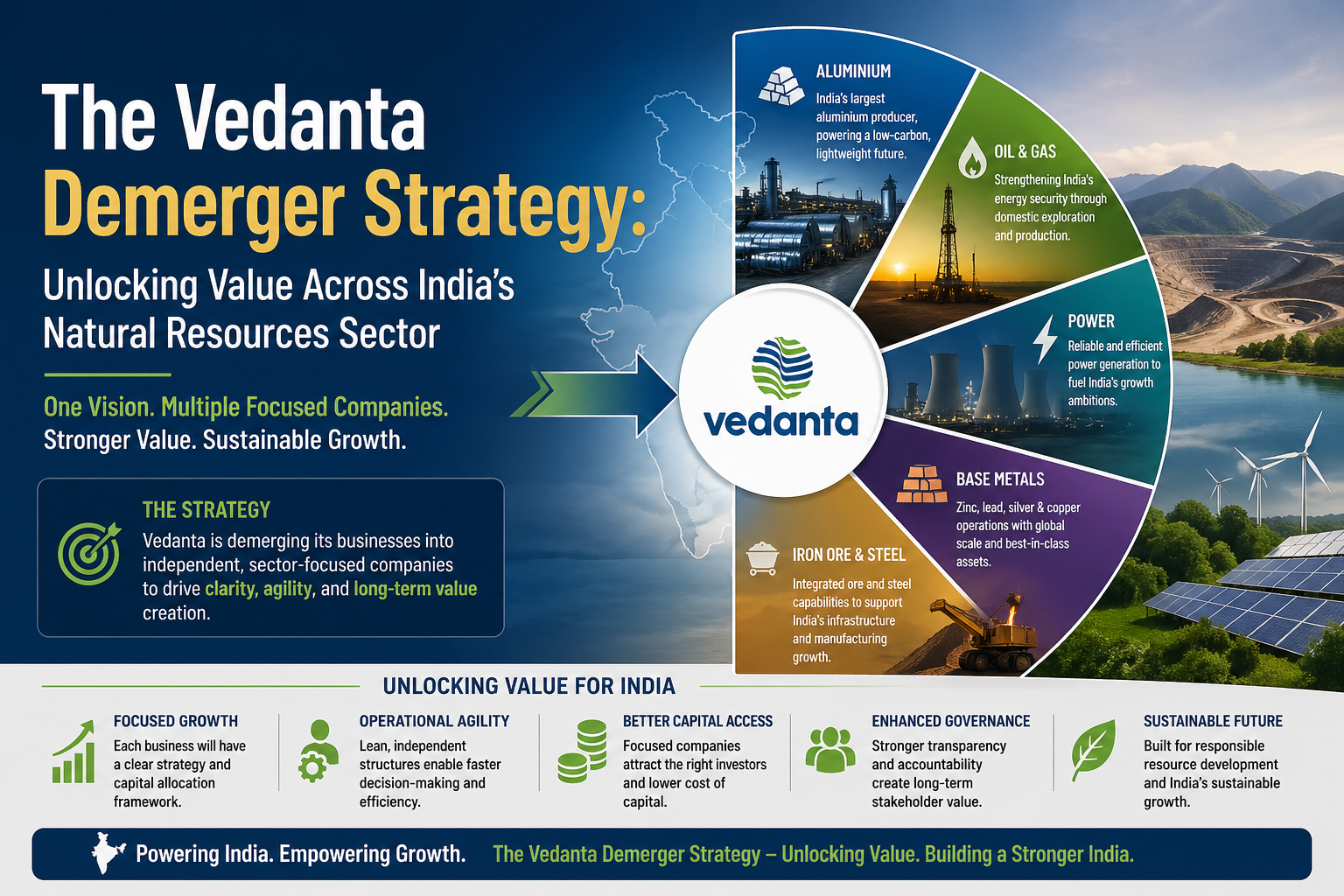
💡 The Vedanta Demerger Strategy: Unlocking Value Across India’s Natural Resources Sector
A comprehensive guide to understanding Vedanta's 1-to-6 demerger, its impact on shareholders, and the strategic shift toward pure-play natural resource entities.
The Vedanta demerger is a large-scale corporate restructuring where the parent company, Vedanta Limited, is splitting its diversified businesses into six separate, publicly traded companies. For every one share an investor holds in Vedanta Limited, they will receive one additional share in each of the five newly created entities. This strategy aims to eliminate the 'conglomerate discount' by allowing each business—ranging from Aluminum to Oil & Gas—to operate independently, attract its own capital, and be valued by the market based on its specific sector performance.
Navigating the Transformation of a Diversified Conglomerate
For decades, Vedanta has operated as a massive umbrella for various natural resource businesses. While this diversification provided a cushion during market volatility, it often led to a complex corporate structure that was difficult for investors to value accurately. Investors interested in the high-growth aluminum sector, for instance, were forced to take on exposure to the more mature power or oil businesses. The demerger is a pivot toward specialization, transforming a single giant into a fleet of agile, focused companies.
Deconstructing the 1-to-6 Split: How the New Corporate Structure Functions
The restructuring is designed as a vertical split. Once the process is complete, the existing Vedanta Limited will remain listed, but five of its core components will be carved out into independent companies. This is not a share split in the traditional sense where the price is simply divided; it is a distribution of ownership across different industries.
Under this arrangement, if you own 100 shares of Vedanta Ltd, you will eventually own:
- 100 shares of Vedanta Limited (holding the Zinc business and other assets)
- 100 shares of Vedanta Aluminum
- 100 shares of Vedanta Oil & Gas
- 100 shares of Vedanta Power
- 100 shares of Vedanta Steel and Ferrous Materials
- 100 shares of Vedanta Base Metals
Profiling the Six Pure-Play Entities: From Aluminum to Oil & Gas
Each of the six entities will cater to a specific market segment, allowing investors to choose their exposure based on their risk appetite and sector outlook.
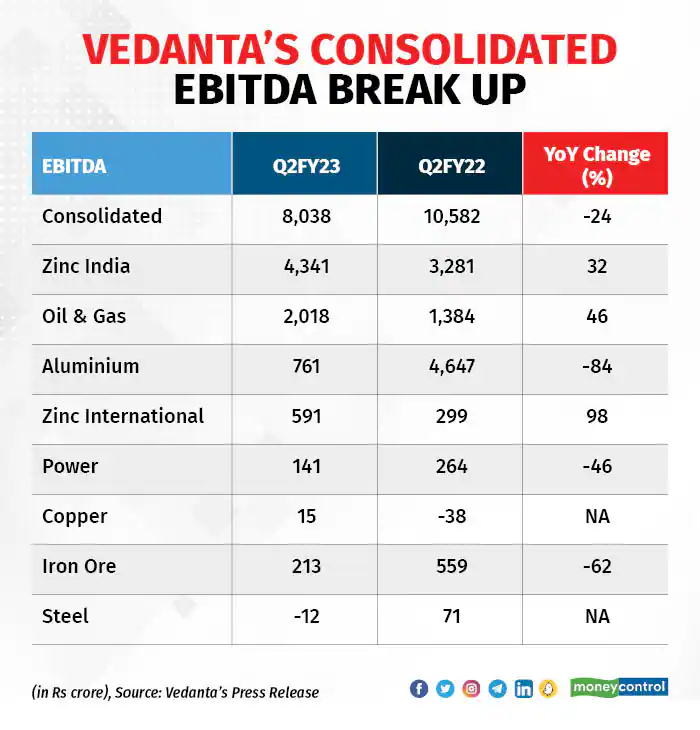
- Vedanta Aluminum: This entity will house the largest aluminum production capacity in India. It is positioned to capitalize on the growing demand in the automotive and construction sectors.
- Vedanta Oil & Gas: Operating primarily through Cairn India, this business focuses on domestic oil exploration and production, contributing significantly to India’s energy security.
- Vedanta Power: This segment handles a large portfolio of thermal and renewable energy assets, aimed at meeting the rising industrial power demand.
- Vedanta Steel and Ferrous Materials: This includes iron ore mining and steel production facilities, essential for India's infrastructure push.
- Vedanta Base Metals: Focused on copper and zinc international operations, this entity addresses the global demand for metals required in the green energy transition.
- Vedanta Limited: The remaining core company will continue to hold the majority stake in Hindustan Zinc and other incubating businesses like semiconductors and display glass.
The Strategic Rationale: Debt Management and Unlocking Shareholder Value
The primary driver behind this move is the need for efficient capital allocation. When all businesses are under one roof, the cash flow from a profitable segment like Zinc might be diverted to service debt in a less profitable segment. By separating them, each company can manage its own balance sheet.
Furthermore, the parent company, Vedanta Resources (UK), has faced significant debt repayment obligations. A demerged structure allows for better transparency and potentially higher valuations for individual units, making it easier to raise funds or divest stakes in specific businesses to pay down debt without affecting the entire group.
Investor Impact: Understanding Share Allocation and Tax Implications
For retail investors, the demerger is generally a tax-neutral event at the time of the share allotment, provided the transaction meets the requirements of the Indian Income Tax Act. However, the 'cost of acquisition' for your original Vedanta shares will be split among the six new companies based on their net book value at the time of the demerger.

Practical Example: If you bought Vedanta shares at ₹300, after the demerger, that ₹300 cost will be distributed. For instance, Aluminum might be assigned ₹100 of that cost, Oil & Gas ₹50, and so on. This becomes crucial when you eventually decide to sell individual shares, as it determines your capital gains tax.
Potential Headwinds: Regulatory Approvals and Market Volatility
While the strategy looks sound on paper, it faces several hurdles:
- Lender Approvals: Vedanta needs the green light from its banks and bondholders. Lenders are often wary of demergers because the collateral (the company's assets) is being split up.
- Regulatory Clearances: Approvals from the National Company Law Tribunal (NCLT) and SEBI are mandatory and can be time-consuming.
- Commodity Cycles: Since all six entities are in the natural resources sector, they remain highly sensitive to global commodity prices. A downturn in aluminum or oil prices could affect the listing gains of the new entities.
Frequently Asked Questions Regarding the Vedanta Restructuring
1. Do I need to do anything to receive the new shares?
No. If you hold Vedanta shares in your demat account on the record date (which will be announced after all approvals), the new shares will be automatically credited to your account.
2. Will the dividend yield remain the same?
Vedanta has been known for high dividends. Post-demerger, the dividend capacity will depend on the individual profits of each of the six companies. While the total dividend might remain high, it will now come from six different sources.
3. How long will the entire process take?
Demergers in India typically take 12 to 18 months from the date of announcement due to the multiple layers of legal and regulatory approvals required.
4. Is this good for long-term investors?
Generally, demergers are viewed positively for long-term value creation as they allow for better management focus and market-driven valuations. However, investors should monitor the debt levels of each individual entity post-split.
Conclusion: The Future Outlook for the Vedanta Group
The Vedanta demerger is a bold attempt to re-engineer one of India’s largest conglomerates. By moving away from a unified structure to a pure-play model, the group is betting that the sum of its parts is worth significantly more than the whole. For the Indian market, this creates six distinct investment opportunities, allowing for more granular portfolio management. While debt concerns and regulatory timelines remain, the structural shift provides a clearer roadmap for growth in India’s vital natural resources sector.
Important Note: Financial Disclaimer: This content is for educational purposes only and does not constitute professional financial advice. Always consult with a certified financial planner before making investment decisions.





Comments 0
Leave a Reply
Your email address will not be published. Required fields are marked *
Be the first to share your thoughts!