
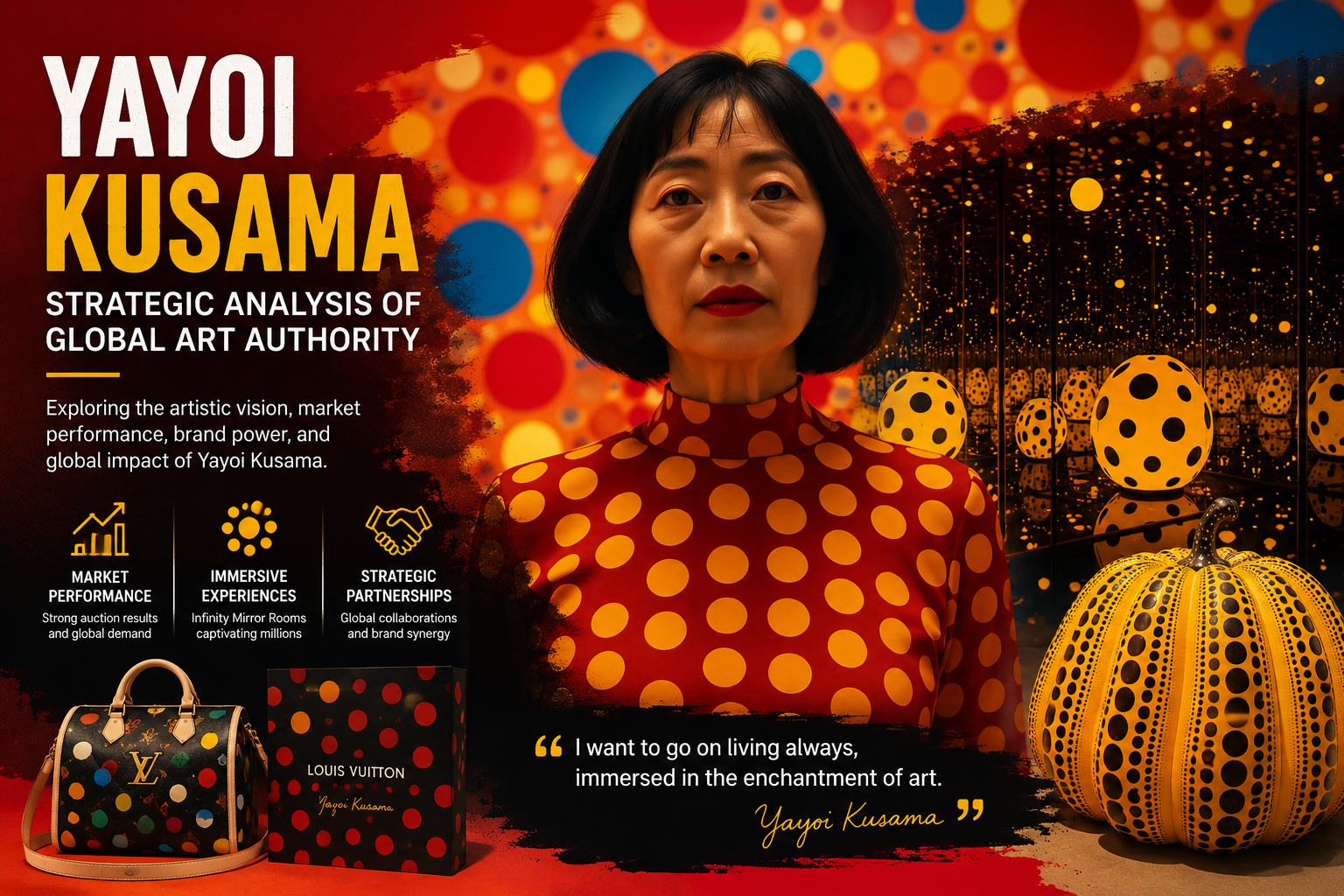
💡 Yayoi Kusama: Strategic Analysis of Global Art Authority
A comprehensive strategic analysis of Yayoi Kusama's impact on the global art market, her brand authority, and the economics of the experience economy.
Executive Summary
Yayoi Kusama was one of the most commercially successful and culturally influential female artists of the modern era, building a global artistic identity through decades of consistent creative production, distinctive visual language, immersive experiences, and strategic collaborations. Her long-term authority was driven by three major forces: the scarcity and high valuation of important works, the global appeal of her immersive installations, and collaborations that extended her visual identity beyond the traditional art world. Her auction market reached a major milestone in 2022, when Untitled (Nets) (1959) sold for $10.496 million at Phillips, establishing a new auction record for the artist at the time.
Kusama's Infinity Mirror Rooms also demonstrated the commercial and cultural power of the experience economy. Her exhibitions attracted large audiences and generated significant social-media engagement, helping transform immersive art into a globally recognizable cultural experience. Her passing on August 14, 2026, at the age of 97 marks the beginning of a new phase in her story—one centered on legacy, institutional recognition, market demand, and the long-term stewardship of her artistic estate.
Introduction
The global art market is often characterized by volatility, yet Yayoi Kusama built an unusually durable position within contemporary art through a combination of artistic consistency, cultural visibility, and commercial adaptability. Born in 1929 in Matsumoto, Japan, Kusama developed her distinctive artistic language through paintings, sculptures, installations, performances, literature, and immersive environments. She moved to the United States in the late 1950s and became an important figure in New York's avant-garde scene before returning to Japan in the 1970s.
Her decision to maintain a highly recognizable visual vocabulary—particularly polka dots, nets, pumpkins, repetition, mirrors, and infinity—helped create an identity that could be recognized across museums, galleries, public installations, fashion, and popular culture. Rather than allowing her work to remain confined to traditional art institutions, Kusama successfully connected contemporary art with mass audiences and the emerging experience economy.
Her artistic journey ultimately became part of her brand authority: a combination of personal narrative, visual consistency, institutional recognition, and global accessibility that allowed her work to remain relevant across multiple generations.
The Deep Dive: Market Performance and Brand Synergy
To understand Kusama's market position, it is important to look at both the financial performance of her works and the cultural demand surrounding them. Her most important early works have achieved multimillion-dollar auction results, demonstrating strong demand for historically significant pieces. In 2022, her 1959 painting Untitled (Nets) sold for $10.496 million at Phillips, establishing an auction record for Kusama at the time.
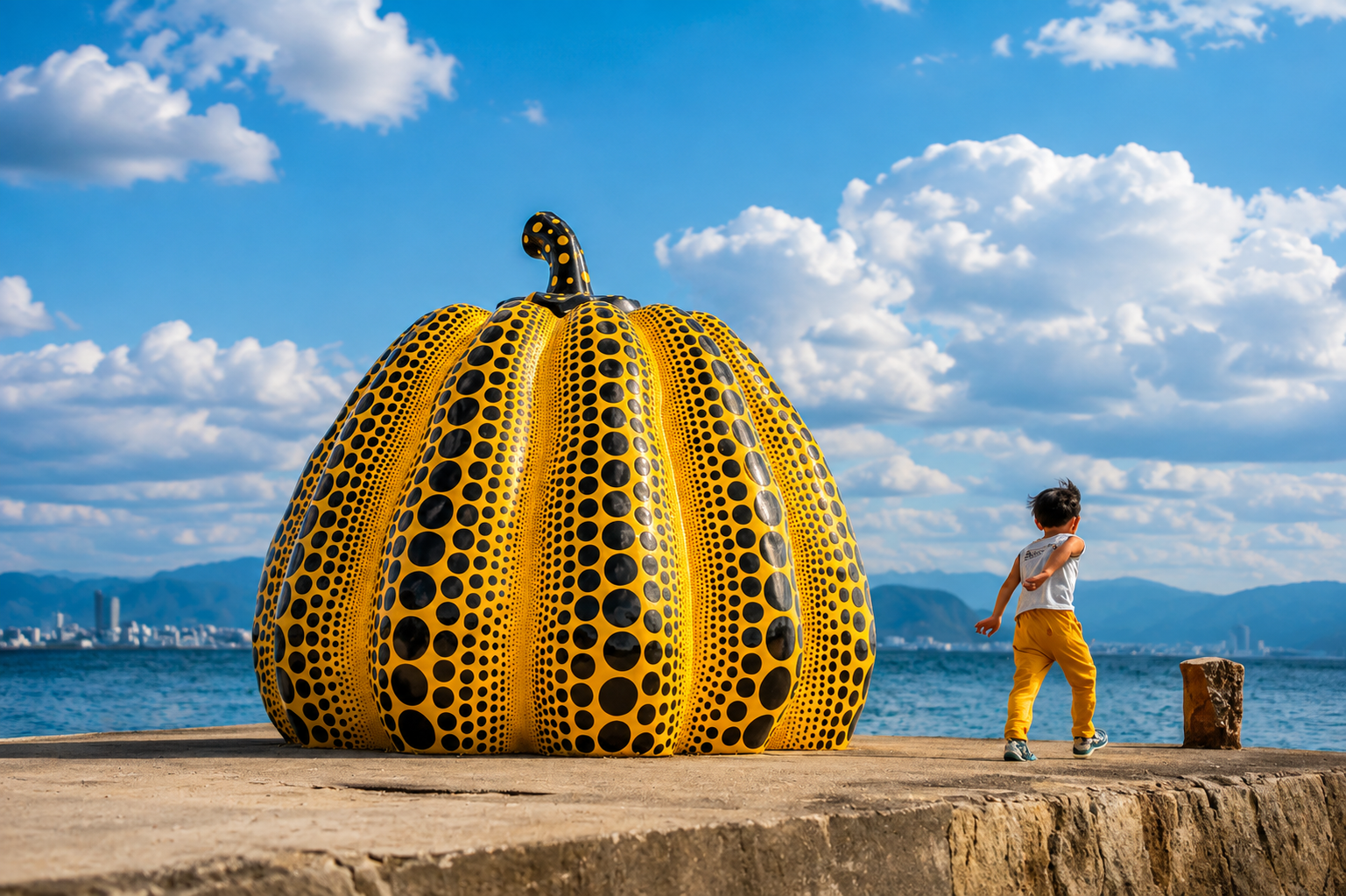
This market strength is not limited to paintings. Kusama's pumpkins, sculptures, installations, and Infinity Mirror Rooms have become among the most recognizable elements of her artistic identity. The repetition of these motifs across decades created a powerful form of visual continuity, allowing collectors and audiences to immediately associate specific forms, patterns, and colors with the Kusama name.
Her gallery relationships, including representation by major international galleries such as David Zwirner and Victoria Miro, have also supported the global presentation and distribution of her work. Rather than relying only on scarcity, Kusama's market authority has been reinforced by institutional exhibitions, collector demand, museum acquisitions, and sustained public visibility.
The Experience Economy
The rise of the experience economy has been particularly important to Kusama's global reach. Her Infinity Mirror Rooms transform artwork from something audiences simply observe into something they physically experience. This model naturally encourages photography, social sharing, and word-of-mouth promotion.
The 2017 Yayoi Kusama: Infinity Mirrors exhibition at the Smithsonian's Hirshhorn Museum illustrates this effect. Nearly 160,000 people visited the exhibition, while the museum and sculpture garden recorded a record 475,000 visitors during the same period. The exhibition's hashtag also reached approximately 93 million Twitter and Instagram accounts and generated 355 million impressions.
This creates a powerful marketing cycle: immersive experiences generate emotional engagement; visitors share those experiences digitally; social visibility increases cultural relevance; and increased cultural relevance drives further demand for exhibitions, merchandise, collaborations, and artworks.
Corporate Brand Synergy
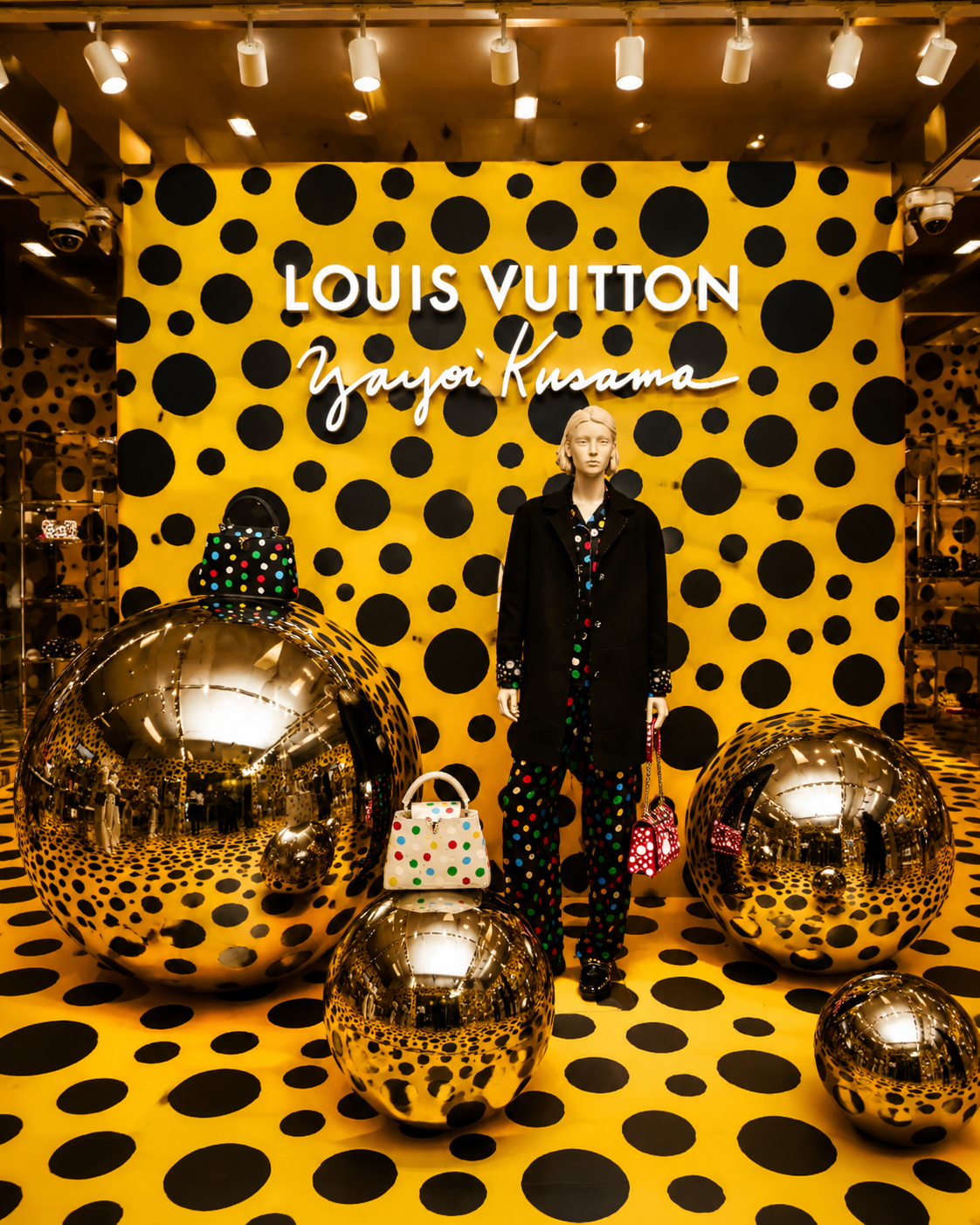
Kusama's collaborations with global luxury brands further demonstrate her ability to extend artistic authority into commercial culture. Her collaboration with Louis Vuitton, particularly the major 2023 collection, brought her signature dots, pumpkins, and visual motifs into luxury fashion and retail.
The strategic importance of such collaborations goes beyond product sales. They introduce an artist's visual language to audiences who may never visit a contemporary art gallery while simultaneously reinforcing the artist's cultural status. In Kusama's case, the collaboration demonstrated how a highly recognizable artistic identity can operate across museums, galleries, fashion, retail, digital media, and popular culture.
The Psychological Framework and Artistic Consistency
A major component of Kusama's artistic identity was her long-running exploration of repetition, infinity, self-obliteration, and the relationship between the individual and the universe. Her personal experiences and hallucinations influenced the development of these themes, which subsequently became central elements of her artistic narrative.
From a brand-strategy perspective, the consistency of this visual and conceptual language is particularly significant. Polka dots, infinity nets, pumpkins, mirrored environments, and repetitive patterns became instantly recognizable identifiers of the Kusama brand.
In contemporary art, where visual trends can change rapidly, maintaining a recognizable artistic language for decades can create substantial long-term value. Kusama demonstrated that consistency does not necessarily require stagnation; instead, the same core visual vocabulary can be continuously reinterpreted through new materials, technologies, exhibitions, collaborations, and cultural contexts.
Her career therefore provides an important example of how artistic consistency + innovation + cultural accessibility can produce long-term global authority.
Important 2026 Update
Yayoi Kusama died in Tokyo on August 14, 2026, at the age of 97. Reports noted that she remained creatively active until her final days. Her death changes the market context of this analysis: the focus is now shifting from her continued production toward her artistic legacy, institutional exhibitions, estate management, and the long-term significance of her existing body of work
The logistical management of her studio, the Kusama Enterprise, also warrants analysis.
The studio operates with a high degree of precision, overseeing the production of large-scale installations and managing her intellectual property. This organizational structure has allowed her artistic practice to scale internationally while maintaining consistency in the perceived value of her work. The ability to produce both high-value paintings and accessible museum merchandise demonstrates a sophisticated understanding of market segmentation.
What This Means For You
For the modern observer or investor, Yayoi Kusama represents more than just an artistic icon. She is a case study in long-term brand building and market resilience. For collectors, her strong auction history and institutional recognition make her work an important area of the contemporary art market, although individual artworks can vary significantly in value and art remains a market-dependent, illiquid asset. For those in the marketing and branding sectors, her career illustrates the power of a consistent visual language and the importance of adapting to new mediums of distribution, such as social media and immersive technology. Understanding her trajectory helps in identifying other cultural assets that possess the same combination of historical significance and modern adaptability.
Expert Verdict and Future Outlook
The outlook for Yayoi Kusama's market remains significant. Following her death in August 2026 at the age of 97, the focus has shifted toward her legacy and the long-term management of her estate. Her early works from the 1950s and 1960s are likely to remain particularly important to collectors because of their historical significance and relative scarcity. Furthermore, the continued presentation of her work in museums and public spaces, particularly across Asia and other international markets, is expected to maintain her cultural influence for future generations.
FAQ
Why are Yayoi Kusama's pumpkins so expensive?
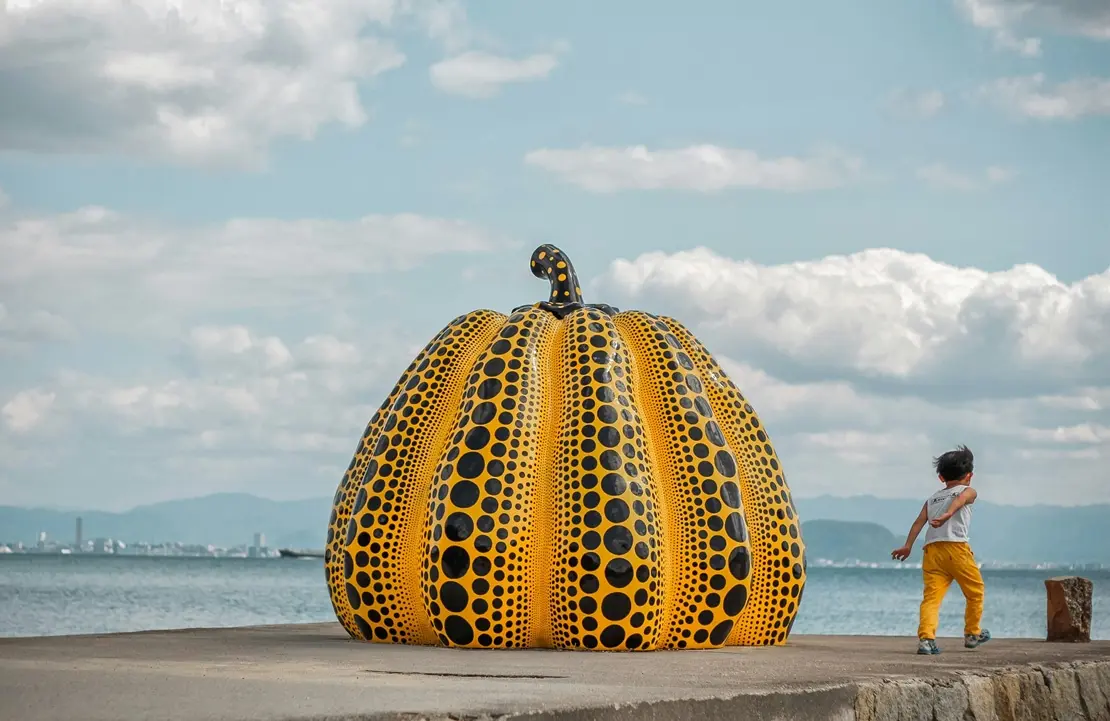
The pumpkins are considered one of the most iconic representations of Kusama's style. Their high prices reflect their recognizable cultural status, rarity, historical significance, and strong demand among collectors. However, they should not automatically be considered stable investments, as art values can fluctuate.
How many Infinity Mirrored Rooms exist?
Kusama has created more than 20 distinct Infinity Mirror Room installations. Each varies in theme, materials, and design, while using mirrors, light, and repetition to create immersive environments connected to her ideas of infinity and self-obliteration.
Is Yayoi Kusama still creating art?
No. Yayoi Kusama died in August 2026 at the age of 97. She continued her artistic practice throughout her later years, leaving behind a substantial body of paintings, sculptures, installations, and other works. Her My Eternal Soul series includes hundreds of large-scale paintings.
What is the significance of the polka dots in her work?
For Kusama, dots represent the individual's relationship with the universe and the idea of dissolving the boundaries between the self and the surrounding world. This concept, which she associated with self-obliteration, became one of the defining themes of her artistic practice.
How did the Louis Vuitton collaboration affect her market value?
The Louis Vuitton collaboration significantly expanded Kusama's global visibility by introducing her distinctive visual language to a broader, fashion-conscious audience. While the collaboration strengthened her cultural and commercial presence, its direct effect on the prices of her artworks should not be presented as a guaranteed increase in market value.
Conclusion
Yayoi Kusama's strategic dominance resulted from a rare combination of profound artistic vision, visual consistency, cultural relevance, and sophisticated market positioning. By embracing immersive experiences, maintaining a distinctive artistic language, and extending her identity across museums, fashion, and popular culture, she built a brand that transcended the traditional boundaries of the art world. For collectors, marketers, and enthusiasts, her career provides a valuable blueprint for understanding how artistic authority can be established and maintained through decades of cultural and economic change. As her legacy continues to develop following her death in 2026, her influence on the art market and global culture is likely to remain significant.





Comments 0
Leave a Reply
Your email address will not be published. Required fields are marked *
Be the first to share your thoughts!