
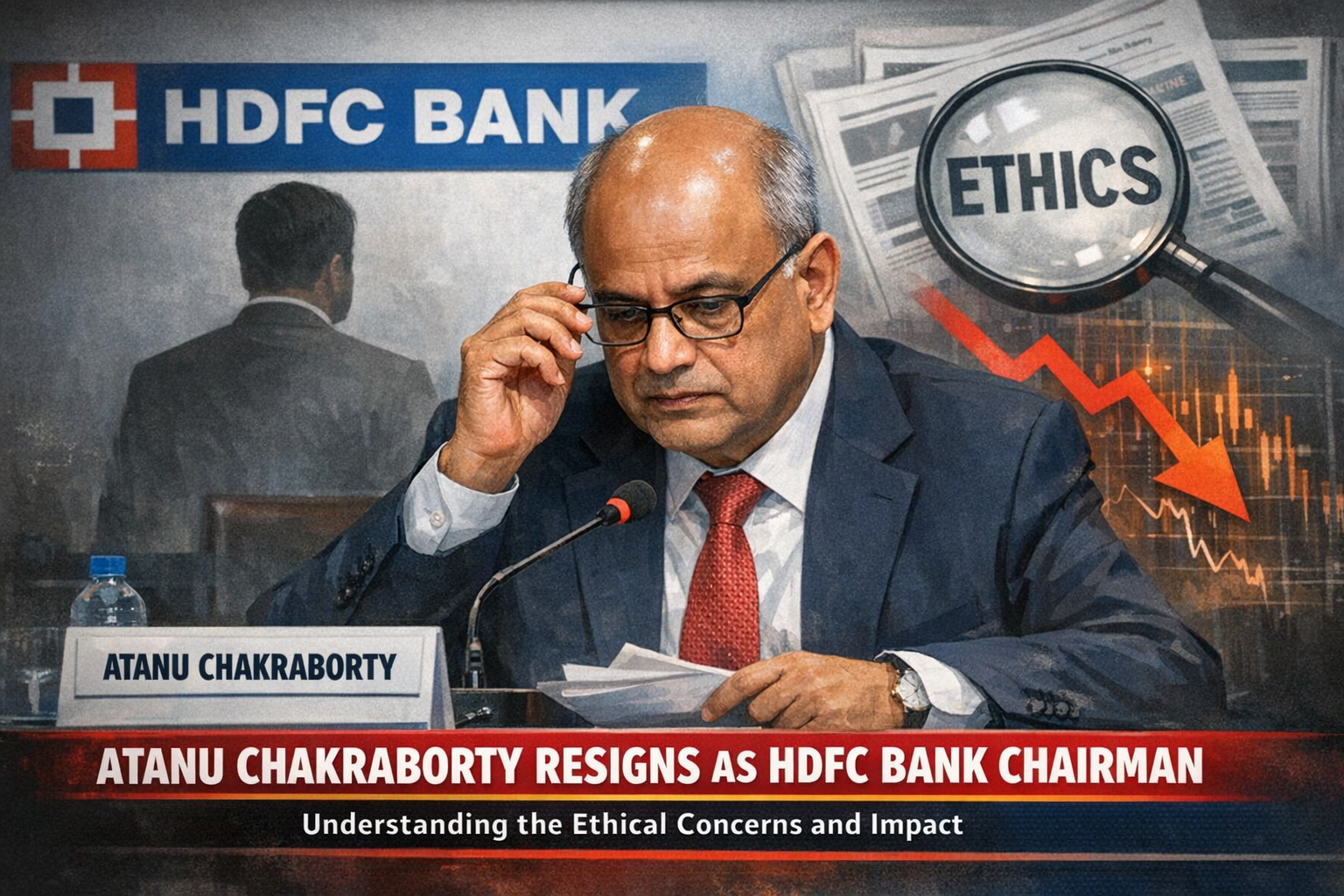
Recent discussions around HDFC Bank leadership changes have attracted attention in financial media. As the head of India’s largest private sector lender, Chakraborty’s sudden departure marks a pivotal moment for the institution. The resignation, which was reported by major financial news outlets including Bloomberg, Mint, and Moneycontrol, comes at a time when the bank is navigating a complex post-merger environment and shifting regulatory expectations.
The announcement has immediately captured the attention of investors, regulators, and industry analysts alike. HDFC Bank, often considered a bellwether for the Indian banking sector, now faces the challenge of managing a high-profile leadership transition under a cloud of stated 'ethical differences.' The departure of a chairman of Chakraborty's stature—a former high-ranking bureaucrat with a reputation for integrity—is an event of considerable weight in the corporate governance sphere.

The Core Reason: Ethical Differences and Values
The most striking aspect of Atanu Chakraborty’s resignation is the explicit language used to describe his departure. According to reports from Bloomberg and Mint, Chakraborty cited "ethical differences" and stated that "certain practices" within the organization were "incongruent with his values." In the world of high finance, where resignations are often attributed to "personal reasons" or "the pursuit of other interests," such direct references to ethics are exceedingly rare and carry heavy implications.
While the specific nature of these practices has not been publicly detailed in the resignation filings, the phrasing suggests a fundamental rift between the Chairman and the bank’s operational or strategic leadership. The term "incongruent with values" points toward a disagreement on corporate culture, governance standards, or specific decision-making processes that Chakraborty felt he could no longer oversee or endorse. This transparency, while jarring for the market, highlights a growing trend of professional accountability among independent directors and board chairs in India.
Industry experts note that for a professional of Chakraborty’s background—having served at the highest levels of the Indian government—the decision to step down on ethical grounds is likely a calculated move to protect his professional legacy and adhere to the stringent governance norms expected of a public figure in his position.
Leadership Transition: Mistry Named Interim Chairman
To ensure operational continuity and mitigate the risk of a leadership vacuum, HDFC Bank acted swiftly following the resignation. Business Standard reported that the board has named Mistry (Keki Mistry) as the interim Chairman. Mistry, a veteran of the HDFC ecosystem, brings a wealth of experience and a deep understanding of the bank’s internal workings, making him a logical choice to stabilize the ship during this turbulent period.
The appointment of an interim chief is a standard procedure intended to maintain the confidence of stakeholders, including depositors and shareholders. However, the board now faces the pressing task of identifying a permanent successor who can command the same level of respect as Chakraborty while navigating the internal issues that led to his exit. The timeline for a permanent appointment remains a subject of intense speculation, as the bank must find a candidate who satisfies both the internal requirements of the board and the rigorous 'fit and proper' criteria set by the Reserve Bank of India (RBI).

Profile of Atanu Chakraborty: A Career Overview
Atanu Chakraborty’s tenure at HDFC Bank was built upon a distinguished career in public service. A seasoned bureaucrat and a former officer of the Indian Administrative Service (IAS), Chakraborty is widely recognized for his tenure as the Economic Affairs Secretary of India. During his time with the Ministry of Finance, he played a crucial role in shaping India’s fiscal policies and managing the country’s economic response to various global and domestic challenges.
His transition to the private sector as the Chairman of HDFC Bank was seen as a move that would bring a strong regulatory perspective and seasoned administrative oversight to the bank’s board. His contributions to the bank prior to this resignation were marked by a focus on strengthening governance frameworks and ensuring the bank remained aligned with the evolving regulatory landscape of the Indian financial sector. His exit, therefore, represents a loss of significant institutional knowledge and regulatory expertise for the bank.
Implications for HDFC Bank and Corporate Governance
The resignation of a chairman over ethical concerns is a rare event that inevitably triggers a period of intense scrutiny. For HDFC Bank, the immediate implication is a potential impact on investor confidence. The bank’s reputation has long been built on a foundation of stability and prudent management. Any suggestion of internal ethical friction threatens to erode that hard-earned trust. Transparency in addressing the concerns raised by Chakraborty will be vital for the bank to maintain its standing in the eyes of institutional investors.
Furthermore, such a high-profile exit is likely to draw the attention of the Reserve Bank of India (RBI). As the regulator of the banking sector, the RBI maintains a keen interest in the corporate governance of major financial institutions. The central bank may seek clarifications regarding the "practices" mentioned by Chakraborty to ensure that they do not pose systemic risks or violate regulatory guidelines. This development could lead to a broader discussion about the role and independence of non-executive chairmen in India’s private banks.

Market Reaction and Expert Analysis
Initial market reactions to the news were characterized by a mix of caution and concern. Shares of HDFC Bank (HDFCB IN) faced immediate pressure as investors reacted to the uncertainty surrounding the leadership change. Financial analysts have pointed out that while the appointment of an interim chief provides a temporary buffer, the long-term health of the bank’s leadership remains a point of focus. Comparison with previous leadership changes in other major Indian financial institutions suggests that the clarity of the bank’s communication in the coming weeks will be critical.
Some analysts argue that Chakraborty’s resignation could serve as a catalyst for deeper internal reforms, potentially leading to a more robust governance structure. Others remain concerned that the "ethical differences" cited could hint at deeper cultural issues within the organization that may take time to resolve. Regardless of the interpretation, the consensus among experts is that HDFC Bank is entering a period where its internal culture and governance will be under the microscope more than ever before.
Conclusion: What Lies Ahead
The resignation of Atanu Chakraborty marks the end of a significant chapter for HDFC Bank and opens a new, more uncertain one. By citing ethical concerns, Chakraborty has elevated the conversation from a simple leadership change to a matter of corporate values and integrity. As the bank moves forward under interim leadership, the focus will remain on how it addresses the underlying issues that led to this fracture.
For Atanu Chakraborty, this move reaffirms his commitment to the principles that defined his long career in public service. For HDFC Bank, the path ahead involves not just finding a new Chairman, but also ensuring that its internal practices are fully aligned with the high ethical standards expected of a leader in the global financial community. The coming months will be a true test of the bank's resilience and its commitment to transparency.





Comments 0
Leave a Reply
Your email address will not be published. Required fields are marked *
Be the first to share your thoughts!