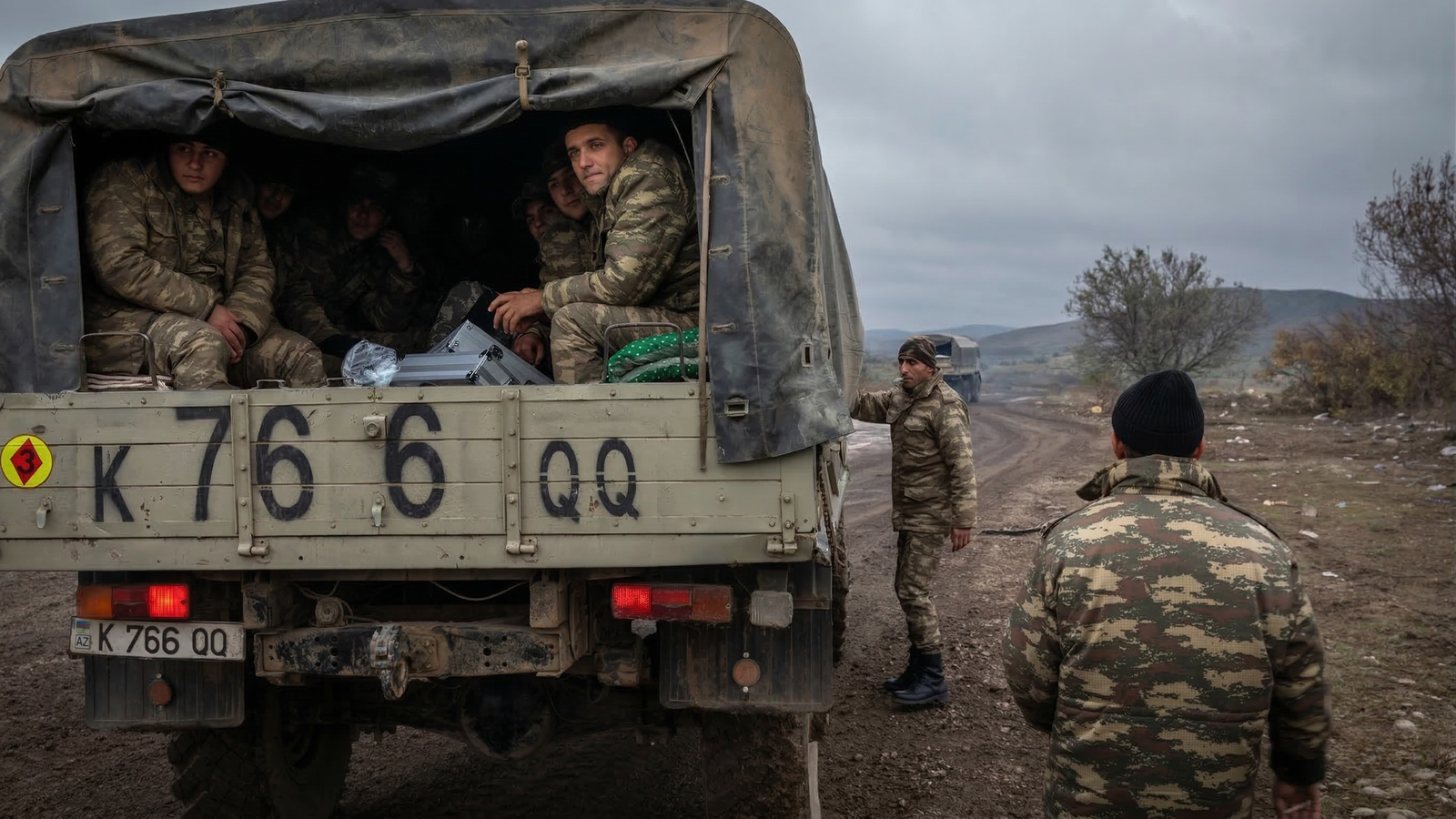
Azerbaijan Conflict Escalation: A Growing Concern for Global Stability
The Azerbaijan-Armenia conflict in the South Caucasus has become a growing concern due to recent escalations in the Nagorno-Karabakh region. This long-standing dispute has significant implications for regional stability, international relations, and energy security. Right at its heart lies the persistent struggle between Azerbaijan and Armenia, particularly over the Nagorno-Karabakh region. While it might seem like a faraway problem to some, this isn't just a minor squabble; it's a deeply entrenched dispute with significant ripples for regional stability and international relations alike. Worryingly, recent years have seen a sharp increase in tensions, once again highlighting the tragic human toll and the urgent, desperate need for lasting peace.
To understand the current situation, it is important to examine the key factors behind the conflict.We must dig into the rich, sometimes painful, historical context, understand the immediate sparks that ignite these heightened tensions, and, most importantly, grasp the profound impact on the lives of ordinary people caught in the middle. It also means closely examining the international community's attempts-and often frustrations-in mediating a lasting resolution. aiming to shed light on its complexities and ponder what a genuine path forward might look like.
The conflict has negatively affected the regional economy. Trade routes have been disrupted, and infrastructure has been damaged.
Uncertainty has reduced foreign investment and slowed economic growth. Governments are also allocating more resources to defense instead of development.

Causes of the Conflict Escalation in Azerbaijan
To really understand the current state of affairs, we first have to peel back the layers and examine the fundamental issues that have fueled this long-running dispute. It's not just about recent events, after all; it's about decades, even centuries, of intertwined history and competing narratives that refuse to fade away.
Timeline of Key Events
- 1988: Conflict begins during the Soviet period
- 1991–1994: First war between Armenia and Azerbaijan
- 1994: Ceasefire agreement signed
- 2020: Major conflict leading to territorial changes
- Recent years: Continued tensions and military clashes
Historical Background of the Nagorno-Karabakh Conflict
The Nagorno-Karabakh conflict's roots stretch back to the early 20th century. This mountainous enclave became a hotly contested territory between Armenia and Azerbaijan. Both nations passionately assert historical claims to the region. During the Soviet era, it existed as an autonomous oblast within the Azerbaijan Soviet Socialist Republic, though its population was overwhelmingly ethnic Armenian. When the Soviet Union began its dramatic collapse in the late 1980s, the region made a bold move, seeking to join Armenia. This ignited a full-scale war in the early 1990s, a conflict that left deep scars.
This first major confrontation saw Armenian forces establish control over Nagorno-Karabakh and several surrounding districts of Azerbaijan. A shaky ceasefire was eventually signed in 1994, but here's the rub: a truly comprehensive peace agreement never materialized. This left hundreds of thousands of Azerbaijanis displaced from their ancestral homes, turning the conflict into a "frozen" one, simmering just beneath the surface for nearly three decades. The unresolved status of Nagorno-Karabakh and these occupied territories has remained a constant, painful thorn, perpetually defining-and often poisoning-Armenia-Azerbaijan relations.
Recent Escalation: Factors Contributing to the Conflict
While those historical grievances are like a constant hum in the background, recent years have unfortunately witnessed a disturbing rise in clashes. Several factors have converged to contribute to this renewed intensity, pushing the region closer to the brink:
- Border Disputes: The long, often rugged and porous border between Armenia and Azerbaijan remains poorly defined and highly contentious. This leads to frequent, sometimes deadly, skirmishes and territorial claims that can quickly spiral into broader confrontations.
- Territorial Claims: At its very core, the issue of Nagorno-Karabakh's ultimate status and who controls the surrounding areas continues to be a major flashpoint. Azerbaijan steadfastly insists on its territorial integrity, viewing the region as its sovereign land, while Armenia champions the right to self-determination for the region's Armenian population.
- Military Modernization: Both countries have poured significant resources into modernizing their armed forces. Often, this is fueled by the backing and even arms sales from regional powers, creating a more volatile and dangerous military balance. It's a dangerous arms race.
- Geopolitical Interests: The South Caucasus isn't just any region; it holds immense geopolitical importance. It draws the keen attention-and sometimes the overt interference-of larger regional and global powers, including Russia, Turkey, and Iran. The presence and influence of foreign military forces or proxies can regrettably exacerbate local tensions, turning a local dispute into a regional chess game.
- Lack of Diplomatic Progress: Decades of painstaking negotiations under the OSCE Minsk Group co-chairs (Russia, France, and the United States) frustratingly failed to produce a lasting solution. This led to widespread frustration and a growing, dangerous perception that military action might be the only way to achieve their objectives.
These factors converged most dramatically in the 2020 Nagorno-Karabakh war, a brutal conflict that saw Azerbaijan reclaim significant territory. Since then, while large-scale hostilities have mostly subsided, sporadic clashes and border incidents continue to cast a dark shadow, constantly threatening a renewed, large-scale conflict and keeping the entire region on tenterhooks.
Impact of the Conflict Escalation on Azerbaijan and the Region
The human and economic costs of this conflict are truly staggering, leaving deep, painful scars on the communities and vital infrastructure across the South Caucasus. It's a tragedy that unfolds daily.
Humanitarian Crisis: Displacement and Casualties
The conflict has created a significant humanitarian crisis. Thousands of people have been displaced, and many civilians have been affected by ongoing violence.Access to essential services such as healthcare, food, and shelter remains limited in conflict-affected areas.
But beyond displacement, the conflict mercilessly claims lives and leaves countless others injured, often suffering lifelong physical and psychological trauma. Essential services-like healthcare, education, and even access to clean water-are routinely disrupted, especially in areas perilously close to the front lines. The long-term psychological impact on children growing up amidst such conflict is particularly severe, creating a tragic cycle of trauma and mistrust that can span generations.The situation highlights the need for continued diplomatic efforts and long-term solutions.

Economic Consequences: Impact on Trade and Infrastructure
Let's be clear: conflict is a profoundly destructive force for any economy. The Azerbaijan conflict has shattered trade routes, severely damaged critical infrastructure, and deterred much-needed foreign investment. This cripples local economies and undermines broader regional stability. Roads, bridges, and utilities in conflict-affected areas are frequently destroyed or rendered unusable, making reconstruction efforts incredibly costly, slow, and challenging.
For both Armenia and Azerbaijan, huge chunks of their national budgets are frustratingly diverted to military spending, money that could otherwise be invested in vital areas like education, healthcare, or genuine economic development. This stifles growth and only perpetuates poverty. Furthermore, the closure of borders and the persistent tensions actively impede regional cooperation, preventing the South Caucasus from fully realizing its immense potential as a transit and trade hub. Businesses struggle with overwhelming uncertainty, supply chains are constantly disrupted, and the overall economic outlook remains heavily clouded by the ever-present specter of renewed hostilities. It's a costly stalemate for everyone involved.
International Response to the Conflict Escalation
Given the very real potential for broader regional destabilization, the international community hasn't just sat idly by; it has long been deeply involved in trying to mediate and ultimately resolve this intractable conflict.
UN and EU Efforts to Resolve the Conflict
The United Nations (UN) has consistently championed a peaceful resolution, steadfastly upholding the bedrock principles of international law, including territorial integrity and the right to self-determination. The UN Security Council has passed various resolutions, repeatedly calling for the withdrawal of forces and a negotiated settlement. The European Union (EU) has also been a very active player, providing crucial humanitarian aid, supporting grassroots peace-building initiatives, and engaging in high-level diplomatic efforts aimed at mediating a peaceful resolution between the two sides. The EU often stresses dialogue, practical confidence-building measures, and the development of shared economic interests as pragmatic pathways to achieving lasting peace. But are these efforts enough?
Role of Regional Organizations: OSCE and CSTO
Regional organizations certainly play a crucial, though sometimes complicated, role in this drama. The Organization for Security and Co-operation in Europe (OSCE) famously established the Minsk Group back in 1992, co-chaired by France, Russia, and the United States, with the explicit goal of finding a peaceful resolution to the Nagorno-Karabakh conflict. While it has facilitated countless talks and discussions, its persistent inability to achieve a genuine breakthrough has been a significant point of contention and deep frustration for all parties involved.
The Collective Security Treaty Organization (CSTO), a military alliance of several former Soviet states including Armenia (but notably not Azerbaijan), also has a vested interest in maintaining regional stability. Its role, however, is invariably complicated by its security commitments to Armenia, which can understandably be perceived quite differently by Azerbaijan. These organizations, despite their varying mandates and often mixed effectiveness, undeniably remain key players in the ongoing diplomatic landscape surrounding the conflict, each with their own influences and limitations.

Challenges and Pathways to Peace
Achieving a truly lasting peace in the Azerbaijan conflict is undeniably fraught with significant challenges; yet, pathways for resolution genuinely do exist. One major hurdle, perhaps the biggest, is the deep-seated mistrust and pervasive historical grievances festering between the two nations, often inflamed by divisive nationalist rhetoric. The unresolved legal status of Nagorno-Karabakh-whether it's an integral part of Azerbaijan or an independent entity with strong ties to Armenia-remains a fundamental, seemingly intractable disagreement. Furthermore, the involvement of external powers, each pursuing their own distinct strategic interests, can unfortunately complicate mediation efforts, sometimes even inadvertently prolonging the conflict. The vast number of displaced persons and the immense logistical and political challenge of their safe return also represents a complex humanitarian and political conundrum. However, potential pathways forward absolutely include sustained, high-level diplomatic engagement focused on practical confidence-building measures, economic cooperation that clearly benefits both sides, and a renewed, robust commitment from international mediators to push for a comprehensive peace agreement. This agreement must genuinely address the security concerns and aspirations of all populations involved. Investing in people-to-people dialogue and educational initiatives can also, over the long term, help bridge these painful divides, fostering a new generation more inclined towards coexistence and mutual respect.
The ongoing escalation highlights the importance of diplomatic engagement. A long-term solution will require cooperation, negotiation, and commitment from all parties involved.A truly durable peace hinges not merely on temporary ceasefires, but rather on a comprehensive political settlement. Such a settlement must fundamentally respect international law while simultaneously addressing the legitimate security concerns and urgent humanitarian needs of all affected populations. This monumental task will require an unwavering commitment from both local actors and the broader international community alike.
FAQ
What is the current situation in Azerbaijan?
The situation in the region, particularly around the Azerbaijani borders, remains tense, with ongoing skirmishes and standoffs between Armenian and Azerbaijani forces, especially along the border and in areas near Nagorno-Karabakh.
What are the main causes of the conflict escalation?
The conflict's recent escalation is primarily fueled by long-standing historical and territorial disputes over Nagorno-Karabakh. Other critical factors include unresolved border issues, the presence of foreign military forces or influences, and a frustrating lack of tangible progress in diplomatic negotiations.
How has the conflict affected the local population?
Tragically, the conflict has led to significant displacement of countless civilians, with many seeking refuge in neighboring countries or other parts of their own nations. It has also resulted in casualties, severely disrupted essential services, and caused widespread, lasting psychological trauma.
People Also Ask
What is the Nagorno-Karabakh conflict?
The Nagorno-Karabakh conflict is a deeply rooted and longstanding dispute between Armenia and Azerbaijan concerning the region of Nagorno-Karabakh, which is an ethnically Armenian-populated enclave internationally recognized as part of Azerbaijan.
Who is involved in the conflict?
The primary parties directly involved are Armenia and Azerbaijan. Beyond them, regional organizations like the OSCE and CSTO, alongside international bodies such as the UN and EU, are also actively engaged in diplomatic and humanitarian efforts to address the crisis.
What is the international response to the conflict?
The international community, including major players like the UN and EU, has been actively working to mediate a peaceful resolution. They consistently call for de-escalation, adherence to international law, and robust support for humanitarian efforts. The OSCE Minsk Group has historically served as the main platform for these mediation attempts.
The path to peace in the South Caucasus is, without a doubt, incredibly challenging, paved as it is with complex historical narratives and deep-seated grievances. Yet, the intensifying tensions and the profound, undeniable human cost underscore the urgent, imperative need for a renewed commitment to diplomacy, open dialogue, and a truly comprehensive political settlement. Only through sustained international engagement and a genuine willingness from all parties to prioritize human lives and regional stability over rigid territorial claims can a lasting peace truly be forged. It's a long journey that demands patience, profound empathy, and a shared vision for a future where cooperation genuinely replaces conflict, ultimately allowing the people of Azerbaijan and Armenia to thrive in a secure and prosperous region. Isn't that a future worth striving for?



Comments 0
Leave a Reply
Your email address will not be published. Required fields are marked *
Be the first to share your thoughts!