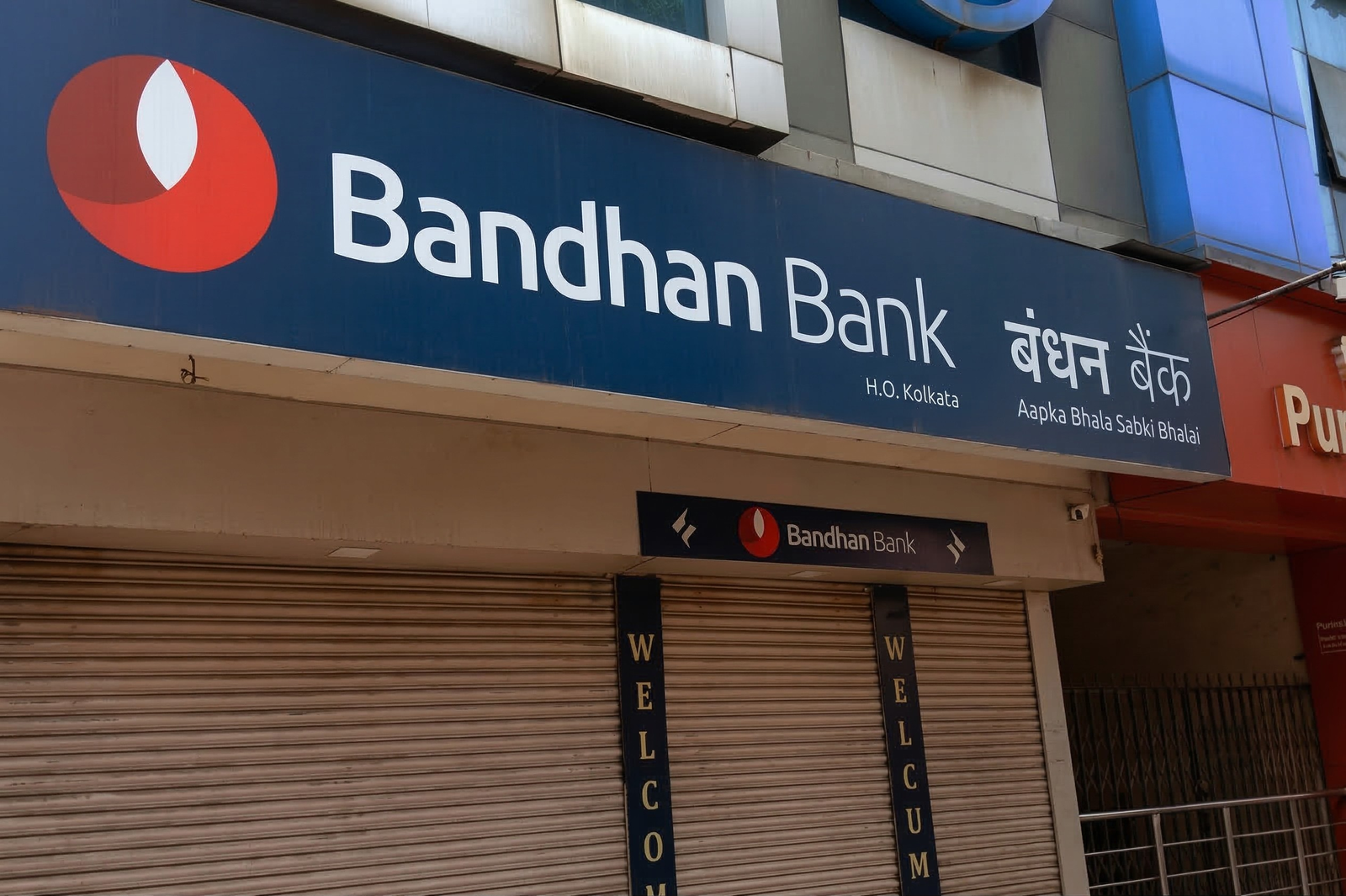
Bandhan Bank shares declined sharply in today’s trading session, falling around 10–12% and hitting the lower circuit on stock exchanges. The stock came under heavy selling pressure, impacting overall sentiment in the banking sector.
The decline began early in the trading session as investors reacted to reports related to a possible change in the promoter group’s stake. As a prominent player in the Indian private banking landscape, particularly known for its roots in microfinance, any major price movement in Bandhan Bank is closely watched by both domestic and international institutional investors. Today’s crash represents one of the most significant single-day drops for the stock in recent months, marking a period of intense pressure for the banking entity.

Why is Bandhan Bank Share Price Down Today?
The primary catalyst behind the 12% plunge in Bandhan Bank's share value is the circulation of reports suggesting that the bank’s promoters are actively exploring a stake sale. According to market intelligence and news reports, the move is intended to facilitate an exit for long-term investors who have been associated with the bank. The prospect of a large block of shares hitting the market often leads to immediate price depreciation as supply outweighs demand, a phenomenon clearly visible in today’s trading patterns.
Furthermore, the stock hit the 'lower circuit'-a regulatory threshold set by stock exchanges to prevent extreme volatility. A lower circuit was triggered when selling pressure exceeded permitted limits, restricting further downside trading during the session.
Promoter Stake Sale and IPO Facilitation
According to media reports, the promoter group may be considering a stake-related transaction, which has influenced investor sentiment. However, there is no official confirmation from the company. This structural change is reportedly linked to broader goals, including potential IPO-related maneuvers to streamline the bank's capital structure. In the world of private banking, promoter holding regulations are stringent, and moves to dilute stakes are often perceived with a mix of caution and strategic interest.
For existing shareholders, the impact of such a sale is twofold. On one hand, it introduces a high volume of shares into the secondary market, which can depress prices in the short term. On the other hand, facilitating an exit for long-term investors can sometimes lead to the entry of new, high-quality institutional backers. However, the immediate market reaction has been overwhelmingly negative, as the uncertainty regarding the identity of the buyers and the final price of the stake sale remains a concern for retail and institutional traders alike.

Broader Impact on the Banking Sector
The volatility was not confined to Bandhan Bank alone. The reports of institutional shifts and promoter exits appeared to dampen sentiment across several other banking stocks. Other banking and financial stocks also witnessed selling pressure during the session, reflecting weak sector sentiment. This suggests a contagion effect where investors, wary of potential regulatory or structural changes within the sector, opted to reduce their exposure to banks with similar profiles or those undergoing institutional transitions.
A comparative analysis of the volatility shows that while private banks like Bandhan Bank faced the brunt of the sell-off, payment banks like Fino also felt the pressure. This highlights a broader market trend in India where the banking sector is currently hypersensitive to news regarding promoter holdings and institutional exits. The collective decline of these stocks indicates that the market is pricing in a period of transition for several mid-sized and niche banking players in the country.
Investor Sentiment and Market Trends in India
This juxtaposition highlights the diverse interests of the Indian digital population but also points toward a potential distraction for retail investors during a period of high market volatility. Despite the external noise, the focus for the financial community remained squarely on the bank's plummeting valuation.
The retail response to the news was one of visible panic, as evidenced by the rapid hit to the lower circuit. Retail investors often find themselves at the end of the information chain, and the sudden news of a promoter exit can lead to 'sell-first, ask-questions-later' behavior. Conversely, institutional investors may be viewing this as a necessary structural adjustment for the bank’s long-term health, though their immediate actions contributed to the liquidity crunch that drove the price down.

Technical Outlook for Bandhan Bank Shares
From a technical view, the stock has broken key support levels, indicating strong bearish momentum in the short term. The stock has broken through several short-term support levels, and the high volume recorded during the crash indicates strong conviction among sellers. Analysts are now looking at historical support levels to see where the stock might find a floor. The 'lower circuit' hit today serves as a psychological and technical barrier that may take several trading sessions to overcome.
Volume analysis suggests that the sell-off was not merely a retail phenomenon but involved significant institutional offloading. For investors looking for a recovery, the key will be the volume of buying at lower levels. Expert opinions remain divided; some view this as a potential 'buy on dip' opportunity if the fundamentals of the bank remain intact post-stake sale, while others warn that the uncertainty surrounding the promoter's final decision could lead to further underperformance in the coming weeks.
Conclusion: The Road Ahead for Bandhan Bank
The road ahead for Bandhan Bank will be largely determined by the clarity provided by the management and promoters regarding the stake sale. If the bank can successfully transition its long-term investors and bring in reputable new backers, the current volatility may be viewed as a temporary hurdle. However, in the immediate term, the stock is likely to remain under pressure as the market digests the implications of the promoter's exit strategy and the potential for structural changes within the organization.

For long-term investors in the Indian banking space, the Bandhan Bank episode serves as a reminder of the impact that promoter actions can have on equity valuations. As the bank navigates this period of transition, all eyes will be on the finality of the stake sale and the subsequent regulatory filings that will shed light on the bank's future shareholding pattern.





Comments 0
Leave a Reply
Your email address will not be published. Required fields are marked *
Be the first to share your thoughts!