
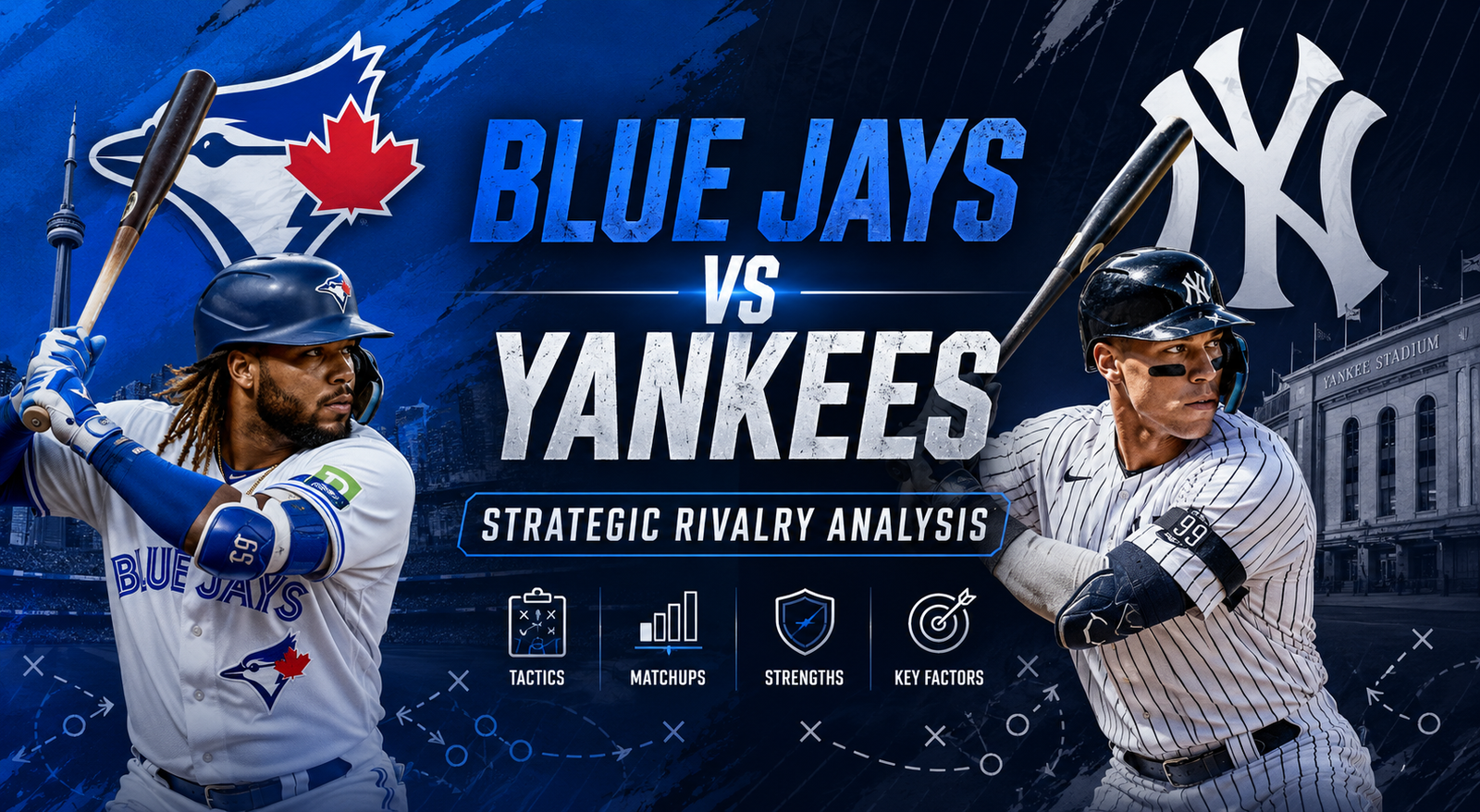
💡 Blue Jays vs Yankees: Strategic Rivalry Analysis
An authoritative analysis of the AL East rivalry between the Toronto Blue Jays and New York Yankees, examining economic impact, roster strategy, and performance metrics.
Executive Summary
The rivalry between the Toronto Blue Jays and the New York Yankees represents one of the most significant economic and competitive focal points in Major League Baseball (MLB). This analysis highlights three primary findings. First, the New York Yankees continue to leverage a top-tier payroll, often exceeding 300 million dollars, to maintain a high-floor competitive status. Second, the Toronto Blue Jays have transitioned from a rebuilding phase to a high-spending contender, with a payroll consistently ranking in the top ten league-wide. Third, the statistical variance in head-to-head matchups is increasingly driven by advanced metrics such as barrel rate and pitching velocity. Data indicates that while the Yankees hold the historical edge, the Blue Jays have closed the gap in Expected Weighted On-Base Average (xwOBA) over the last three seasons.

Introduction
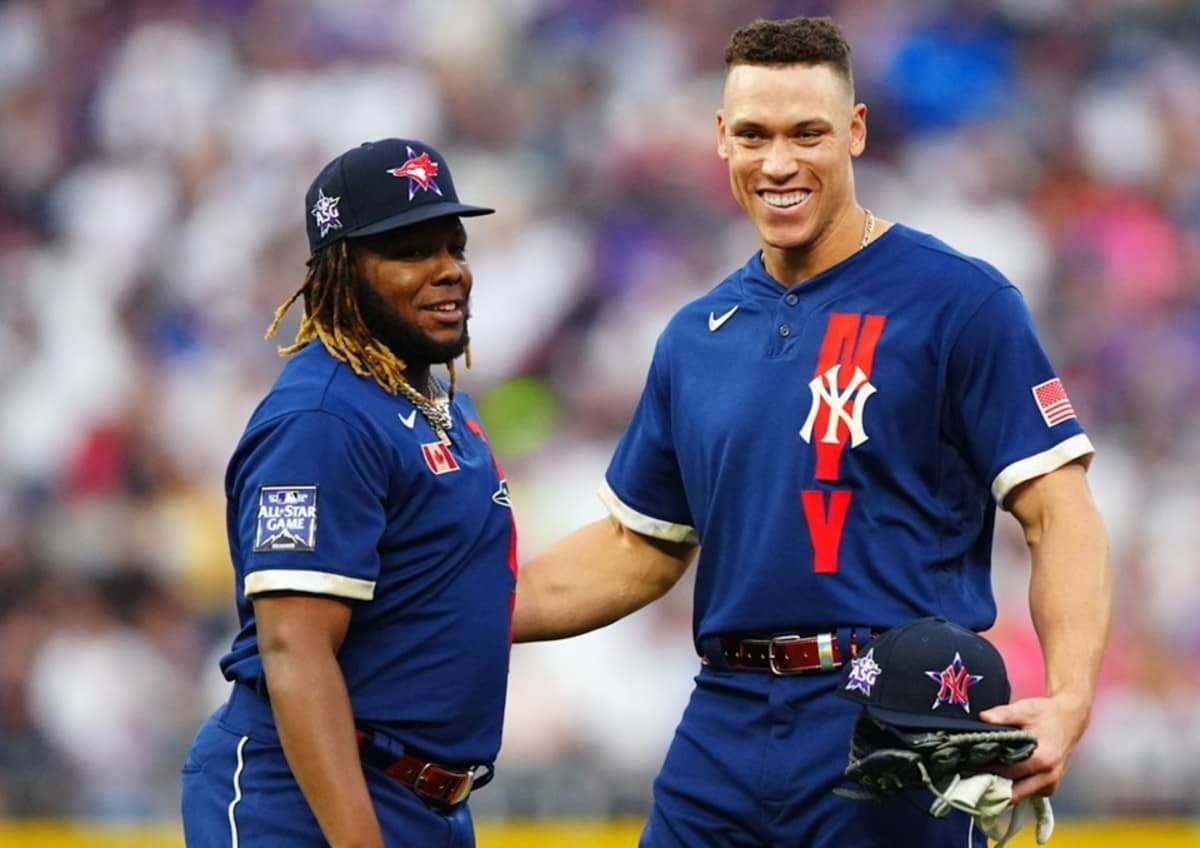
In the landscape of professional sports, few divisions offer the concentrated talent and financial might found in the American League East. The matchup between the Toronto Blue Jays and the New York Yankees is more than a simple game of baseball; it is a collision of two distinct organizational philosophies and massive media markets. As the only MLB team located outside the United States, the Blue Jays represent an entire nation, while the Yankees remain the most valuable franchise in the sport, valued at approximately 7.1 billion dollars according to recent industry valuations. Understanding the dynamics of this rivalry requires a look at the intersection of player development, luxury tax implications, and on-field execution. Similar to how we see the Caitlin Clark: A Strategic Analysis of Economic Impact affecting the WNBA, the star power of Aaron Judge and Vladimir Guerrero Jr. dictates the commercial success of this divisional pairing.
THE DEEP DIVE: Strategic and Statistical Breakdown
The Economic Engine and Payroll Strategy
The financial disparity between these two clubs has narrowed significantly over the last decade. The Yankees have long been synonymous with the luxury tax, frequently operating in the highest tiers of the Competitive Balance Tax (CBT). In 2024, the Yankees projected payroll sat near 305 million dollars, driven by massive contracts for Aaron Judge, Gerrit Cole, and Giancarlo Stanton. This strategy relies on high-end veteran talent to secure postseason berths consistently.
Conversely, the Toronto Blue Jays have shifted their economic strategy. Under the ownership of Rogers Communications, the club has authorized payrolls exceeding 225 million dollars. This investment is not just in players but in infrastructure, including the multi-phase renovation of Rogers Centre. This capital expenditure is designed to maximize local revenue, which in turn feeds the player acquisition budget. The strategic focus here is on a balanced roster that blends homegrown stars with targeted free-agent acquisitions like George Springer and Kevin Gausman.
Analytical Matchups: Power vs. Precision
When analyzing the on-field product, the data reveals a fascinating contrast. The Yankees offensive strategy under modern leadership has prioritized exit velocity and walk rates. Aaron Judge remains the gold standard in this regard, consistently ranking in the 100th percentile for Hard-Hit Percentage. The addition of Juan Soto further solidified this approach, creating a lineup that punishes pitching mistakes with extreme efficiency. Much like the data-driven insights found in the Shai Gilgeous Alexander Stats: A Strategic Analysis, the Yankees utilize granular player data to optimize their batting order and defensive shifts.
The Blue Jays have countered this with a pitching-centric model. Their rotation strategy emphasizes high-spin rates and horizontal movement. Kevin Gausman’s splitter and Jose Berrios’s durability are the anchors of a staff designed to neutralize high-power offenses. In head-to-head matchups, the Blue Jays often rely on their defensive efficiency, particularly in the outfield, to mitigate the Yankees power-hitting tendencies. Statcast data shows that in games played at Rogers Centre, the Blue Jays pitching staff has successfully reduced the Yankees average launch angle by 2.4 degrees compared to games played at Yankee Stadium.
Broadcasting and Global Market Reach
The media rights associated with these two teams are a cornerstone of their respective valuations. The Yankees are the primary draw for the YES Network, which reaches millions of households in the tri-state area. The Blue Jays are unique because they are owned by the same entity that controls their primary broadcaster, Sportsnet. This vertical integration allows for a seamless flow of marketing and content, ensuring that the Blue Jays remain a dominant brand across all ten Canadian provinces. This media dominance is comparable to the strategies discussed in the Disney Plus: A Strategic Analysis of Streaming Dominance, where content control is the ultimate lever for revenue growth.

WHAT THIS MEANS FOR YOU
For the average fan or sports investor, the Blue Jays vs. Yankees rivalry offers several actionable insights. If you are following the betting markets, pay close attention to the pitching matchups rather than historical win-loss records, as the volatility in the AL East is higher than in any other division. For fans attending games, the renovations at Rogers Centre have created a more social, fan-centric environment, while Yankee Stadium remains a cathedral of traditional baseball history. From a business perspective, these teams serve as a case study in how to manage a high-cost workforce while maintaining public interest and brand loyalty in a digital-first world.
Expert Verdict and Future Outlook
The future of the Blue Jays vs. Yankees rivalry will be defined by the 2025 and 2026 free-agent classes. The Yankees face the challenge of an aging core and the need to integrate younger, cheaper talent from their farm system to stay under the highest luxury tax thresholds. The Blue Jays are at a crossroads with the impending free agency of Vladimir Guerrero Jr. and Bo Bichette. Expert consensus suggests that the Blue Jays must secure at least one of these cornerstone players to remain competitive in the long term. Failure to do so could result in a significant market correction for the franchise. Expect the Yankees to remain aggressive in the trade market, utilizing their deep pockets to fill gaps as they appear.
FAQ
- Who has won more games historically between the Blue Jays and Yankees? The New York Yankees lead the all-time series, holding a significant margin that dates back to the Blue Jays inception in 1977. However, the gap has narrowed in recent seasons as Toronto's competitive window opened.
- How do the stadiums affect the gameplay between these two teams? Yankee Stadium is known for its short porch in right field, which favors left-handed power hitters. Rogers Centre, following its recent renovations, has more varied outfield dimensions that can create unique bounces and challenges for visiting outfielders.
- What is the average ticket price for a Blue Jays vs. Yankees game? Prices vary based on the venue and timing, but premium matchups between these two rivals typically see a 20 to 30 percent increase in secondary market prices compared to non-divisional games.
- Which team has a better farm system currently? This fluctuates annually, but the Yankees have recently been praised for their ability to develop high-velocity relief pitchers, while the Blue Jays have focused on versatile infielders and high-ceiling international prospects.
- Are there any specific player rivalries to watch? The battle between the Yankees pitching staff and Vladimir Guerrero Jr. is always a highlight, as Guerrero has historically performed exceptionally well in high-leverage situations against New York.
Conclusion
The Toronto Blue Jays and New York Yankees rivalry is a masterclass in modern sports management. It combines massive financial investment with cutting-edge analytical strategies to produce a product that captivates millions. As both teams navigate the complexities of payroll management and player development, the AL East will remain the most scrutinized and competitive division in baseball. For stakeholders and fans alike, the strategic takeaway is clear: success in this rivalry requires a perfect balance of economic power and statistical precision. Whether in the Bronx or Toronto, every pitch in this series carries the weight of a multi-billion dollar industry.





Comments 0
Leave a Reply
Your email address will not be published. Required fields are marked *
Be the first to share your thoughts!