
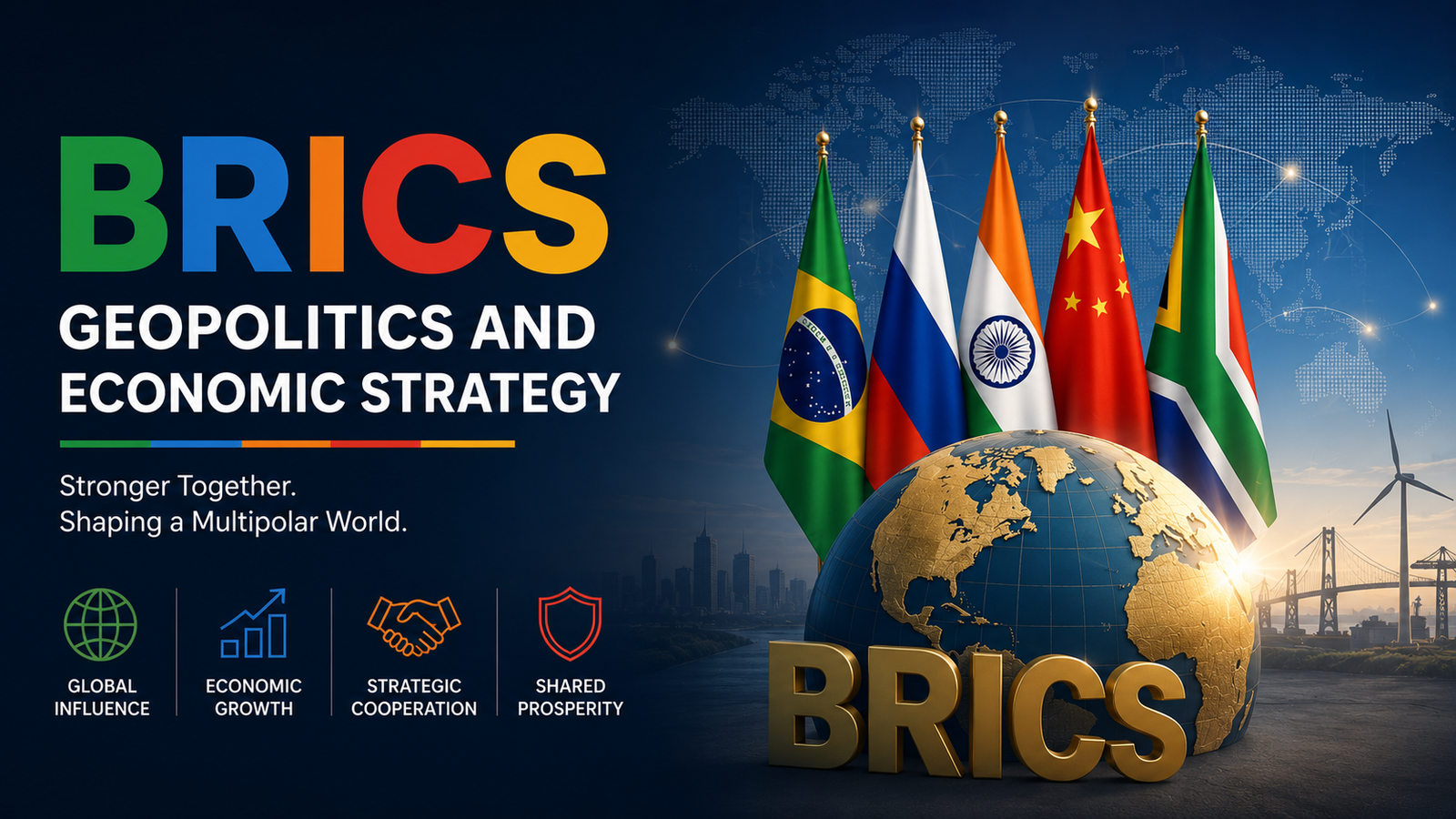
💡 BRICS Geopolitics and Economic Strategy
An authoritative analysis of BRICS+ expansion, de-dollarization initiatives, and the strategic shift toward a multipolar global economic landscape.
Executive Summary
The geopolitical landscape is undergoing a fundamental transformation as the BRICS bloc evolves from a loose economic grouping into a formidable institutionalized alliance. Key findings in this analysis indicate that the expanded BRICS+ now represents approximately 37.3 percent of global GDP when measured by Purchasing Power Parity (PPP), officially surpassing the G7’s 29.9 percent share. With the inclusion of major energy producers like the UAE and Iran, the bloc now controls over 43 percent of global oil production. This strategy is centered on three pillars: the institutionalization of the New Development Bank (NDB), the creation of independent cross-border payment systems, and the promotion of local currency trade to mitigate dependency on the US dollar. Data highlights show a 15 percent increase in intra-BRICS trade over the last twenty-four months, signaling a decisive move toward economic autonomy.
Introduction: The Shift Toward Multipolarity
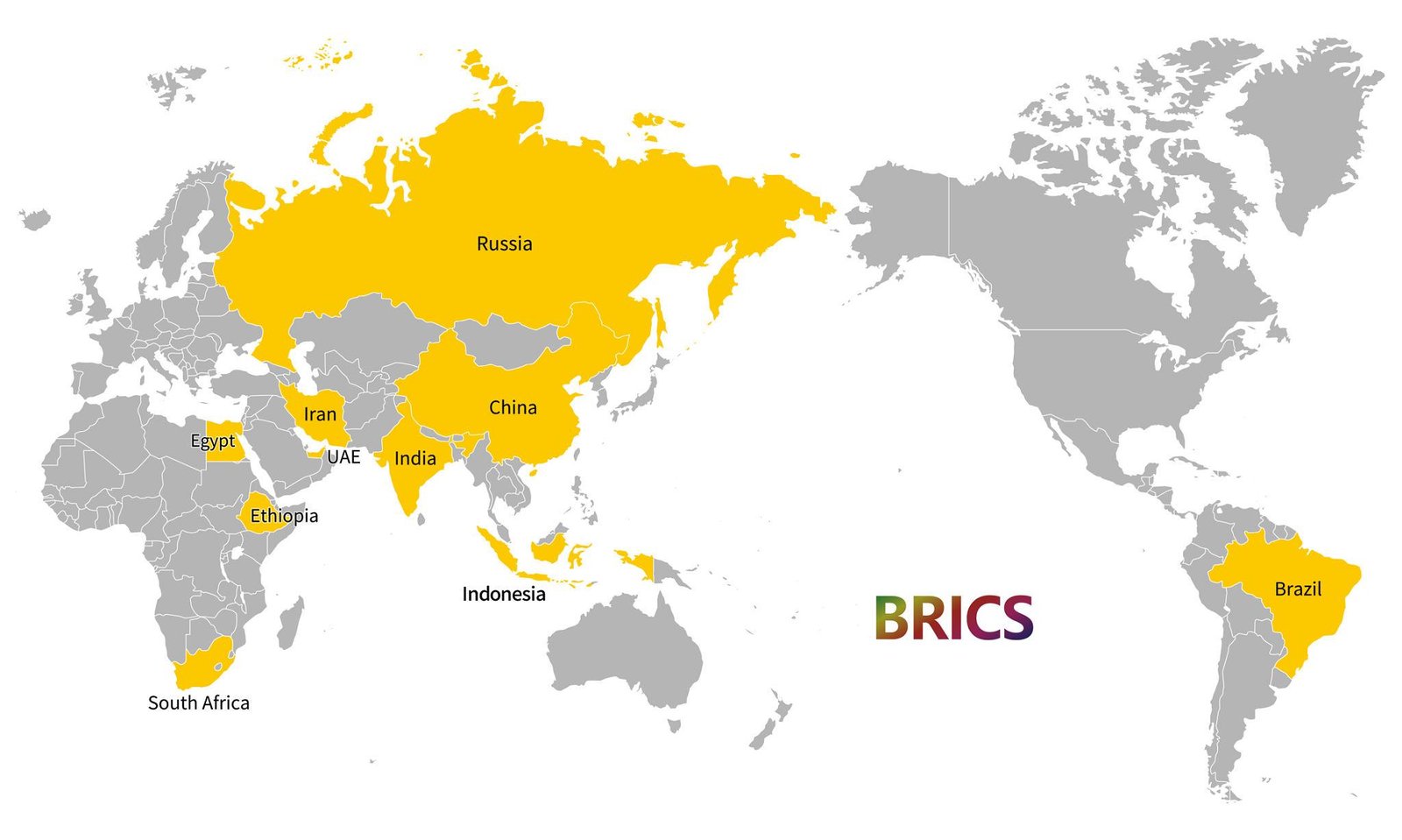
For decades, the global financial system has operated under a unipolar framework dominated by Western institutions. However, the emergence of BRICS+ signifies a historic pivot. This coalition, originally composed of Brazil, Russia, India, China, and South Africa, has expanded its reach to include Egypt, Ethiopia, Iran, and the United Arab Emirates. This expansion is not merely a demographic exercise; it is a strategic realignment of global power. By aggregating the interests of the Global South, BRICS aims to create a counterweight to the traditional hegemony of the G7. The motivation behind this movement stems from a collective desire for strategic autonomy and a more equitable distribution of influence in international governance. As we examine the Stock Market: A Strategic Analysis of Global Financial Dynamics, it becomes clear that these geopolitical shifts are already influencing capital flows and investor sentiment on a global scale.
The Deep Dive: Financial Architecture and Strategic Autonomy
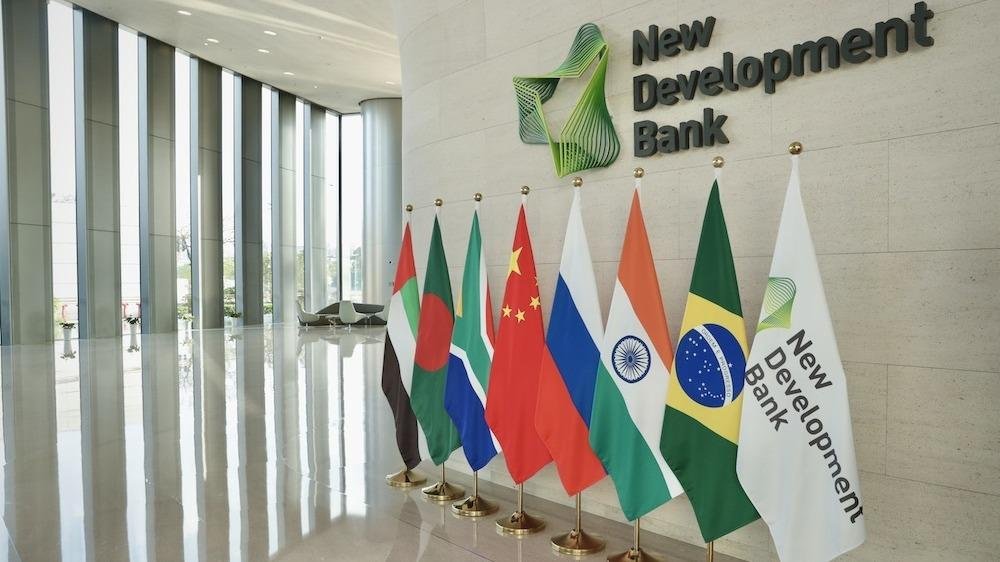
The core of the BRICS strategy lies in its financial infrastructure. The New Development Bank (NDB), headquartered in Shanghai, has already approved over 32 billion dollars in loans for infrastructure and sustainable development projects. Unlike the International Monetary Fund (IMF), the NDB does not impose strict political conditionalities, making it an attractive alternative for emerging economies. A critical component of this strategy is the BRICS Bridge, a digital platform designed to facilitate cross-border payments in local currencies. This initiative seeks to bypass the SWIFT system, thereby reducing the risk of unilateral sanctions and lowering transaction costs for member states.
De-dollarization is no longer a theoretical concept but a functional policy. In 2023, China and Brazil reached an agreement to trade in their own currencies, completely bypassing the US dollar. Similarly, India has initiated rupee-denominated trade settlements with several partners. While the dollar remains the primary reserve currency, its share in global reserves has slipped from roughly 70 percent to 58 percent over the last two decades. The BRICS strategy is to accelerate this trend by creating a basket of currencies or a blockchain-based unit of account that provides stability without Western oversight.
Geopolitically, the bloc is leveraging its control over critical minerals and energy resources. The inclusion of new members has turned BRICS into an energy powerhouse. This enables the group to coordinate on production levels and pricing, similar to the influence exerted by OPEC but with a broader economic agenda. Furthermore, the bloc is focused on innovation and technology. While Western nations have historically led in high-tech sectors, the shift toward sovereign technology is evident. For instance, the focus on localized AI and digital infrastructure mirrors the innovation leadership seen in other regions, such as the trends explored in the Sweden: Strategic Analysis of a Global Innovation Powerhouse report. BRICS nations are increasingly investing in domestic tech ecosystems to ensure they are not vulnerable to external supply chain disruptions.
However, the bloc faces significant internal challenges. The rivalry between China and India remains a primary friction point. Border disputes and competition for leadership within the Global South create a complex internal dynamic. Despite these tensions, the collective economic benefit of the alliance currently outweighs bilateral grievances. The strategic focus remains on long-term institutional building and the diversification of investment portfolios, a theme often analyzed by firms like Longrange Capital: Strategic Private Equity Analysis when assessing emerging market risks and opportunities.
What This Means For You
- Investment Diversification: Investors should look beyond traditional Western markets. The growth trajectory of BRICS+ suggests that emerging market equities and bonds will play a larger role in balanced portfolios.
- Supply Chain Resilience: Businesses must account for the shift in trade corridors. The development of the International North-South Transport Corridor (INSTC) and China’s Belt and Road Initiative are creating new logistics hubs.
- Currency Risk Management: Corporations involved in international trade must prepare for a multi-currency world. Hedging against dollar volatility will become more complex as local currency settlements gain traction.
- Resource Security: As BRICS gains more control over critical minerals needed for the green transition, companies in the EV and renewable energy sectors must secure long-term supply agreements within these jurisdictions.
Expert Verdict and Future Outlook
The future of BRICS+ depends on its ability to transition from a consultative forum to a functional economic union. The expert consensus suggests that while a single BRICS currency is unlikely in the short term, the expansion of local currency trade is inevitable. By 2030, BRICS+ is projected to contribute over 50 percent of global economic growth. The bloc will likely continue to expand, with over 30 countries having expressed interest in joining or partnering with the group. The strategic takeaway is that the era of unipolarity is ending. The global economy is fragmenting into regional blocs, and the ability to navigate these overlapping spheres of influence will be the defining skill for leaders in the coming decade.
FAQ: Understanding the BRICS Strategy
- Is BRICS trying to replace the US Dollar? BRICS is not necessarily trying to eliminate the dollar but rather to reduce its dominance. The goal is to provide alternatives that protect member states from US-led sanctions and exchange rate volatility.
- What is the significance of the 2024 expansion? The expansion adds significant weight in terms of energy production and geographic reach, particularly in the Middle East and Africa, making the bloc more representative of the global population.
- How does the New Development Bank differ from the World Bank? The NDB focuses on infrastructure and sustainable development for emerging markets with a governance structure that gives equal voting power to all founding members, regardless of their capital contribution.
- Can India and China coexist within BRICS? While they are strategic rivals, both nations view BRICS as a necessary platform to challenge Western-centric global governance. Their economic interdependence often acts as a stabilizing factor.
- Will BRICS become a military alliance? There is currently no indication that BRICS will evolve into a military pact like NATO. Its primary focus remains on economic cooperation, trade, and diplomatic coordination.
Important Note: Financial Disclaimer: This content is for educational purposes only and does not constitute professional financial advice. Always consult with a certified financial planner before making investment decisions.
Conclusion
The strategic evolution of BRICS represents a systemic shift in the global order. By prioritizing financial independence, energy security, and institutional expansion, the bloc is successfully creating a viable alternative to Western-led systems. While internal rivalries persist, the collective momentum toward a multipolar world is now an established reality. For global stakeholders, success will depend on recognizing these new power centers and adapting to a landscape where economic influence is more broadly distributed across the Global South.




Comments 0
Leave a Reply
Your email address will not be published. Required fields are marked *
Be the first to share your thoughts!