
The F35 Lightning II: A Comprehensive Guide to the Worlds Most Advanced Multi-Role Fighter
The landscape of modern aerial warfare has shifted from simple dogfighting to a complex environment defined by information superiority and stealth. At the center of this transformation is the F35 Lightning II. As a fifth-generation multi-role fighter, the F35 is designed to perform ground attacks, aerial reconnaissance, and air defense missions with a level of integration never before seen in aviation history. Understanding the F35 requires looking beyond its physical airframe and examining the sophisticated digital architecture that allows it to operate as a central node in a global defense network.
According to global analysts, the F35 represents a paradigm shift in how nations approach national security. It is not merely a replacement for older jets: it is a platform that redefines the capabilities of a modern air force. By combining advanced stealth with integrated sensor systems, the F35 provides pilots with an unprecedented level of situational awareness, often referred to as the quarterback of the sky. This article provides an in-depth exploration of the F35, its variants, its core technologies, and its role in modern global defense.
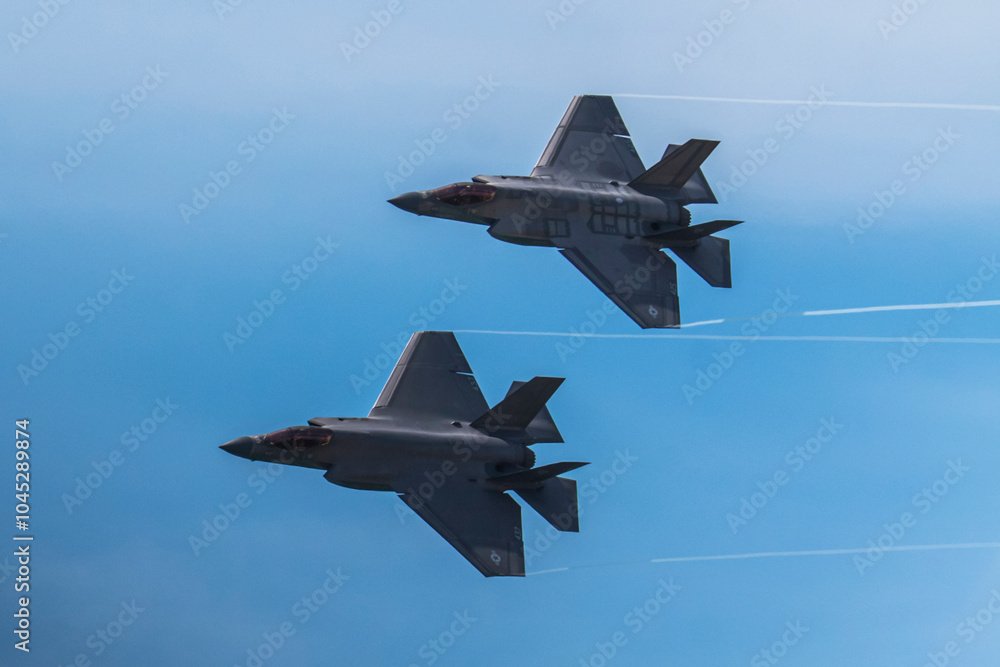
Understanding the Three Variants of the F35
The F35 program was developed under the Joint Strike Fighter (JSF) initiative, which sought to create a single aircraft design that could meet the diverse needs of different military branches. This resulted in three distinct variants, each optimized for specific operational environments. While they share approximately 80 percent of their parts, their structural differences are significant.
F35A: Conventional Takeoff and Landing (CTOL)
The F35A is the most common variant and is primarily used by air forces around the world. It is designed to operate from standard runways and is the only version of the aircraft to feature an internal 25mm cannon. Because it does not require specialized landing gear or lift fans, the F35A is the lightest and most agile of the three, capable of pulling up to 9g maneuvers. Experts suggest that the F35A offers the best balance of range and payload for traditional land-based operations [Link to: Air Force Modernization Strategies].
F35B: Short Takeoff and Vertical Landing (STOVL)
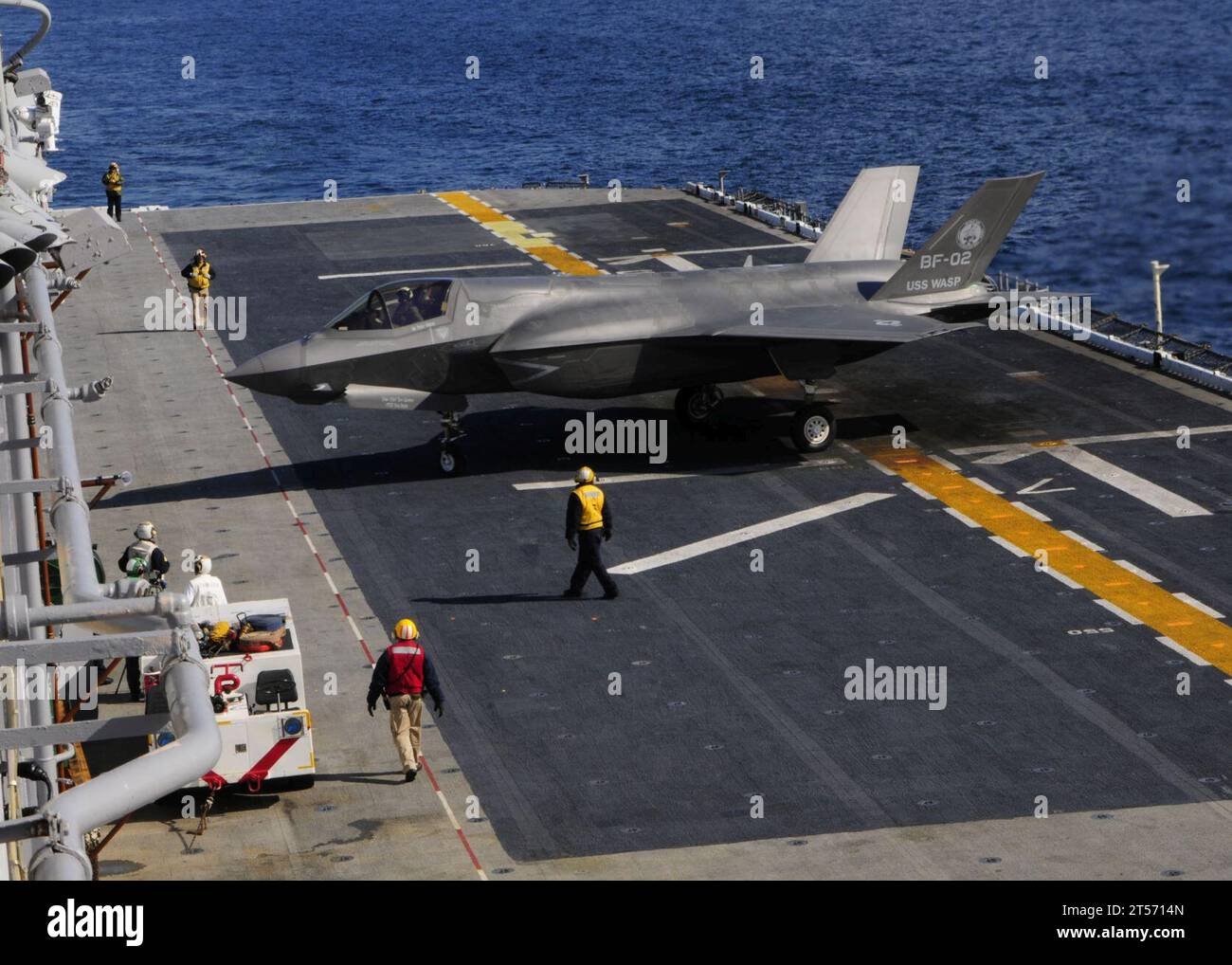
The F35B is perhaps the most technically complex variant. It is designed for use by marine corps and navies that operate from smaller amphibious assault ships or austere bases with limited runway space. The F35B utilizes a unique Rolls-Royce LiftSystem, which includes a massive lift fan located behind the cockpit and a swiveling engine nozzle at the rear. This allows the aircraft to hover and land vertically. However, the space required for the lift fan means the F35B has a smaller internal fuel capacity and must carry its cannon in an external pod.
F35C: Carrier Variant (CV)
Designed specifically for catapult launches and arrested recoveries on large aircraft carriers, the F35C features larger wings and control surfaces to improve low-speed handling during landings. The wings also fold to save space on crowded carrier decks. To withstand the immense stress of carrier operations, the F35C has a reinforced internal structure and more robust landing gear. According to industry reports, the larger wing area also allows the F35C to carry more fuel, giving it the greatest internal range of the three variants.
Core Technologies and Stealth Capabilities
The defining characteristic of the F35 is its stealth, or Low Observability (LO). Unlike older aircraft that use external stealth coatings which are difficult to maintain, the F35 incorporates stealth into the very shape of its airframe and its composite materials. Every angle of the aircraft, from the alignment of its wing edges to the shape of its engine intake, is designed to deflect radar energy away from the source.
Beyond its physical shape, the F35 utilizes advanced radar-absorbent materials (RAM) that are baked into the structure. This reduces the aircrafts radar cross-section to a size comparable to a metal marble. As per recent industry reports, this stealth capability allows the F35 to penetrate sophisticated enemy air defenses that would be impassable for fourth-generation fighters like the F16 or F18 [Link to: Stealth Technology Fundamentals].
Stealth is not just about radar. The F35 also manages its infrared (heat) signature and its electronic emissions. The engine is buried deep within the fuselage to mask heat, and the aircrafts own radar uses Low Probability of Intercept (LPI) technology, allowing it to see enemies without being detected by its own electronic signals.
The Role of Sensor Fusion and Pilot Interface
In traditional fighter jets, the pilot is responsible for monitoring multiple screens for radar, electronic warfare, and navigation, and then mentally combining that data to understand the battlefield. The F35 revolutionizes this through a process called sensor fusion. The aircrafts central computer gathers data from the Active Electronically Scanned Array (AESA) radar, the Distributed Aperture System (DAS), and the Electro-Optical Targeting System (EOTS), and merges them into a single, intuitive tactical picture.
The Distributed Aperture System is particularly noteworthy. It consists of six infrared cameras mounted around the aircraft, providing a 360-degree view. This imagery is projected directly onto the pilots Helmet Mounted Display System (HMDS). If a pilot looks down at the floor of the cockpit, they do not see the floor: they see the ground beneath them through the DAS cameras. This gives the pilot the ability to see through the airframe, providing unparalleled situational awareness.
Global Impact and Strategic Use Cases
The F35 is a global program involving numerous partner nations, including the United Kingdom, Italy, Netherlands, Australia, and others. This international cooperation ensures that allied forces can operate together seamlessly. Because all partner nations use the same hardware and software, they can share data in real-time during missions, a capability known as interoperability.
Real-life use cases for the F35 extend beyond high-intensity conflict. Its advanced sensors make it an excellent platform for Intelligence, Surveillance, and Reconnaissance (ISR). It can loiter near a target area, gather high-resolution imagery and electronic data, and transmit that information to ground troops or other aircraft without ever being detected. In a maritime environment, the F35 can identify and track naval threats from long distances, providing a protective bubble for carrier strike groups [Link to: Global Defense Logistics].
Maintenance and the Digital Backbone
Maintaining a machine as complex as the F35 requires a modern approach to logistics. The aircraft uses a digital backbone originally called the Automated Logistics Information System (ALIS), which is being transitioned to the Operational Data Integrated Network (ODIN). These systems monitor the health of every component on the aircraft in real-time. When a part is nearing the end of its lifespan or shows signs of wear, the system automatically alerts maintenance crews and ensures that a replacement part is ready before the aircraft even lands.
While this digital integration provides efficiency, it also presents challenges. Cybersecurity is a top priority, as the software running the F35 is as critical to its performance as the engine. Experts suggest that the ongoing software updates, known as Block upgrades, are essential for keeping the F35 ahead of emerging threats in the electronic warfare domain.
Common Misconceptions and Technical Challenges
Despite its capabilities, the F35 has faced criticism and misconceptions. One common mistake is comparing the F35s top speed or turn rate to older, specialized air-superiority fighters like the F22 or the Su-35. While the F35 is fast (Mach 1.6) and agile, its primary advantage is that it wins the fight before the enemy even knows it is there. Engaging in a visual-range dogfight is considered a secondary scenario for a stealth aircraft.
Another misconception involves the cost of the program. While the initial development costs were high, the unit price of the F35A has decreased significantly as production volume increased. However, the operating cost per flight hour remains a focus for military planners, as the high-tech coatings and complex sensors require more specialized care than older generation jets.
Pro Tips and Expert Insights for Aviation Enthusiasts
- Watch the EOTS: If you see an F35 on the ground, look for the faceted glass window under the nose. That is the Electro-Optical Targeting System, which allows the jet to identify targets at long ranges without using its radar.
- Observe the Tail: You can distinguish the F35C from the F35A by its much larger tail fins and wings. The F35B can be identified by the visible seam for the lift fan door behind the cockpit.
- Understand the Software: The F35 is often called a flying computer. Its capabilities are defined more by its millions of lines of code than by its physical speed.
Frequently Asked Questions
How fast can the F35 fly?
The F35 has a top speed of Mach 1.6, which is approximately 1200 miles per hour. It is designed to maintain this speed even with a full internal weapons load.
Can the F35 be detected by radar?
While no aircraft is 100 percent invisible, the F35 is designed to have an extremely low radar cross-section. This makes it very difficult for conventional radar systems to track or lock onto the aircraft at long ranges.
Which countries use the F35?
The F35 is used by the United States and several partner nations, including the United Kingdom, Israel, Italy, Australia, Norway, the Netherlands, and Japan, among others.
Is the F35 better than the F22?
The F22 Raptor is a specialized air-superiority fighter optimized for high-altitude dogfighting. The F35 is a multi-role fighter with more advanced sensors and electronics, designed for a wider variety of missions including ground attack and electronic warfare.
Conclusion
The F35 Lightning II is more than just a fighter jet: it is a transformative technology that has redefined the requirements for modern air power. By integrating stealth, advanced sensors, and global interoperability, it provides a level of capability that ensures its relevance for decades to come. While technical challenges and costs are inherent in such an ambitious program, the strategic advantages provided by the F35 make it the cornerstone of modern aerial defense for the United States and its allies. Its ability to act as a data hub in the sky ensures that it will remain a critical asset in an increasingly complex global security environment.
The takeaway for the reader is that the F35s true power lies not in its speed or weapons, but in its ability to see the battlefield and share that information with the entire fleet. Lottery and gambling activities involve financial risk. This content is for informational purposes only. Please participate responsibly.





Comments 0
Leave a Reply
Your email address will not be published. Required fields are marked *
Be the first to share your thoughts!