
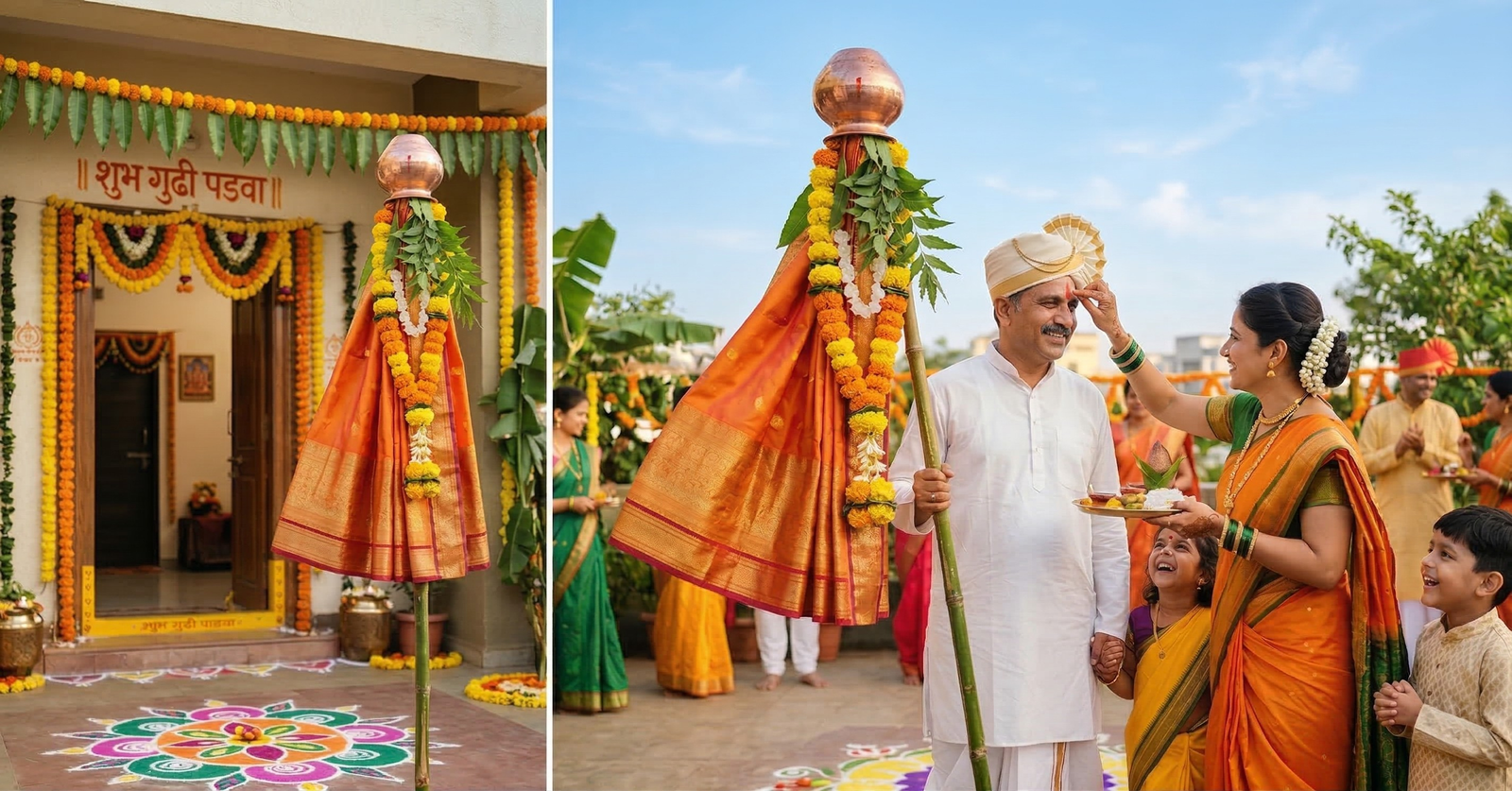
Gudi Padwa, the traditional New Year for Marathi and Konkani Hindus, stands as one of India's most vibrant and culturally significant festivals. Marking the beginning of the Chaitra month according to the Hindu lunisolar calendar, the festival signals the arrival of spring and the start of a fresh agricultural cycle. For millions of devotees, the question of “Gudi Padwa kab hai?” is essential for preparing rituals, celebrations, and welcoming the Hindu New Year with devotion and positivity.
Introduction to Gudi Padwa: The Marathi New Year
Gudi Padwa is celebrated with immense fervor, primarily in the state of Maharashtra and parts of Goa. It marks the first day of the Chaitra month, which is the first month of the Hindu calendar. The festival is a time for families to come together, clean their homes, and look forward to a year of prosperity and health. As a harvest festival, it also celebrates the end of the winter crop season and the abundance of the earth.
The term 'Padwa' is derived from the Sanskrit word 'Pratipada,' which refers to the first day of a lunar fortnight. For the Marathi diaspora worldwide, Gudi Padwa is an occasion to reconnect with their roots, showcasing traditional attire, music, and culinary delights that have been passed down through generations.
Gudi Padwa 2025 and 2026: Key Dates and Tithi Timing
Understanding the timing of Gudi Padwa is essential for performing the rituals during the auspicious 'Muhurta.' According to the festive calendars for upcoming years, Gudi Padwa 2025 will continue the tradition of marking the onset of the spring season. According to the Hindu lunisolar calendar, Gudi Padwa in 2025 will be celebrated on March 30, 2025, marking the beginning of the Chaitra month and the Marathi New Year.
Looking further ahead, The Economic Times and Moneycontrol have highlighted the March 2026 festive calendar, which places Gudi Padwa in a busy month of celebrations. In 2026, Gudi Padwa will be celebrated on March 19, 2026. The festival also marks the beginning of Chaitra Navratri, making it an especially auspicious occasion for devotees across India. This alignment creates a continuous period of spiritual devotion and celebration across India, emphasizing the importance of the lunar cycle in determining these sacred dates.
The History and Significance of the Festival
The historical and mythological roots of Gudi Padwa are deep and varied. One of the most prominent legends associated with the day is the victory of King Shalivahana. It is believed that on this day, Shalivahana defeated the Sakas in battle, and his people hoisted flags (Gudis) to celebrate the triumph of justice and the establishment of a new era. This is why the day is also known as the start of the Shalivahana Shaka era.
Another significant belief is that Lord Brahma created the universe on this specific day. Therefore, Gudi Padwa represents the dawn of time itself. The 'Gudi' or flag hoisted outside homes is a symbol of victory and prosperity. It is believed to ward off evil and invite good luck and health into the household. Traditionally, the festival is celebrated as both a New Year and a harvest festival, symbolizing prosperity, renewal, and the arrival of spring.

Traditional Rituals: How to Celebrate Gudi Padwa
The celebration of Gudi Padwa involves several intricate rituals that begin at dawn. The most iconic aspect is the raising of the Gudi. To create a Gudi, a bright green or yellow silk cloth with a brocade (zari) border is tied to the tip of a long bamboo pole. On top of the cloth, neem leaves, a garland of flowers, and a 'Gathi' (a garland of sugar crystals) are tied. The pole is then capped with an inverted copper or silver pot (Kalash).
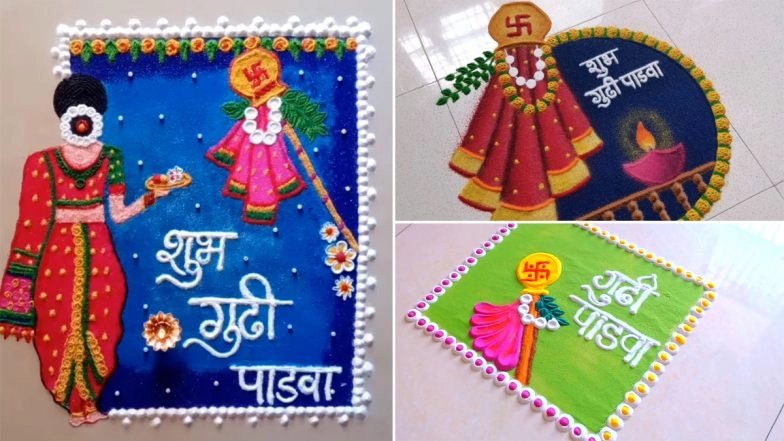
This Gudi is hoisted at the entrance of the house or on a window so that it is visible to everyone. Before hoisting, the area is thoroughly cleaned, and a beautiful Rangoli is drawn at the foot of the Gudi. The Rangoli, made with vibrant colors, signifies the welcoming of the New Year. Families offer prayers and perform an 'Aarti' to the Gudi, seeking blessings for the coming year.
Gudi Padwa and Ugadi: Regional Variations Across India
While Maharashtra celebrates Gudi Padwa, the same lunar day is observed as Ugadi in Karnataka, Andhra Pradesh, and Telangana. As noted by Mint, though the names and some customs differ, the underlying theme of a new beginning remains constant. In the southern states, the festival is marked by the preparation of 'Ugadi Pachadi' or 'Beavu Bella,' a mixture of six tastes including neem (bitterness) and jaggery (sweetness).
The consumption of this mixture is highly symbolic, representing the various experiences of life—joy, sorrow, anger, fear, disgust, and surprise—and the philosophy that one must accept all facets of life with equanimity in the coming year. In Maharashtra, a similar tradition involves eating neem leaves with jaggery or making a paste of neem, cumin, and jaggery to purify the blood and strengthen the immune system for the changing season.

March 2026 Festive Calendar: A Month of Celebrations
The year 2026 promises to be a significant year for Hindu festivals. The March 2026 festive calendar is filled with significant Hindu celebrations, making it a spiritually vibrant period across India. Gudi Padwa will serve as the gateway to a series of observances including Chaitra Navratri, which begins on the same day. This nine-day period dedicated to the Goddess Durga culminates in Ram Navami.
In addition to Gudi Padwa, the month of March 2026 will see the celebration of Holi, the festival of colors, and various Ekadashi and Purnima (full moon) dates. Moneycontrol highlights that these dates are crucial for devotees who plan pilgrimages and fasts. During this festive period, temples across India witness a large influx of devotees seeking blessings for prosperity and well-being.
Conclusion and Cultural Impact
Gudi Padwa remains a powerful symbol of cultural continuity and spiritual renewal. Whether it is the hoisting of the Gudi, the creation of intricate Rangolis, or the sharing of traditional sweets like Shrikhand and Puran Poli, the festival reinforces the values of victory, gratitude, and community. As we look toward the celebrations in 2026 and 2027, the essence of Gudi Padwa continues to inspire millions to embrace the future with hope and devotion.





Comments 0
Leave a Reply
Your email address will not be published. Required fields are marked *
Be the first to share your thoughts!