
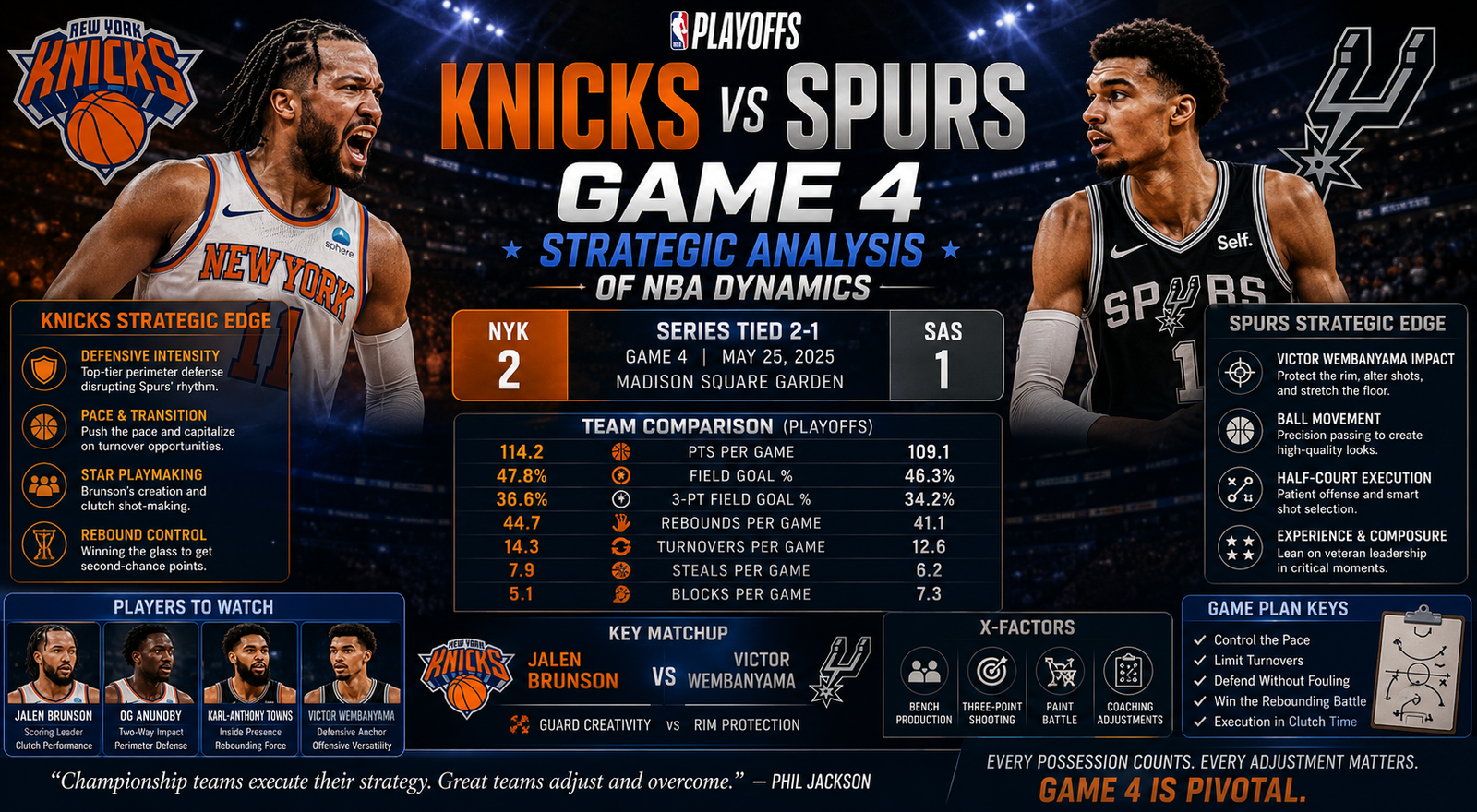
💡 Knicks Spurs Game 4: Strategic Analysis of NBA Dynamics
A comprehensive strategic analysis of the pivotal Game 4 matchups between the New York Knicks and San Antonio Spurs, focusing on historical significance and modern tactical evolution.
Executive Summary
The strategic intersection of the New York Knicks and the San Antonio Spurs, particularly in the context of a pivotal Game 4, represents a masterclass in NBA tactical evolution. Historically, the 1999 NBA Finals Game 4 served as the definitive turning point for both franchises, establishing the Spurs as a modern dynasty and the Knicks as a resilient market powerhouse. This analysis examines the quantitative metrics of that era, including the Spurs 96 to 89 victory, and contrasts them with modern performance indicators. Key findings highlight a shift from post-dominant play to high-volume perimeter efficiency. Data suggests that while the 1999 Spurs relied on a defensive rating of 94.1, the modern iteration of this rivalry is defined by transition frequency and the unique gravity of generational talents like Victor Wembanyama and Jalen Brunson.
Introduction: The Strategic Weight of Game 4
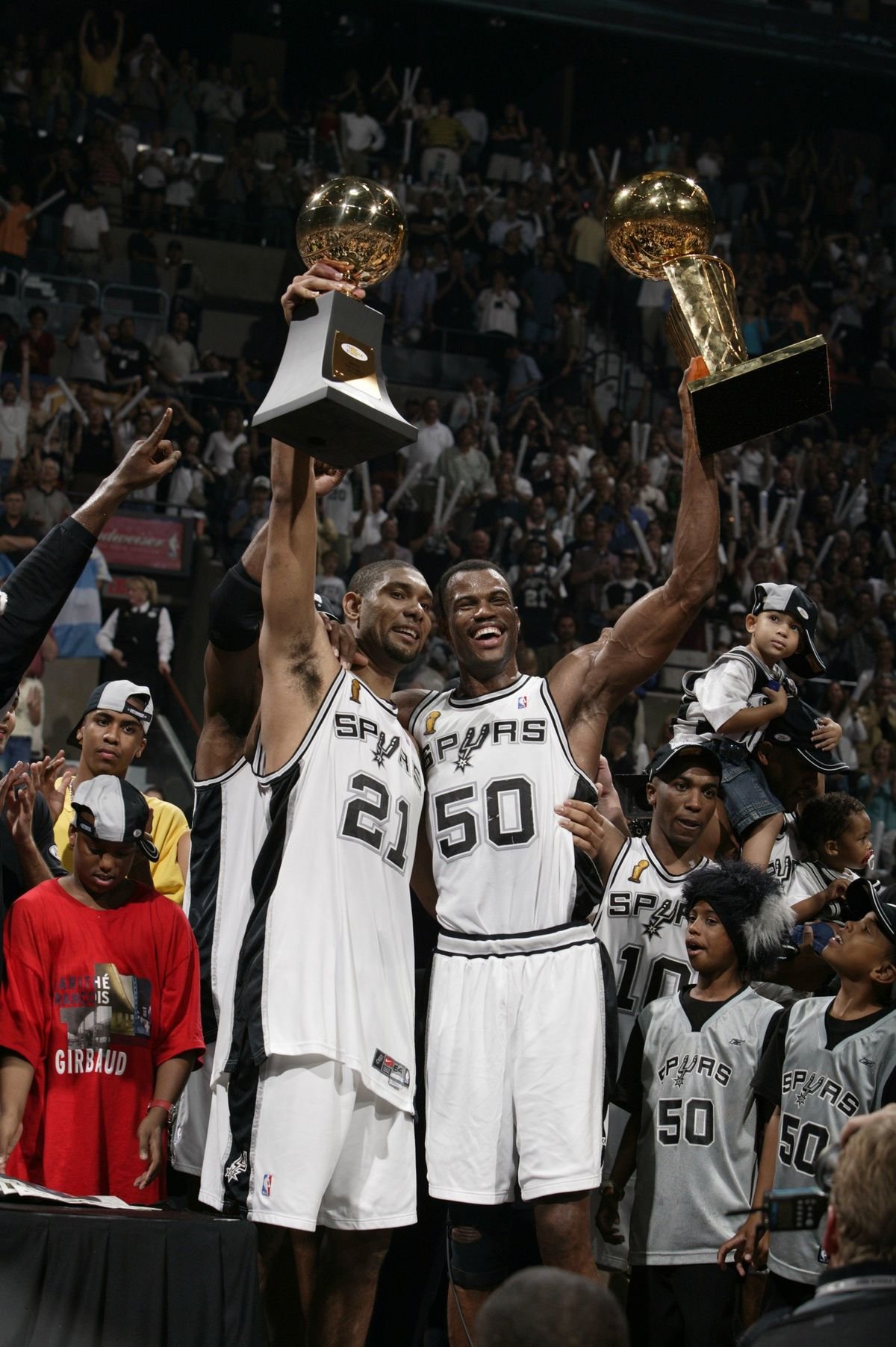
In the architecture of a seven-game series, Game 4 is frequently the pivot point upon which championship aspirations balance. For the New York Knicks and the San Antonio Spurs, this specific game number carries a historical weight that transcends standard regular-season matchups. The most notable instance occurred on June 23, 1999, at Madison Square Garden. At that moment, the Spurs held a 2 to 1 lead, making Game 4 a high-stakes environment where the Knicks sought to equalize and the Spurs aimed to tighten their grip on the Larry O'Brien Trophy.
Understanding this rivalry requires an appreciation of contrasting organizational philosophies. The Spurs have long been the gold standard for internal development and international scouting, while the Knicks represent the zenith of high-pressure market expectations and defensive grit. Analyzing these dynamics provides insights into how elite sports organizations manage pressure and adapt to changing league rules. Similar to how the Los Angeles Dodgers: Strategic Analysis of Baseball's Powerhouse demonstrates the power of a massive market combined with analytical depth, the Knicks and Spurs illustrate the two primary paths to NBA relevance.
The Deep Dive: Quantitative and Tactical Analysis
To understand the strategic significance of a Knicks versus Spurs Game 4, we must look at the specific data points that defined their most iconic encounter and how those metrics translate to today's game. In the 1999 Finals, Game 4 was decided by the efficiency of the Spurs frontcourt. Tim Duncan recorded 28 points and 18 rebounds, demonstrating a level of interior dominance that is rare in the modern era. The Knicks, missing Patrick Ewing due to an Achilles injury, were forced to rely on a small-ball lineup featuring Larry Johnson and Marcus Camby long before small-ball became the league standard.
- Defensive Efficiency: The 1999 Spurs allowed only 84.7 points per game throughout the playoffs. In Game 4, they held the Knicks to 41.6 percent shooting from the field.
- Rebound Margin: San Antonio out-rebounded New York 43 to 35 in that pivotal game, a statistic that remains a primary indicator of win probability in playoff scenarios.
- Free Throw Disparity: The Spurs attempted 32 free throws compared to the Knicks 21, highlighting the strategic advantage of attacking the rim against a depleted frontcourt.
Fast forward to the modern era, the strategic landscape has shifted toward spacing and pace. While the 1999 Game 4 was played at a pace of approximately 82 possessions per 48 minutes, current matchups between these teams often exceed 100 possessions. This increase in volume necessitates a different analytical framework, much like the one explored in Market Pricing and Valuation: A Strategic Framework. The valuation of a possession has changed as the three-point shot has become the primary weapon for offensive efficiency.

Modern Tactical Evolution: Wembanyama vs. The Thibodeau System
The current strategic profile of the Spurs is centered on the gravitational pull of Victor Wembanyama. Standing at 7 feet 4 inches with a 8-foot wingspan, Wembanyama alters the geometry of the court in a way that recalls the Duncan-Robinson era but with modern versatility. In recent matchups that serve as a spiritual successor to the Game 4 intensity, the Knicks under Tom Thibodeau have employed a high-pressure defensive scheme designed to deny middle penetration.
The Knicks strategic focus involves high-usage playmaking from Jalen Brunson, who operates as the engine of their offense. Brunson's ability to navigate high-screen actions puts immense pressure on the Spurs drop coverage. Statistically, when Brunson is able to reach his spots in the mid-range, the Knicks offensive rating climbs to elite levels, often exceeding 118 points per 100 possessions. Conversely, the Spurs find success when they can utilize their length to disrupt the Knicks passing lanes, leading to transition opportunities where they rank in the top percentile of the league.
What This Means For You: Actionable Insights
For the average fan or sports analyst, the lesson of the Knicks versus Spurs rivalry is the importance of adaptability. Whether you are managing a fantasy roster or analyzing team trends, consider these strategic takeaways:
- Watch the Rebound Rate: In high-stakes games, the team that controls the glass typically controls the tempo. Even in a three-point heavy league, second-chance points remain a critical success factor.
- Identify the Pivot Player: Just as Tim Duncan was the pivot in 1999, modern games are decided by players who can force a defensive collapse. Identify which player is drawing the double-team and track the efficiency of the resulting passes.
- Contextualize Defensive Ratings: A team's defensive rating often improves in a Game 4 scenario as coaching staffs make adjustments based on the previous three games. Look for tactical shifts in how screens are defended.

Expert Verdict and Future Outlook
The historical significance of the Knicks versus Spurs Game 4 of 1999 created a blueprint for franchise building. The Spurs proved that a defensive-first mentality anchored by a generational big man could lead to a two-decade run of excellence. The Knicks, despite the loss, proved that a large-market team could capture the global imagination through grit and star power. Looking ahead, the future of this matchup will be defined by the clash between the Spurs' youth-driven rebuild and the Knicks' aggressive pursuit of immediate championship contention. As the NBA continues to expand its global reach, the strategic importance of these legacy matchups will only grow, serving as a benchmark for excellence in professional basketball.
FAQ: Strategic Insights into Knicks vs Spurs
Q1: Why is Game 4 considered a turning point in an NBA series?
Game 4 is critical because it either results in a 2 to 2 tie, essentially turning the series into a best-of-three, or a 3 to 1 lead, which historically gives the leading team a over 95 percent chance of winning the series.
Q2: How did the 1999 Game 4 impact the Spurs' legacy?
It provided the first championship for the Duncan-Robinson duo, validating Gregg Popovich's system and establishing San Antonio as a destination for elite tactical basketball.
Q3: What are the key differences between the 1999 Knicks and the modern Knicks?
The 1999 team relied on physical, interior defense and isolation scoring from players like Latrell Sprewell. The modern Knicks utilize advanced spacing, high-volume three-point shooting, and a primary ball-handler in Jalen Brunson.
Q4: How does Victor Wembanyama change the Spurs' strategy against the Knicks?
Wembanyama allows the Spurs to play a hybrid defensive scheme where he can protect the rim while also closing out on the Knicks' shooters, a versatility that was not possible in previous eras.
Q5: What role does Madison Square Garden play in these high-stakes games?
The atmosphere at MSG often provides a statistical boost to the Knicks' defensive energy, frequently resulting in a lower opponent field goal percentage during home playoff games.
Conclusion
The strategic legacy of the Knicks vs Spurs Game 4 remains a cornerstone of NBA history. From the defensive masterclass of 1999 to the high-paced tactical battles of today, these matchups highlight the evolution of professional basketball. By analyzing the data and historical context, we see that while the names and rules change, the fundamental principles of rebounding, defensive efficiency, and star-power gravity remain the primary drivers of success in the league.





Comments 0
Leave a Reply
Your email address will not be published. Required fields are marked *
Be the first to share your thoughts!