
💡 Navigating the Right to Education (RTE) Act: A Comprehensive Guide to Eligibility and School Admissions
A detailed guide on India's RTE Act, explaining the 25% private school reservation, eligibility criteria, required documents, and how the lottery admission system works.
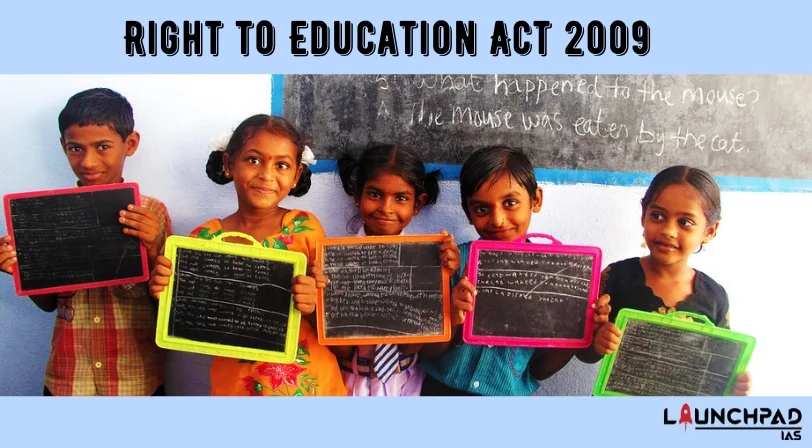
The Right to Education (RTE) Act, 2009, is a transformative law in India that guarantees free and compulsory education to every child between the ages of 6 and 14. Under Section 12(1)(c) of this Act, private non-minority schools are mandated to reserve 25% of their entry-level seats (Pre-primary or Class 1) for children from Economically Weaker Sections (EWS) and disadvantaged groups. This ensures that a child's financial background does not prevent them from accessing quality education in private institutions, with the government covering the cost of tuition and basic supplies.
The Vision of Universal Education in India
The RTE Act was born out of the belief that education is a fundamental right, not a privilege. By integrating children from diverse socio-economic backgrounds into the same classrooms, the Act aims to create a more inclusive society. It moves beyond just providing 'literacy' and focuses on providing an environment where every child has an equal opportunity to thrive, regardless of their family's income or social status.
The Framework of the RTE Act: Understanding the 25% Reservation Mandate
The 25% reservation is the most significant feature of the RTE Act for parents. It applies specifically to private, unaided, non-minority schools. While government schools offer free education to everyone, this mandate opens the doors of private schools to the neighborhood's underprivileged children. The government compensates these private schools based on a per-child expenditure model or the school's actual fees—whichever is lower. It is important to note that minority-run institutions (both religious and linguistic) are currently exempt from this specific reservation rule following various court rulings.
Determining Eligibility: Age Requirements, Income Thresholds, and Disadvantaged Categories
Eligibility for RTE admission is generally divided into two main categories: the Economically Weaker Section (EWS) and Disadvantaged Groups (DG).
- Age Requirements: Generally, children must be between 6 and 14 years old for the broader scope of the Act. However, for entry-level admissions (Pre-KG, Nursery, or Class 1), the child must usually be between 3 and 6 years old as of March 31st of the academic year.
- Income Thresholds: For the EWS category, the family's total annual income must fall below a certain limit set by the state government. This limit varies significantly; for example, in some states, it is ₹1 lakh, while in others, it may be up to ₹2.5 lakhs.
- Disadvantaged Categories: This includes children from Scheduled Castes (SC), Scheduled Tribes (ST), Other Backward Classes (OBC - Non-Creamy Layer), orphans, children with special needs (differently-abled), and sometimes children of HIV-affected parents or transgender children.
Essential Documentation Checklist for a Successful RTE Application
Having the right paperwork is the most critical step in the RTE process. Missing even one document can lead to the rejection of an application. You will typically need:
- Proof of Birth: Birth certificate from the Municipal Corporation or a hospital record.
- Address Proof: Aadhaar card, Ration card, Voter ID, Electricity bill, or a registered Rent Agreement in the parent's name.
- Income Certificate: Issued by a Revenue Officer (Tehsildar) or equivalent authority, usually not older than six months to a year.
- Caste Certificate: If applying under the Disadvantaged Group category.
- Photographs: Recent passport-sized photos of the child.
Step-by-Step Roadmap for the RTE Online Admission Process
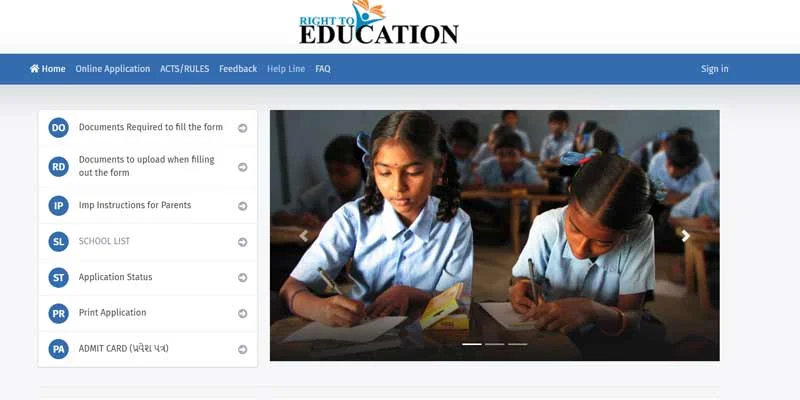
Most states in India now manage RTE admissions through dedicated online portals (e.g., RTE Maharashtra, RTE Karnataka, etc.). The process generally follows these steps:
- Registration: Create a profile on the state’s RTE portal using a valid mobile number.
- Form Filling: Enter the child’s details, parent information, and address accurately.
- School Selection: You will be shown a list of schools within your neighborhood. You can usually select multiple schools in order of preference.
- Document Upload: Scan and upload the required certificates.
- Submission: Review all details carefully before final submission. Note down the application number for future tracking.
Decoding the Lottery System: How School Seats Are Allocated
Since the number of applicants often exceeds the number of reserved seats, admissions are not granted on a first-come, first-served basis. Instead, a Centralized Lottery System is used. This is a computer-generated random selection process that ensures transparency and eliminates human bias. If your child’s name appears in the lottery, you will receive an SMS or notification to proceed with the physical verification of documents at the assigned school or a designated center.
Geographic Boundaries: The Role of Neighborhood Schooling in Selection
The RTE Act emphasizes "neighborhood schooling." This means preference is given to children living closest to the school. The system usually categorizes applicants into distance slabs:
- 0 - 1 km: Highest priority.
- 1 - 3 km: Second priority.
- 3 - 6 km: Only considered if seats remain vacant.
This rule is designed to ensure that young children do not have to travel long distances to reach their school.
Post-Admission Rights: Provisions for Tuition Fees, Uniforms, and Textbooks
Securing admission is just the beginning. The RTE Act ensures that the education remains truly 'free' for the selected students. Under the Act, the school cannot charge any tuition fees, library fees, or laboratory fees from RTE students. Furthermore, states often mandate that schools provide free textbooks, writing materials, and at least one set of uniforms to these students to ensure they are not distinguished from their fee-paying peers.

Common Challenges in RTE Admissions and How to Overcome Them
Despite the noble intent, the process can be challenging for many families. Common hurdles include:
- The Digital Divide: Many eligible parents lack internet access. Solution: Visit local 'Maha e-Seva' centers, Common Service Centers (CSCs), or NGOs that help with free RTE registrations.
- Document Discrepancies: Names on the Aadhaar card and Birth Certificate might not match. Solution: Ensure all documents have consistent spelling and dates well before the application window opens.
- School Resistance: Some schools might hesitate to admit RTE students. Solution: If a school refuses admission despite a lottery win, parents should immediately contact the District Education Officer (DEO) or the local education department.
Frequently Asked Questions Regarding State-Specific RTE Portals and Deadlines
1. Can I apply for RTE in any state?
No, you must apply in the state where you have a permanent residence and valid address proof.
2. Is the RTE admission valid until graduation?
The RTE mandate for free education currently covers children from the entry-level up to the completion of Class 8. After Class 8, the child may have to pay fees unless the state has specific extended provisions.
3. What if I miss the online application deadline?
Most states do not allow late applications as the lottery is conducted on a fixed schedule. It is vital to track the state portal announcements, usually between January and March.
4. Do I need to pay any 'donation' or 'activity fee'?
No. Any demand for a donation or capitation fee is illegal under the RTE Act and can lead to heavy fines for the school.
Conclusion
The Right to Education Act is a powerful tool for social mobility, breaking the barriers that once kept high-quality private education out of reach for millions. While the online application and lottery system may seem daunting, preparation is the key. By gathering documents early and understanding the neighborhood criteria, parents can successfully navigate the process. Ultimately, the goal of RTE is to ensure that every child in India, regardless of their starting point in life, has the opportunity to learn, grow, and contribute to the nation's future.





Comments 0
Leave a Reply
Your email address will not be published. Required fields are marked *
Be the first to share your thoughts!